ADVERTISEMENT

DepEd to fast-track classroom construction through private sector collaboration, technology

Published Feb 5, 2026 05:49 pm
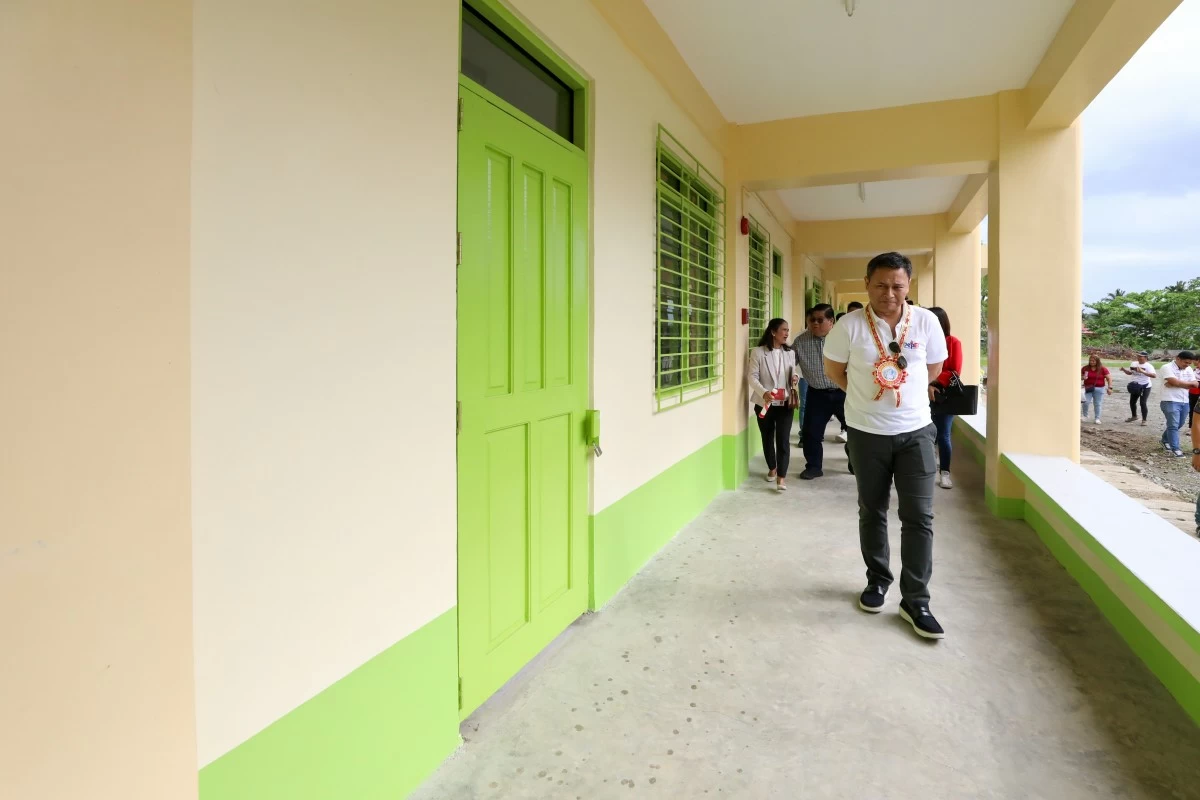
Department of Education (DepEd) Secretary Sonny Angara shares plans to speed up classroom construction through technology and partnerships with NGOs and private sector groups to address the country’s growing school infrastructure backlog. (DepEd photo)
The Department of Education (DepEd) is launching a multi-pronged initiative to tackle the country’s growing classroom shortage—combining technologies with expanded participation from private sector groups and non-government organizations (NGOs).
In an interview over DZRH on Thursday, February 5, DepEd Secretary Sonny Angara said the move aims to speed up the delivery of classrooms—many of which are urgently needed as schools struggle with overcrowding and multi-shift schedules caused by a nationwide backlog estimated at 165,000 rooms.
Tech-driven construction to reduce delays
Angara said DepEd is exploring innovative methods to build classrooms and make them more conducive to learning.
“Sa teknolohiya ngayon, puwedeng subukan at bigyan ng tsansa sa iba't ibang lugar dahil sa dami ng kakulangan (With today’s technology, we can try and give opportunities in different areas because of the sheer shortage),” he said.
“Puwede tayong maging creative o innovative sa approach natin. Diyan puwedeng pumasok ang makabagong teknolohiya (We can be creative or innovative in our approach. That’s where modern technology can come in),” he added.
Angara said it would also be ideal for newly built classrooms to be equipped with modern learning facilities, including standard desks and chairs, multimedia equipment, smart TVs, and basic technology infrastructure in selected schools to enhance both traditional and digital learning environments.
Opening construction to NGOs, private sector partners
Beginning in 2026, Angara said DepEd will allow accredited NGOs and private sector organizations with proven experience in school construction to participate in government-funded projects through formal bidding processes.
“For the first time, puwedeng makilahok ang mga NGOs na ia-accredit dahil may record na sila sa paggawa ng classrooms (For the first time, accredited NGOs can participate because they already have a track record of building classrooms),” Angara explained.
Previously, these groups were limited to contributions. Organizations such as the Federation of Filipino Chinese Chambers of Commerce, the Philippine Chamber of Commerce and Industry (PCCI), Angat Buhay, and several corporate foundations have supported school infrastructure independently or through donations.
Under the new policy, Angara said they can now directly implement government-funded projects.
“Matagal nang gumagawa ng mga classrooms ang mga ito, pero iba ngayon dahil hindi sila dating lumalahok sa government bidding—iyong tinatawag na turnkey approach (They have long been building classrooms, but it’s different now because they didn’t previously participate in government bidding—the so-called turnkey approach),” he said.
Public-private partnerships encouraged
Angara said DepEd is also welcoming proposals under Public-Private Partnership (PPP) arrangements, where private firms may initially shoulder construction costs and receive payment from the government after project completion.
While regulatory approvals may take longer, Angara noted that PPPs could mobilize additional resources for large-scale infrastructure development. He said these partnerships allow more players to help address the classroom shortage while easing immediate government spending pressures.
“Puwede ito sa PPP—ang public-private partnership—kung saan puwedeng mag-submit ng tinatawag na unsolicited proposal (This can fall under PPP, where they can submit what’s called an unsolicited proposal),” he added.
Angara said this expanded approach to classroom construction aligns with DepEd’s broader reform efforts guided by the Second Congressional Commission on Education (EDCOM II), which emphasized the urgent need to close infrastructure gaps and foster collaboration with private sector partners and local government units (LGUs).
By combining technology, decentralization to LGUs, and partnerships with NGOs and private organizations, DepEd hopes to significantly reduce the classroom backlog in the coming years.
With these measures, DepEd said overcrowding in public schools will be eased, resulting in stronger student engagement and more conducive learning environments for millions of Filipino learners nationwide. 

Related Tags

DepEd DepEd Secretary Sonny Angara classroom shortage Philippines classroom construction PPP
ADVERTISEMENT
.most-popular .layout-ratio{ padding-bottom: 79.13%; } @media (min-width: 768px) and (max-width: 1024px) { .widget-title { font-size: 15px !important; } }

{{ articles_filter_1561_widget.title }}

.most-popular .layout-ratio{ padding-bottom: 79.13%; } @media (min-width: 768px) and (max-width: 1024px) { .widget-title { font-size: 15px !important; } }

{{ articles_filter_1562_widget.title }}

.most-popular .layout-ratio{ padding-bottom: 79.13%; } @media (min-width: 768px) and (max-width: 1024px) { .widget-title { font-size: 15px !important; } }

{{ articles_filter_1563_widget.title }}

{{ articles_filter_1564_widget.title }}

.mb-article-details { position: relative; } .mb-article-details .article-body-preview, .mb-article-details .article-body-summary{ font-size: 17px; line-height: 30px; font-family: "Libre Caslon Text", serif; color: #000; } .mb-article-details .article-body-preview iframe , .mb-article-details .article-body-summary iframe{ width: 100%; margin: auto; } .read-more-background { background: linear-gradient(180deg, color(display-p3 1.000 1.000 1.000 / 0) 13.75%, color(display-p3 1.000 1.000 1.000 / 0.8) 30.79%, color(display-p3 1.000 1.000 1.000) 72.5%); position: absolute; height: 200px; width: 100%; bottom: 0; display: flex; justify-content: center; align-items: center; padding: 0; } .read-more-background a{ color: #000; } .read-more-btn { padding: 17px 45px; font-family: Inter; font-weight: 700; font-size: 18px; line-height: 16px; text-align: center; vertical-align: middle; border: 1px solid black; background-color: white; } .hidden { display: none; }
function initializeAllSwipers() { // Get all hidden inputs with cms_article_id document.querySelectorAll('[id^="cms_article_id_"]').forEach(function (input) { const cmsArticleId = input.value; const articleSelector = '#article-' + cmsArticleId + ' .body_images'; const swiperElement = document.querySelector(articleSelector); if (swiperElement && !swiperElement.classList.contains('swiper-initialized')) { new Swiper(articleSelector, { loop: true, pagination: false, navigation: { nextEl: '#article-' + cmsArticleId + ' .swiper-button-next', prevEl: '#article-' + cmsArticleId + ' .swiper-button-prev', }, }); } }); } setTimeout(initializeAllSwipers, 3000); const intersectionObserver = new IntersectionObserver( (entries) => { entries.forEach((entry) => { if (entry.isIntersecting) { const newUrl = entry.target.getAttribute("data-url"); if (newUrl) { history.pushState(null, null, newUrl); let article = entry.target; // Extract metadata const author = article.querySelector('.author-section').textContent.replace('By', '').trim(); const section = article.querySelector('.section-info ').textContent.replace(' ', ' '); const title = article.querySelector('.article-title h1').textContent; // Parse URL for Chartbeat path format const parsedUrl = new URL(newUrl, window.location.origin); const cleanUrl = parsedUrl.host + parsedUrl.pathname; // Update Chartbeat configuration if (typeof window._sf_async_config !== 'undefined') { window._sf_async_config.path = cleanUrl; window._sf_async_config.sections = section; window._sf_async_config.authors = author; } // Track virtual page view with Chartbeat if (typeof pSUPERFLY !== 'undefined' && typeof pSUPERFLY.virtualPage === 'function') { try { pSUPERFLY.virtualPage({ path: cleanUrl, title: title, sections: section, authors: author }); } catch (error) { console.error('ping error', error); } } // Optional: Update document title if (title && title !== document.title) { document.title = title; } } } }); }, { threshold: 0.1 } ); function showArticleBody(button) { const article = button.closest("article"); const summary = article.querySelector(".article-body-summary"); const body = article.querySelector(".article-body-preview"); const readMoreSection = article.querySelector(".read-more-background"); // Hide summary and read-more section summary.style.display = "none"; readMoreSection.style.display = "none"; // Show the full article body body.classList.remove("hidden"); } document.addEventListener("DOMContentLoaded", () => { let loadCount = 0; // Track how many times articles are loaded const offset = [1, 2, 3, 4, 5, 6, 7, 8, 9, 10]; // Offset values const currentUrl = window.location.pathname.substring(1); let isLoading = false; // Prevent multiple calls if (!currentUrl) { console.log("Current URL is invalid."); return; } const sentinel = document.getElementById("load-more-sentinel"); if (!sentinel) { console.log("Sentinel element not found."); return; } function isSentinelVisible() { const rect = sentinel.getBoundingClientRect(); return ( rect.top < window.innerHeight && rect.bottom >= 0 ); } function onScroll() { if (isLoading) return; if (isSentinelVisible()) { if (loadCount >= offset.length) { console.log("Maximum load attempts reached."); window.removeEventListener("scroll", onScroll); return; } isLoading = true; const currentOffset = offset[loadCount]; window.loadMoreItems().then(() => { let article = document.querySelector('#widget_1690 > div:nth-last-of-type(2) article'); intersectionObserver.observe(article) loadCount++; }).catch(error => { console.error("Error loading more items:", error); }).finally(() => { isLoading = false; }); } } window.addEventListener("scroll", onScroll); });

Sign up by email to receive news.