






 Business
Trade & Industry
COMP: Philippines-US critical minerals pact seen boosting mining investments
Business
Trade & Industry
COMP: Philippines-US critical minerals pact seen boosting mining investments
COMP: Philippines-US critical minerals pact seen boosting mining investments


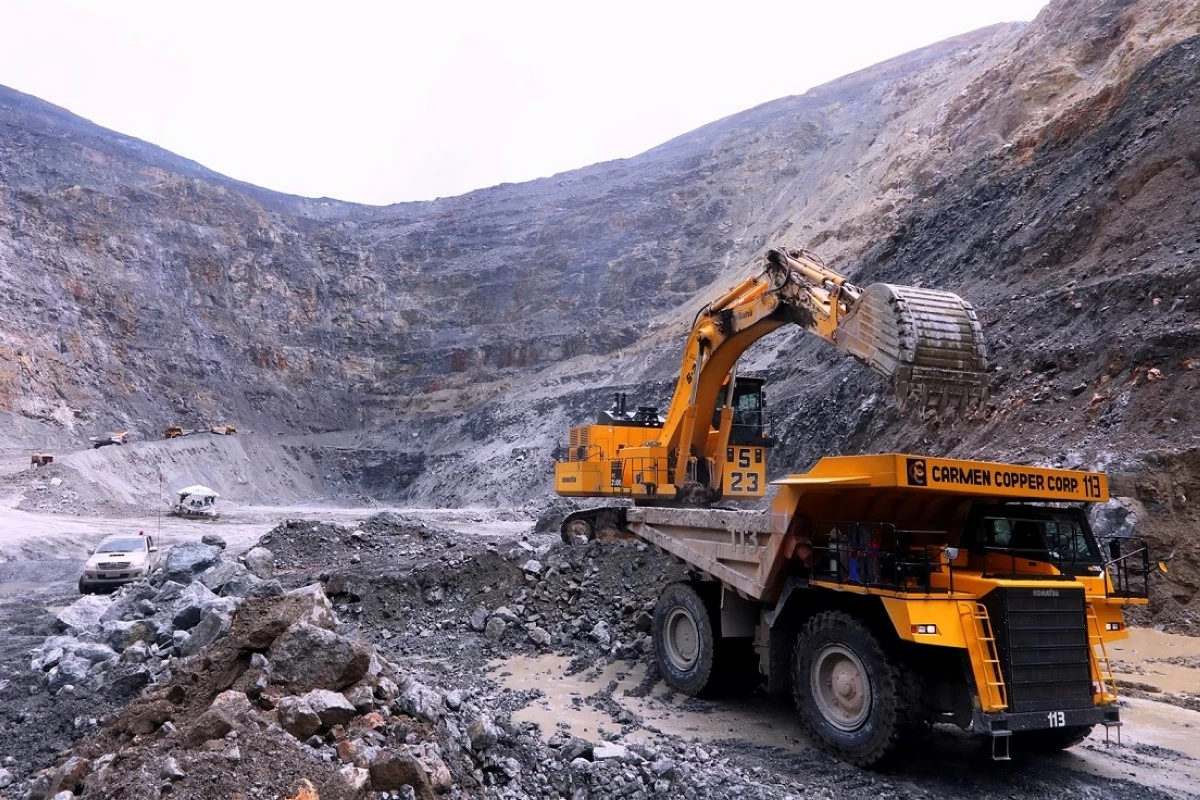
The Philippines is positioned to encourage more investment in the mining industry after signing an agreement to bolster cooperation with the United States (US) on critical minerals, according to the Chamber of Mines of the Philippines (COMP).
In a statement sent to Manila Bulletin, COMP chairman Michael Toledo said the group welcomed the signing of the memorandum of understanding (MOU) between the Philippines and the US on mineral development.
“This partnership represents a positive step toward strengthening responsible mining, advancing sustainable resource development, and enhancing the country’s role in securing critical minerals essential for the global energy transition,” Toledo said.
The US Department of State (DOS) announced on Thursday, Feb. 5, that the Philippines and the US signed the MOU during the US-led Critical Minerals Ministerial.
According to the DOS, the framework covers cooperation between the two countries to “collaborate on pricing challenges, spur development, create fair markets, close gaps in priority supply chains, and expand access to financing.”
The MOU forms part of the inaugural Critical Minerals Ministerial, which sought to convene the US and its top allies to craft policies aimed at ending a “highly concentrated” mining industry.
Without mentioning China directly, the DOS said this concentration has turned the vital sector into “a tool of political coercion and supply chain disruption.”
China and the US have been engaged in a prolonged trade conflict, with Washington aiming to curb Beijing’s dominance in the critical minerals market.
In his speech during the ministerial, US Vice President JD Vance said the current state of the market makes it “nearly impossible” for countries to attract investment, as mineral prices have become unpredictable.
“And that’s one of the things that we want to work on with this initiative. Let’s make the prices more predictable and less erratic so that we can support the domestic supply chains and the investment that makes those supply chains possible,” Vance said.
Speaking to representatives from more than 50 countries, Vance said there should be a concrete mechanism to return the global critical minerals market to a “healthier, more competitive state.”
The US is pursuing the establishment of reference prices for critical minerals at each stage of production, supported by a preferential trading zone.
For member states of this zone, the reference prices would operate as a floor price for critical minerals, maintained through adjustable tariffs.
While the Philippine government has yet to clarify whether the MOU would pave the way for the country to join the preferential trading zone, COMP said the agreement presents an opportunity to attract more investment.
Toledo said a platform of like-minded countries would promote technology transfer and reinforce high environmental and governance standards in the mining industry.
He said this would help stimulate economic growth without neglecting local communities.
“We look forward to working closely with government and stakeholders to ensure that the benefits of this cooperation are realized responsibly and inclusively,” Toledo said.
Beyond countering China’s dominance, the US government is racing to build a global minerals policy to safeguard its interests in advanced technologies dependent on rare earths.
This marks a significant shift for the Trump administration, given its protectionist stance in other sectors, as reflected in its reciprocal tariff policy.