







Inflation quickens to 2.0% as utility costs rise in January
By Derco Rosal
Published Feb 5, 2026 09:12 am
|
Updated Feb 5, 2026 01:38 pm


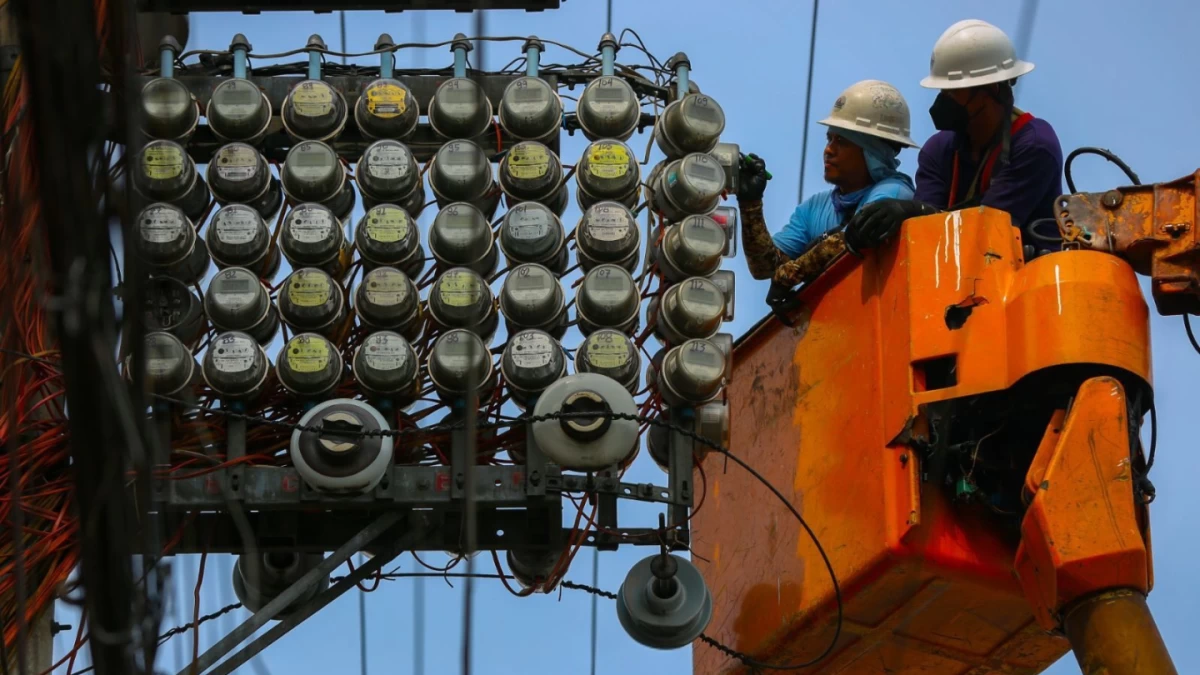
Consumer price growth accelerated in January as spike in housing and utility costs offset the continued slowdown in food prices, keeping inflation within the central bank’s target range while prompting officials to warn of emerging upward pressures.
The consumer price index rose two percent from a year earlier, the Philippine Statistics Authority (PSA) reported Thursday, Feb. 5. The print aligns with the Bangko Sentral ng Pilipinas’ (BSP) forecast of up to 2.2 percent and remains within the government’s two percent to four percent annual target band.
Despite the uptick, National Statistician Claire Dennis Mapa said it is premature to conclude whether headline inflation will breach the four percent ceiling in the coming months.
“Whether it will breach four percent, it is too early to say because this January, we are at two percent,” Mapa said.
Mapa noted that risks to potential inflation breach include already higher food prices, as well as rising costs for housing, water, electricity, gas, and other fuels, which climbed 1.8 percent in December and were driven primarily by a 3.3 percent increase in the housing, water, electricity, and gas index.
He said additional pressure may come from restaurant and accommodation services, particularly food consumed outside the home. This sector jumped to four percent from 2.4 percent in December.
As this sector accounts for nearly 10 percent of the inflation basket, any price spike could significantly affect overall inflation, Mapa noted.
Food inflation, meanwhile, slowed to 0.7 percent due to the sharp plunge in vegetable price growth to 3.3 percent from 11.6 percent. However, underlying pressures appear to be firming.
Notably, the decline in rice prices eased to 8.5 percent in January from a deeper 12.3 percent in December.
According to the Department of Economy, Planning, and Development (DEPDev), easing food prices is a major boon for Filipino households, “particularly for lower-income families where food accounts for a larger share of expenditures.”
“We will continue building on this progress by sustaining efforts to support Filipino families’ purchasing power, alongside other reforms that strengthen resilience and promote long-term growth,” Undersecretary Rosemarie G. Edillon said.
Core inflation, which strips out volatile food and energy items to gauge long-term trends, rose to 2.8 percent in January from 2.4 percent in December.
Other sectors saw modest increases, including health at 3.0 percent and personal care at 2.6 percent. These gains were partially offset by a 0.3 percent decline in transport costs and slower price growth for education and alcoholic beverages.
Housing and utilities remained the largest contributor to the overall increase, accounting for roughly a third of the headline figure.
DEPDev said the government has maintained its inflation targets for 2026 and 2027, “while remaining vigilant against emerging upside risks.” The 2028 target was left undisclosed.
Meanwhile, the central bank’s inflation outlook remains muted given well-anchored consumer expectations. It was local economic developments that appeared to be trending downward.
To note, the policy-setting Monetary Board (MB), whose policy stance also takes into account the country’s output expansion, expects somber economic activity ahead.
“Business sentiment has continued to decline on governance concerns and uncertainty over global trade policy,” the BSP said in a Feb. 5 statement. “Nevertheless, domestic demand is expected to rebound gradually as the effects of monetary policy easing work their way through the economy and public spending improves.”
Given the within-target inflation and duller outlook for gross domestic product (GDP) growth, the MB has maintained its signal that the policy easing cycle is coming to an end. BSP Governor Eli M. Remolona Jr. said another cut at the upcoming Feb. 19 policy meeting remains a “maybe.”
“Any further easing is likely to be limited and guided by incoming data,” the central bank said, which now stands at 4.5 percent after a cumulative 200 basis points (bps) cut from its 6.4 percent peak in August 2024.