






Manila Bulletin
 Business
The Economy
0% partnership? PIDS says it's time to change how schools help businesses
Business
The Economy
0% partnership? PIDS says it's time to change how schools help businesses
Business
The Economy
0% partnership? PIDS says it's time to change how schools help businesses
0% partnership? PIDS says it's time to change how schools help businesses
Published Feb 5, 2026 08:45 am


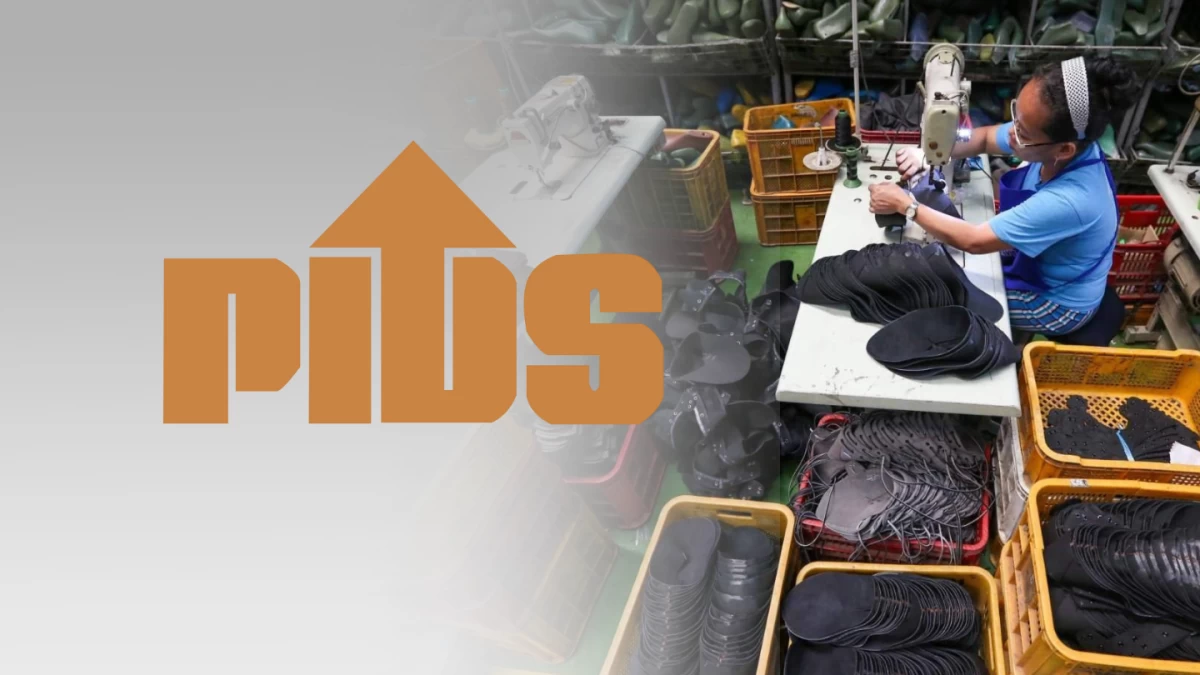
The Philippine Institute for Development Studies (PIDS) is urging lawmakers to institutionalize the Shared Service Facilities (SSF) project, warning that the program’s success depends on bridging the gap between academia and small businesses.
In a position paper released Monday, Feb. 3, the state-run think tank expressed support for seven House bills seeking to mandate the establishment of SSF-Fabrication Laboratories in higher education institutions nationwide.
However, PIDS senior research fellow Francis Mark A. Quimba noted that simply placing high-tech equipment in universities will not guarantee economic returns unless the legislation addresses the historical disconnect between schools and the private sector.
Survey data cited by the think tank revealed the stark reality for the country’s micro, small, and medium enterprises (MSMEs). Only 8.1 percent of MSMEs consider universities to be highly important sources of information for innovation, while none of the surveyed firms identified higher education institutions as their most valuable cooperation partners. In contrast, 33.7 percent of firms prioritized feedback from clients and customers.
To prevent these new fabrication laboratories from becoming underutilized academic assets, PIDS recommended that the final legislation require host institutions to establish formal industry liaison offices. These offices would serve as the primary gateway for MSMEs to access equipment and technical expertise.
The think tank also suggested that the government overhaul faculty incentive structures, arguing that promotion and tenure should reward industry collaboration and business consultation rather than focusing solely on traditional academic output.
Sustainability also remains a primary concern for the proposed rollout. While the bills—including House Bill Nos. 00457, 05695, and 06961—allocate initial funding through the Department of Trade and Industry’s budget and the General Appropriations Act, they lack a clear mechanism for long-term operations.
PIDS proposed that the implementing rules and regulations allow these laboratories to charge service fees and enter into revenue-sharing agreements. Such measures would provide the necessary capital for maintenance and incentivize faculty participation in commercializing research.
The think tank also called for a “fast-track” procurement process for the laboratories to avoid the bureaucratic delays that often hamper government technology projects.
Furthermore, PIDS emphasized that the Department of Trade and Industry must coordinate closely with the Department of Science and Technology and the Commission on Higher Education to align the facilities with regional innovation roadmaps.
By integrating joint product development into university curricula, PIDS argues the government can create an ecosystem where students solve real-world business challenges. This approach would ensure that the SSF project evolves from a mere equipment-sharing program into a sustainable driver of regional industrial growth.