







Meet the man behind the backbone of SM's turon business
Published Feb 4, 2026 01:31 pm


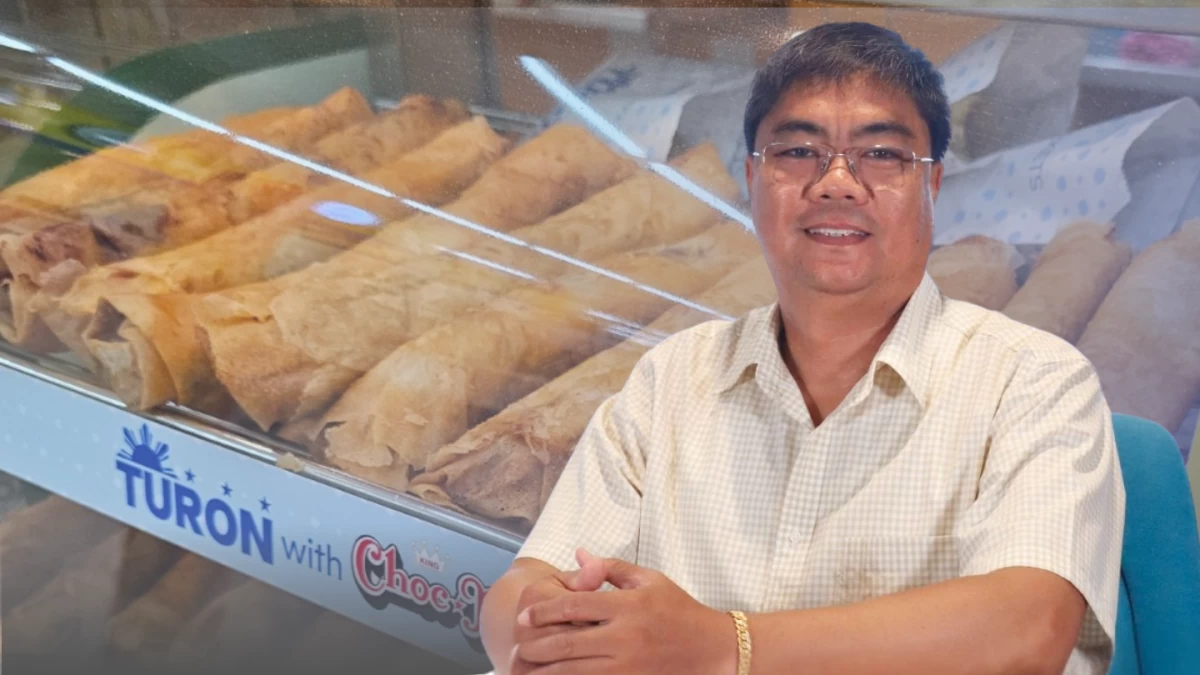
Reginal Del Rosario oversees the production of the lumpia wrappers that now supply more than 120 SM Markets across Luzon
When Reginal Del Rosario was trying to make a living selling surplus Japanese TVs out of a small shop in Bulacan, he learned a hard lesson about how fast the world moves.
When bulky tube TVs were replaced by flat screens almost overnight, his inventory became expensive paperweights. He had a family to feed and a personal mission to be the first of five siblings to build something that would last.
He realized he needed to sell something people wouldn’t stop buying, regardless of how technology changed. He eventually landed on something as humble as it is essential: the lumpia wrapper.
Today, Reginal is the engine behind the scenes for over 120 SM Markets across Luzon. If you have bought a piece of turon at a Savemore in Isabela or an SM Supermarket in Cavite, there is a very high chance the wrapper—and the banana inside it—came from Reginal’s production line. His journey from a local market stall to a regional logistics operation is a blueprint for how a small business can scale without losing its soul.
Reginal didn’t start with a boardroom presentation or a venture capital pitch. In 2012, he was running a small production space behind the Savemore in San Ildefonso. He was making cheese sticks and wrappers for the local wet market, but he noticed something interesting: the supermarket’s own employees were coming to him to buy wrappers for the snacks they prepared and sold inside the store.
He took it as a sign that his quality already met corporate standards. He didn’t wait for an official procurement officer to find him. Instead, he gave his staff a simple instruction: “Get the manager’s number.:
It wasn't an overnight success. It took years of persistence and consistent quality, but by 2017, SM’s merchandising team finally called him in for an interview.
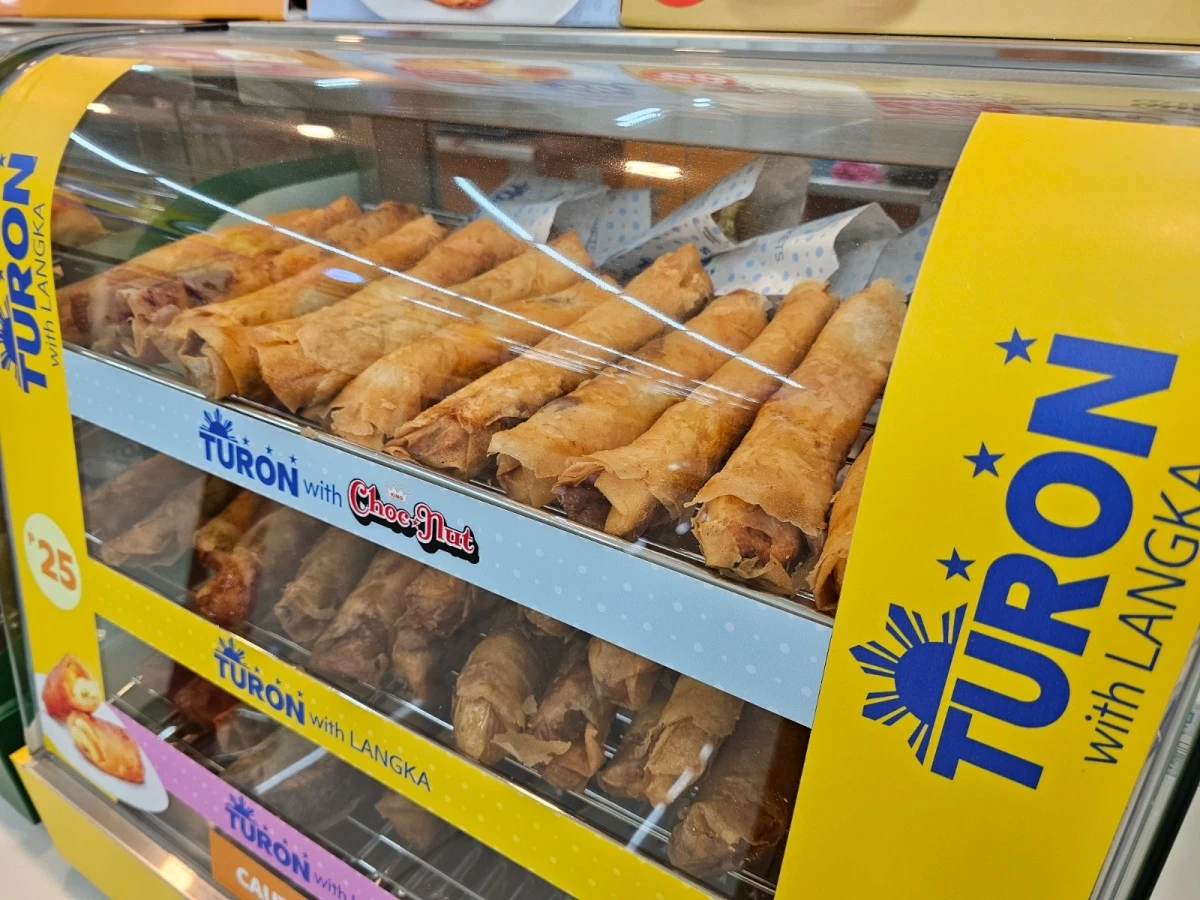
Turon favorites on display, ready for customers, supported by Reginal Del Rosario’s expanded supply to SM Markets that grew from lumpia wrappers to other SM Eats product ingredients like saba bananas, singkamas, and togue.
By February 2018, he was officially onboarded as a supplier. He started small, delivering to just 10 stores in Nueva Ecija. Back then, “logistics” meant Reginal and his wife packing their Suzuki Swift to the roof and personally driving the orders to each branch.
As the partnership grew, SM began asking for more. They didn’t just need wrappers; they needed the ingredients that went inside them. Reginal began supplying saba bananas, followed by singkamas and togue.
He quickly realized that he couldn't rely on local wet markets to fill these orders anymore. To supply dozens of supermarkets across multiple provinces, he had to control the source. This is where the business shifted from a family kitchen to a serious supply chain operation.

Reginal Del Rosario meets with his son, Jelo, who remains deeply involved and dedicated to the business, staying hands-on in sourcing and operations, including direct farm negotiations that help keep supply consistent across SM Markets stores.
Reginal and his son, Jelo, started traveling. They went as far as the mountains of Davao to talk to landowners and farmers directly. In some cases, they even helped farmers pay off mortgages on their land in exchange for a guaranteed harvest. It was a bold move for a small firm, but it meant that when other suppliers ran out of stock due to weather or seasonal shortages, Reginal’s trucks were still showing up at the loading docks.
He built his reputation on a “no-fail” mindset. If a store ran out of wrappers ahead of schedule, he didn’t wait for the next delivery window. He got in the vehicle and filled the gap himself. That reliability is what prompted SM to keep expanding his territory, eventually reaching as far north as the Cagayan Valley.
Pandemic stress test
The real test of any business is a crisis, and for Reginal, that came in 2020. As the pandemic hit and lockdowns paralyzed logistics across the Philippines, the food supply chain became a massive challenge.
Ironically, while his family’s original tailoring business—which had sustained them for years making school uniforms—was forced to shut down because schools were closed, the food business thrived. Because Reginal had spent years building direct lines to farmers, he was one of the few who could keep the supply moving through the checkpoints and travel restrictions.
Instead of laying people off, he used the business as a lifeboat. He brought in his siblings, nieces, and nephews who had lost their livelihoods elsewhere. The company grew from a small team of five to a large family operation that provided stability when everything else was falling apart.
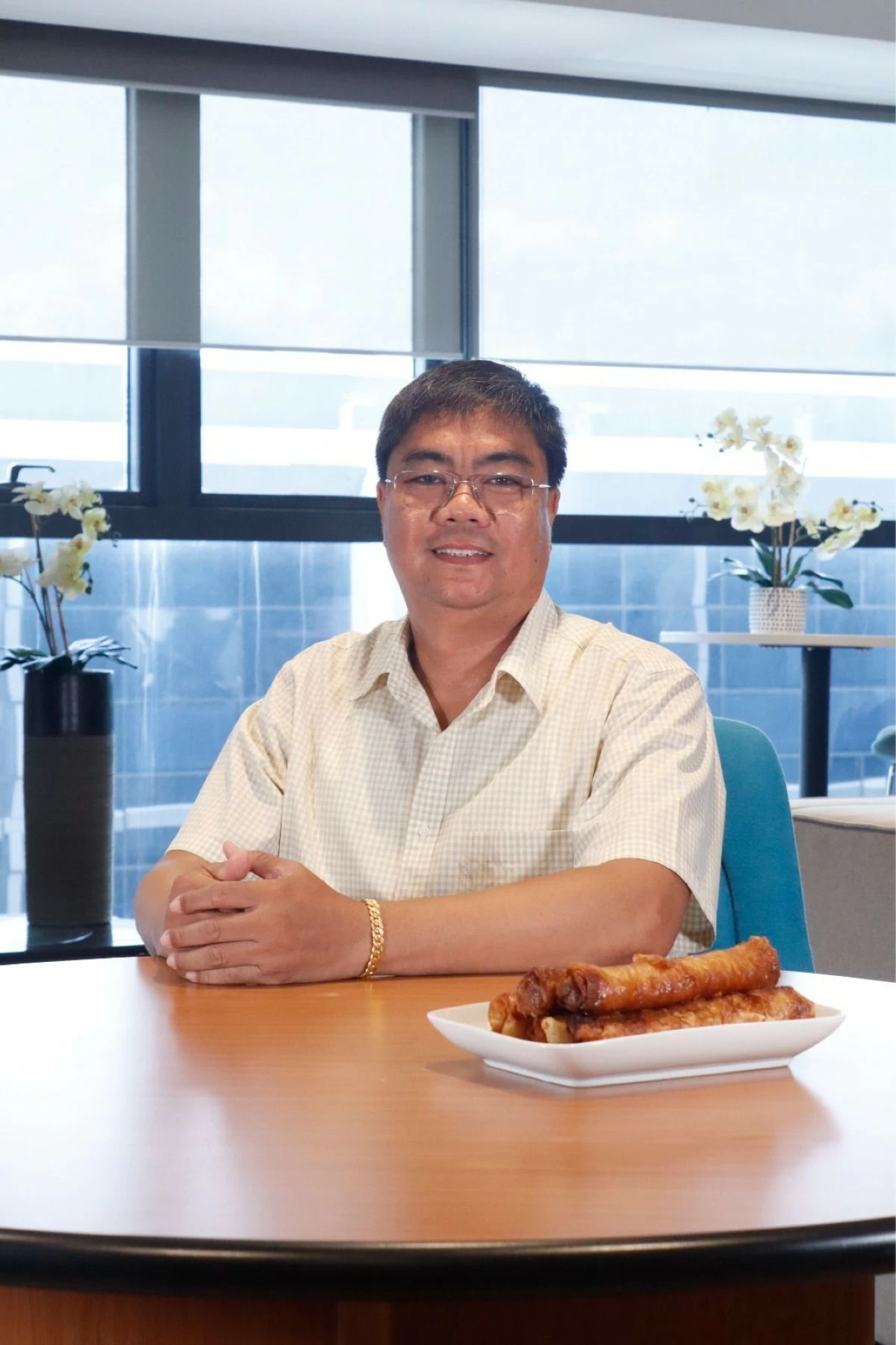
Reginal Del Rosario, officially onboarded as an SM Markets supplier on Feb. 27, 2018, whose products now reach more than 120 SM Markets branches across Luzon.
Reginal is very candid about why he succeeded where others struggled. It wasn’t just about hard work; it was about having a partner who provided a predictable environment.
“When we talk about SM, everybody listens,” Reginal says. But more importantly, the partnership provided the financial backbone he needed to grow. In the world of small business, cash flow is the difference between life and death. Because SM’s payments were consistent and timely, Reginal could stop driving the family car for deliveries and start investing in a fleet. Today, he operates ten delivery trucks.
The scale of the business has changed his life in ways he once thought were out of reach. He has gone from the uncertainty of the surplus TV trade to buying property, traveling abroad with his family, and providing free housing for his long-time employees. For him, the success isn't just about the number of stores he serves; it’s about the number of people he can take care of.
The next chapter
Today, Reginal reflects on his journey with a mix of pride and humility. He named the business after his son, Jelo, and the women who were part of his original production crew—the people who stood by him when they were still making wrappers by hand in a small room.

Reginal Del Rosario with his family, who continue to help build the business through hands-on production and delivery, even in the early years, when Reginal and his wife personally made wrappers and fulfilled orders themselves.
His son is now an integral part of the business, learning the same grit that it took to build the company from scratch. They have moved from being a local vendor to a sophisticated partner that handles complex sourcing and multi-province distribution.
For Reginal, the lesson is simple: find something people need, do it with absolute reliability, and treat your partners and employees with respect. He often says that luck only passes through a person’s life once, and when you catch it, you have to work as hard as possible to keep it.
He’s no longer just the guy selling wrappers behind a Savemore. He is a key part of how thousands of Filipinos get their daily meals, proving that with the right partner and enough dedication, a small-town dream can cover an entire island.