






Manila Bulletin
 Philippines
National
Teachers misled by unaccredited master's programs, Erwin Tulfo says
Philippines
National
Teachers misled by unaccredited master's programs, Erwin Tulfo says
Philippines
National
Teachers misled by unaccredited master's programs, Erwin Tulfo says
Teachers misled by unaccredited master's programs, Erwin Tulfo says
By Dhel Nazario
Published Feb 3, 2026 01:37 pm


At A Glance
- Teachers seeking promotion through graduate studies remain vulnerable to enrolling in unaccredited or unauthorized programs, a problem that surfaced during a Senate hearing on Tuesday, Feb. 3.
Teachers seeking promotion through graduate studies remain vulnerable to enrolling in unaccredited or unauthorized programs, a problem that surfaced during a Senate hearing on Tuesday, Feb. 3.
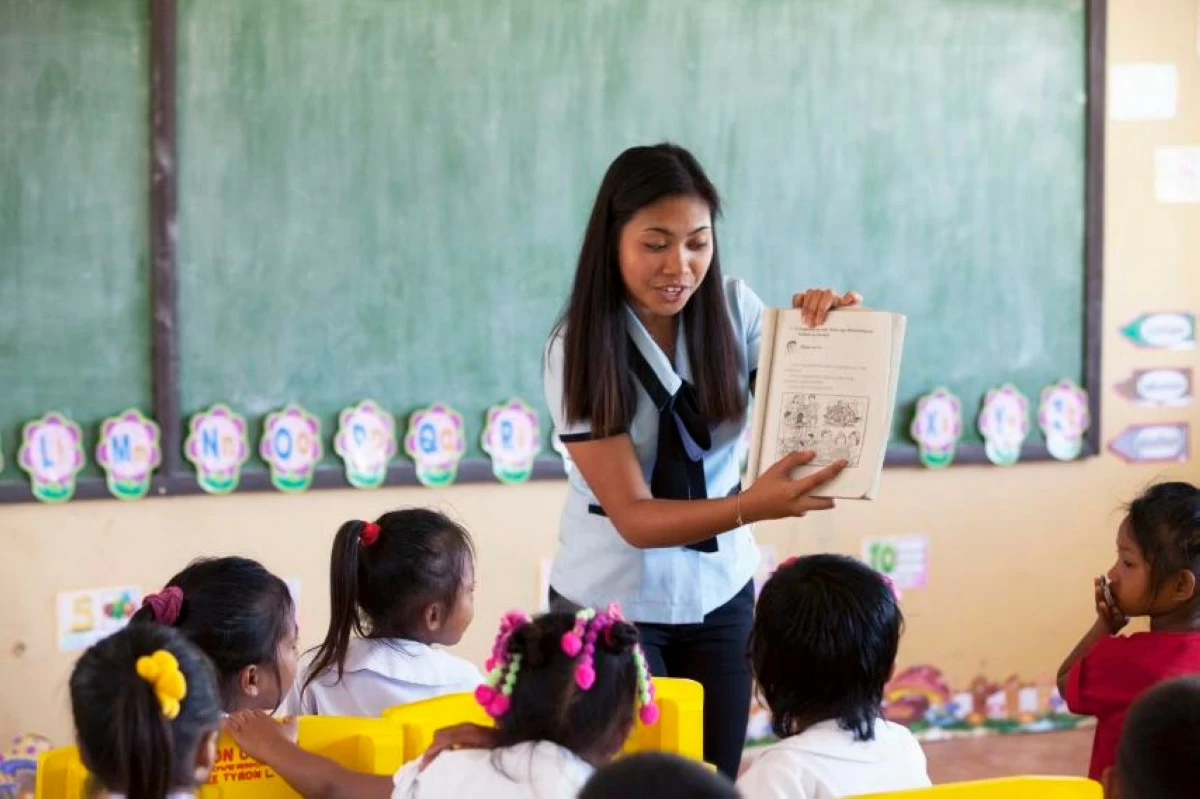
(DepEd / MB file photo)
Senator Erwin Tulfo raised the issue during the hearing of the Committee on Civil Service, Government Reorganization, and Professional Regulation, wherein he questioned safeguards to prevent teachers from being misled.
He explained that many teachers pursue master’s degrees to qualify for promotion and salary increases, investing significant time and money despite relatively modest pay. He warned that the lack of clear guidance and accessible verification mechanisms has allowed questionable programs to take advantage of teachers’ desire for career advancement.
Tulfo said teachers typically enroll in graduate programs believing these are legitimate and will be recognized by education authorities, only to later discover that their coursework does not count toward promotion. He stressed that this results in wasted resources and undermines the efforts of teachers who follow the system in good faith.
“Imagine spending thousands para iniisip ng isang teacher for promotion, advancement (Imagine spending thousands while thinking you’re doing it for your promotion and career advancement as a teacher),” Tulfo said.
As an example of the problem, Tulfo cited a case in Palawan where nearly a hundred teachers allegedly enrolled in online master’s degree courses that were later found to be unaccredited. He said the teachers paid tuition for several months and even attended a graduation ceremony, but their schooling was not recognized for promotion.
Tulfo questioned whether online graduate courses should be allowed for professional advancement or whether stricter standards—such as classroom-based instruction—should be required to prevent abuse.
He also stressed that teachers often spend between P40,000 and P50,000 on further studies, making the financial impact of unaccredited programs particularly severe. He said the issue should be closely monitored to prevent teachers across the country from being similarly affected.
Responding to the concerns, Commission on Higher Education (CHED) Senior Education Program Specialist Ericson Reyes said the Palawan case is currently under investigation and involves an illegal program offering.
Reyes said the school involved is a private institution based in the Bangsamoro Autonomous Region in Muslim Mindanao (BARMM) that offered an extension program in Palawan without authorization from the Ministry of Basic, Higher, and Technical Education.
“Based on information that we have, it’s an illegal offering at Palawan,” Reyes said. He added that the matter has been referred to CHED MIMAROPA and the Department of Education (DepEd) to determine how to address the situation and assist the affected teachers.
Tulfo pressed CHED and DepEd on whether concrete measures are already in place to prevent similar cases, stressing that teachers should not be left unprotected after investing heavily in their education.
Reyes said CHED has initiatives to ensure that all graduate-level programs are authorized and quality-assured, and that the commission is working with DepEd, the Teacher Education Council (TEC), and BARMM to strengthen oversight.
He also cited an initiative spearheaded by the Second Congressional Commission on Education (EDCOM) to develop a centralized database of authorized and recognized programs that institutions and individuals can access.
Teacher Education Council Executive Director Jennie Jocson said the issue prompted agencies to strengthen quality assurance mechanisms in teacher education.
She said the Philippine Teacher Education Registry, or PhilTER, was developed as a public platform where teachers and other stakeholders can check whether teacher education institutions and their programs have undergone quality assurance.
Jocson said data consolidation is still ongoing, but added that mechanisms are in place for users to raise concerns or seek clarification if their programs do not appear in the registry.