ADVERTISEMENT

DepEd partners with Open Ownership to boost transparency in education procurement

Published Feb 2, 2026 05:05 pm
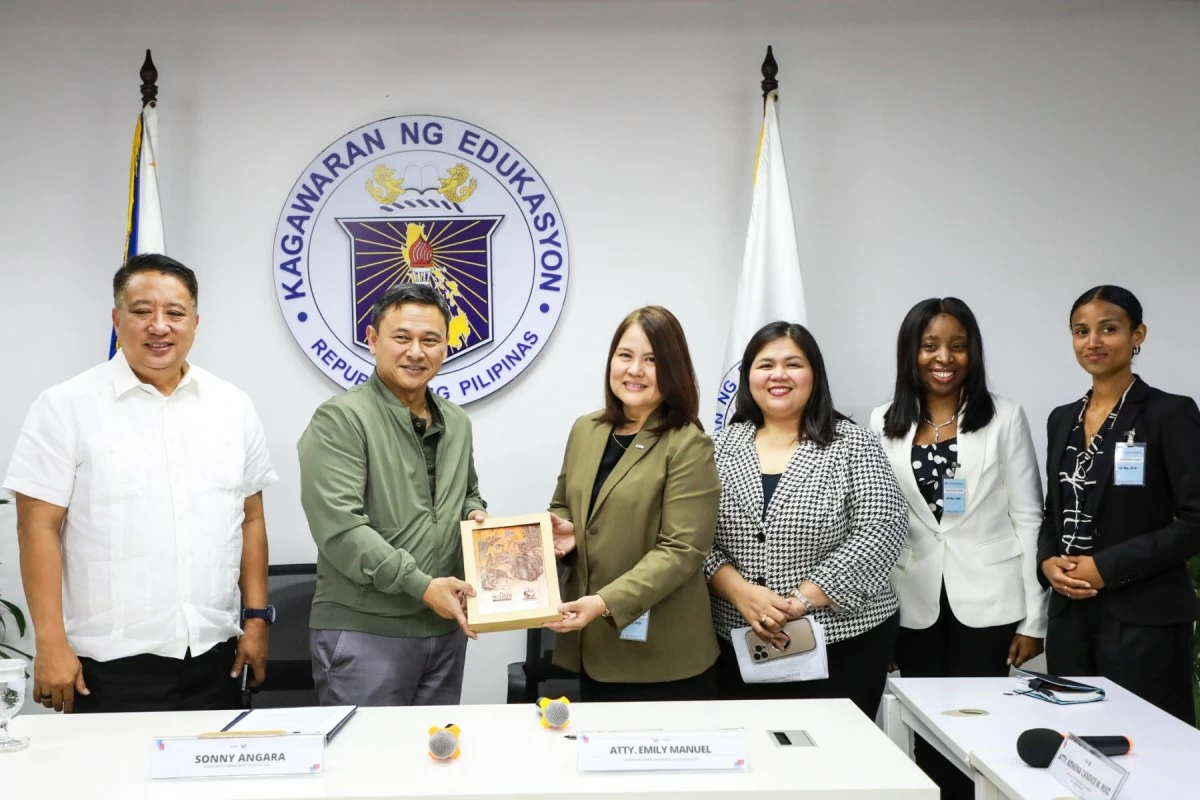
The Department of Education (DepEd) teams up with Open Ownership to strengthen transparency and integrity in education procurement, using beneficial ownership data to safeguard public funds. (DepEd photo)
The Department of Education (DepEd) on Monday, February 2, announced a major step toward improving procurement transparency by formalizing a partnership with Open Ownership.
In a statement, DepEd said the collaboration aims to strengthen integrity and risk detection in public procurement, particularly in the education sector, where government spending is substantial and geographically widespread.
Through a memorandum of agreement (MoA), DepEd will pilot the use of beneficial ownership data in the Philippines for procurement purposes.
Beneficial ownership involves identifying the natural persons who ultimately own, control, or benefit from companies participating in government contracts, going beyond the names of incorporators or official signatories, DepEd explained.
“Gusto naming malaman kung sino talaga ang nasa likod ng mga kumpanyang ka-transaksiyon ng gobyerno (We want to know who is really behind the companies transacting with the government),” DepEd Secretary Sonny Angara said.
“Kapag malinaw iyon, mas madaling maiwasan ang problema at mas mabilis na maihatid ang silid-aralan, libro, at tulong na kailangan ng mga bata (Once that is clear, it will be easier to avoid problems and faster to deliver classrooms, books, and assistance needed by the children),” he added.
“Mas siguradong sa paaralan napupunta ang pera, hindi sa bulsa ng iilan (This way, we can be more certain that the money goes to schools, not into the pockets of a few),” he said.
With a record-breaking 2026 budget, DepEd is the largest procuring agency in the country. Its procurement activities directly impact classrooms, textbooks, school facilities, and learner support nationwide.
For DepEd, ensuring the integrity of education funding is critical to making sure resources reach schools efficiently and effectively.
Under the agreement, DepEd and Open Ownership will conduct a retrospective analysis of selected procurement contracts to examine how beneficial ownership information can identify potential conflicts of interest, undisclosed related parties, bid rotation, and market concentration.
The pilot will also determine the most useful data points, the stages of procurement where they matter, and how their impact can be measured, DepEd said.
Angara emphasized that the initiative supports ongoing reforms to improve budget execution and reduce procurement risks, ensuring that public investments translate into the timely delivery of classrooms, learning materials, and services for learners.
DepEd noted that the project aligns with the New Government Procurement Act, which institutionalizes beneficial ownership transparency as a safeguard against corruption and collusion in public contracting.
Suppliers are required to disclose who ultimately controls or benefits from their companies, shifting procurement oversight from purely compliance-based to more evidence-driven systems, DepEd added.
Open Ownership, an international organization supporting governments in implementing beneficial ownership transparency, will provide technical assistance, capacity-building, and analytical tools to DepEd officials. This includes workshops and the co-development of an impact measurement framework to assess how beneficial ownership data improves procurement outcomes.
DepEd stressed that the pilot is a learning and system-strengthening exercise—not an “investigation or finding of wrongdoing.”
Results are expected to inform future policy refinements, internal controls, and procurement processes across the department.
As one of the first Philippine government agencies to systematically use beneficial ownership data in public procurement, DepEd’s initiative marks a significant step toward public procurement reform, operationalizing reforms, and advancing data-informed governance while safeguarding one of the largest portions of the national budget.

Related Tags

DepEd procurement transparency beneficial ownership Philippines education funding integrity government contract oversight public procurement reform DepEd Secretary Sonny Angara
ADVERTISEMENT
.most-popular .layout-ratio{ padding-bottom: 79.13%; } @media (min-width: 768px) and (max-width: 1024px) { .widget-title { font-size: 15px !important; } }

{{ articles_filter_1561_widget.title }}

.most-popular .layout-ratio{ padding-bottom: 79.13%; } @media (min-width: 768px) and (max-width: 1024px) { .widget-title { font-size: 15px !important; } }

{{ articles_filter_1562_widget.title }}

.most-popular .layout-ratio{ padding-bottom: 79.13%; } @media (min-width: 768px) and (max-width: 1024px) { .widget-title { font-size: 15px !important; } }

{{ articles_filter_1563_widget.title }}

{{ articles_filter_1564_widget.title }}

.mb-article-details { position: relative; } .mb-article-details .article-body-preview, .mb-article-details .article-body-summary{ font-size: 17px; line-height: 30px; font-family: "Libre Caslon Text", serif; color: #000; } .mb-article-details .article-body-preview iframe , .mb-article-details .article-body-summary iframe{ width: 100%; margin: auto; } .read-more-background { background: linear-gradient(180deg, color(display-p3 1.000 1.000 1.000 / 0) 13.75%, color(display-p3 1.000 1.000 1.000 / 0.8) 30.79%, color(display-p3 1.000 1.000 1.000) 72.5%); position: absolute; height: 200px; width: 100%; bottom: 0; display: flex; justify-content: center; align-items: center; padding: 0; } .read-more-background a{ color: #000; } .read-more-btn { padding: 17px 45px; font-family: Inter; font-weight: 700; font-size: 18px; line-height: 16px; text-align: center; vertical-align: middle; border: 1px solid black; background-color: white; } .hidden { display: none; }
function initializeAllSwipers() { // Get all hidden inputs with cms_article_id document.querySelectorAll('[id^="cms_article_id_"]').forEach(function (input) { const cmsArticleId = input.value; const articleSelector = '#article-' + cmsArticleId + ' .body_images'; const swiperElement = document.querySelector(articleSelector); if (swiperElement && !swiperElement.classList.contains('swiper-initialized')) { new Swiper(articleSelector, { loop: true, pagination: false, navigation: { nextEl: '#article-' + cmsArticleId + ' .swiper-button-next', prevEl: '#article-' + cmsArticleId + ' .swiper-button-prev', }, }); } }); } setTimeout(initializeAllSwipers, 3000); const intersectionObserver = new IntersectionObserver( (entries) => { entries.forEach((entry) => { if (entry.isIntersecting) { const newUrl = entry.target.getAttribute("data-url"); if (newUrl) { history.pushState(null, null, newUrl); let article = entry.target; // Extract metadata const author = article.querySelector('.author-section').textContent.replace('By', '').trim(); const section = article.querySelector('.section-info ').textContent.replace(' ', ' '); const title = article.querySelector('.article-title h1').textContent; // Parse URL for Chartbeat path format const parsedUrl = new URL(newUrl, window.location.origin); const cleanUrl = parsedUrl.host + parsedUrl.pathname; // Update Chartbeat configuration if (typeof window._sf_async_config !== 'undefined') { window._sf_async_config.path = cleanUrl; window._sf_async_config.sections = section; window._sf_async_config.authors = author; } // Track virtual page view with Chartbeat if (typeof pSUPERFLY !== 'undefined' && typeof pSUPERFLY.virtualPage === 'function') { try { pSUPERFLY.virtualPage({ path: cleanUrl, title: title, sections: section, authors: author }); } catch (error) { console.error('ping error', error); } } // Optional: Update document title if (title && title !== document.title) { document.title = title; } } } }); }, { threshold: 0.1 } ); function showArticleBody(button) { const article = button.closest("article"); const summary = article.querySelector(".article-body-summary"); const body = article.querySelector(".article-body-preview"); const readMoreSection = article.querySelector(".read-more-background"); // Hide summary and read-more section summary.style.display = "none"; readMoreSection.style.display = "none"; // Show the full article body body.classList.remove("hidden"); } document.addEventListener("DOMContentLoaded", () => { let loadCount = 0; // Track how many times articles are loaded const offset = [1, 2, 3, 4, 5, 6, 7, 8, 9, 10]; // Offset values const currentUrl = window.location.pathname.substring(1); let isLoading = false; // Prevent multiple calls if (!currentUrl) { console.log("Current URL is invalid."); return; } const sentinel = document.getElementById("load-more-sentinel"); if (!sentinel) { console.log("Sentinel element not found."); return; } function isSentinelVisible() { const rect = sentinel.getBoundingClientRect(); return ( rect.top < window.innerHeight && rect.bottom >= 0 ); } function onScroll() { if (isLoading) return; if (isSentinelVisible()) { if (loadCount >= offset.length) { console.log("Maximum load attempts reached."); window.removeEventListener("scroll", onScroll); return; } isLoading = true; const currentOffset = offset[loadCount]; window.loadMoreItems().then(() => { let article = document.querySelector('#widget_1690 > div:nth-last-of-type(2) article'); intersectionObserver.observe(article) loadCount++; }).catch(error => { console.error("Error loading more items:", error); }).finally(() => { isLoading = false; }); } } window.addEventListener("scroll", onScroll); });

Sign up by email to receive news.