






 Business
Trade & Industry
Philippines defends rank as world's #2 pineapple exporter thanks to China
Business
Trade & Industry
Philippines defends rank as world's #2 pineapple exporter thanks to China
Philippines defends rank as world's #2 pineapple exporter thanks to China


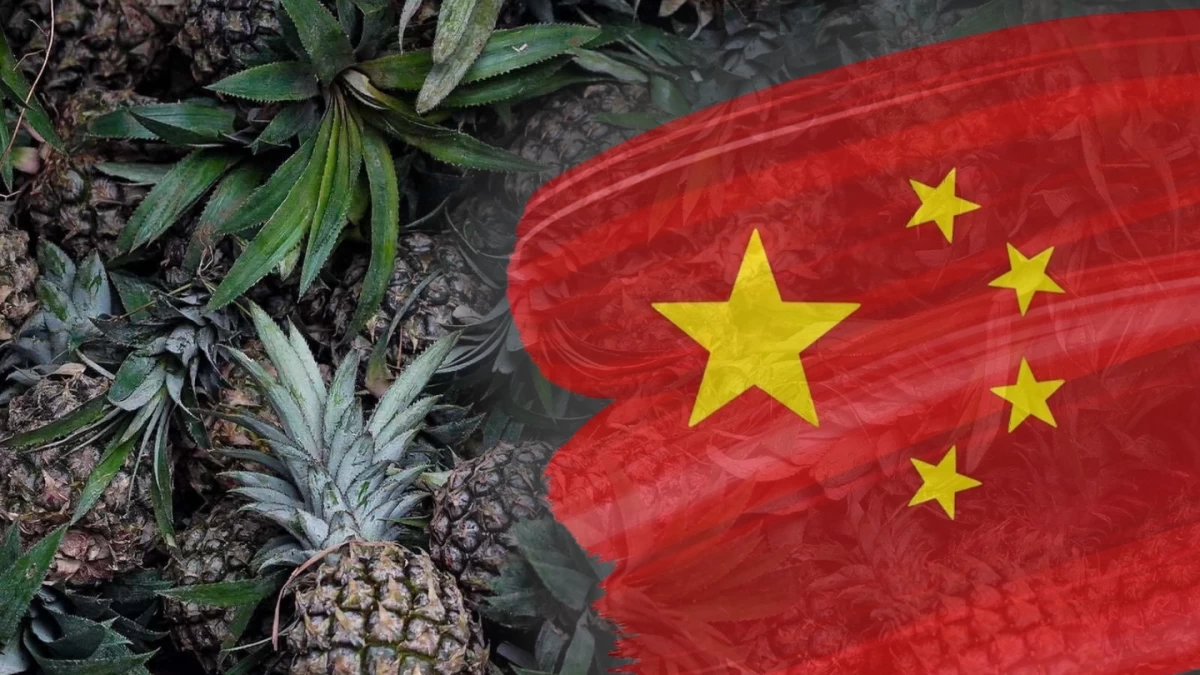
The Philippines retained its ranking as the world’s second-largest exporter of pineapples in 2025, as increased demand from China led to double-digit growth in outbound shipments, according to the Food and Agriculture Organization (FAO).
In a preliminary report, FAO estimated that the Philippines’ pineapple exports may have reached 775,028 metric tons (MT) last year, nearly 14 percent higher than the 682,383 MT recorded in 2024.
The anticipated increase in 2025 was based on trade data for the nine months through September, which showed pineapple shipments to China growing by 19 percent compared with the prior year.
China, the leading destination for Philippine pineapples, is on an upward trajectory in its imports as consumers show greater interest in and willingness to spend on premium imported tropical fruits.
In particular, FAO said there is strong demand for the MD2 variety, which is commonly grown in highland areas of Mindanao.
“Growth in exports to China was boosted by a weather-related decline in Chinese domestic production, which resulted in lower yields and poorer quality,” FAO said.
The Philippines also saw sustained demand from Japan and South Korea, which accounted for around 36 percent and 13 percent of pineapple shipments, respectively.
FAO estimated that exports to Japan are on track to grow by 27 percent year-on-year, based on preliminary data.
The United Nations (UN) agency said the average export unit value of Philippine pineapples over the first nine months of 2025 rose by six percent to $668 per MT.
Despite stronger demand abroad, local production remained robust on the back of improving yields in key production areas and favorable weather conditions.
The government also made substantial investments to help pineapple producers boost output through the provision of fertilizers, packaging materials, and pest management training, FAO said.
Globally, pineapple exports are expected to decline by five percent to 3.38 million MT in 2025 from 3.56 million MT in the previous year.
The Central American country was unable to keep up with demand last year as adverse weather conditions caused planting delays, plant stress, and higher incidences of pest infestations.
Meanwhile, FAO estimated that global pineapple imports inched up to 3.17 million MT last year from 3.1 million MT a year earlier.
The United States (US), the European Union (EU), and China are expected to be the three leading importers of the fruit for the year.