






 Business
The Economy
Philippine manufacturing growth climbs to 9-month high in January, but business confidence sinks
Business
The Economy
Philippine manufacturing growth climbs to 9-month high in January, but business confidence sinks
Philippine manufacturing growth climbs to 9-month high in January, but business confidence sinks


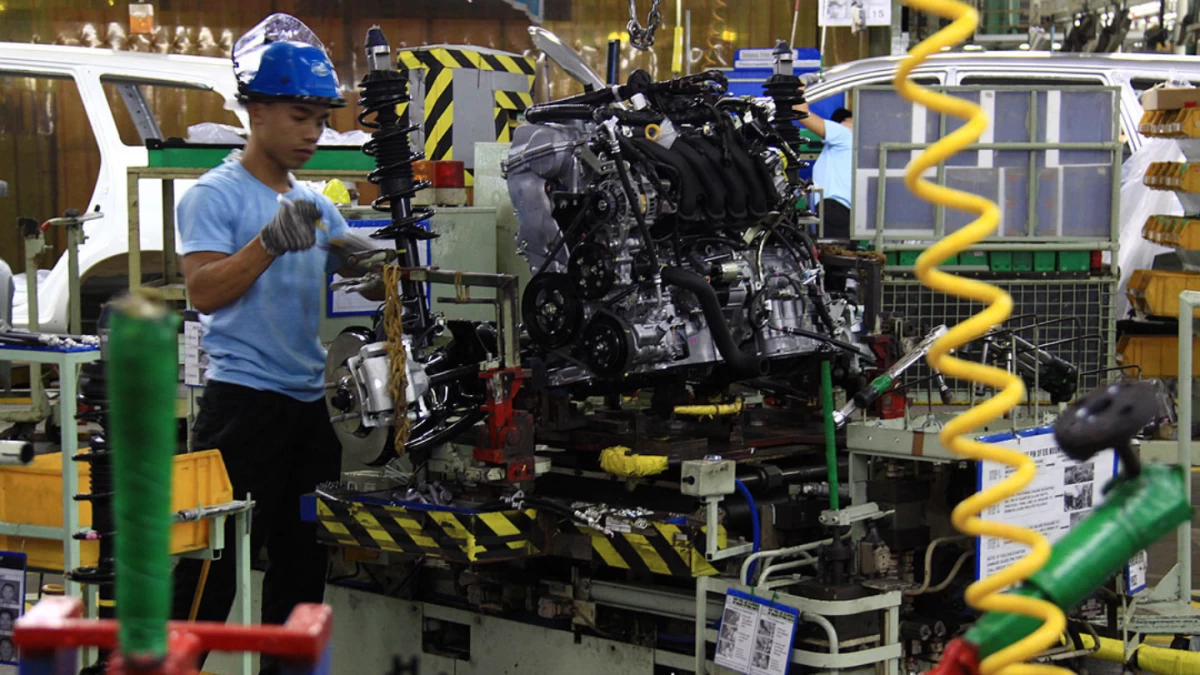
After sluggish 4.4-percent full-year economic growth in 2025—the slowest since the Covid-19 pandemic and weighed down by stalled infrastructure spending linked to the flood-control corruption scandal—the manufacturing sector showed early signs of recovery, posting a nine-month-high growth pace in January.
S&P Global Market Intelligence reported on Monday, Feb. 2, that the Philippines’ manufacturing purchasing managers’ index (PMI) rose to 52.9 in the first month of 2026, up from 50.2 in December last year. A score below 50 signals contraction, while a reading above 50 indicates expansion.
S&P Global said new orders increased at a faster pace, signaling a strong pickup in demand, which in turn drove a renewed rise in production. Output expanded for the first time in five months, broadly matching the growth seen in new orders.
Despite the uptick, S&P Global noted that confidence in the year-ahead outlook deteriorated sharply, marking the second-weakest reading on record since the series began in January 2016, surpassed only by the level seen in March 2020, at the onset of the most stringent Covid-19 lockdowns.
“January’s survey showed a loss in business confidence toward future output,” S&P Global said. “While overall positive sentiment was led by hopes that demand conditions will improve, expectations were dampened by headwinds from economic uncertainty in key export markets.”
The research firm added that the expansion reading signals a broad improvement in operating conditions in the Philippine manufacturing sector.
“A renewed and strong uptick in output and faster growth in new orders contributed positively to the increase in the headline figure,” S&P Global said, noting that stronger demand supported new sales and a renewed rise in production.
“Growth in overall new orders was aided by a fresh rise in new factory orders received from abroad. The rate of expansion was modest but marked the first month of expansion since last September,” S&P Global added.
The report also highlighted that higher production led to renewed job growth—the fastest since June last year—and helped manufacturers slightly reduce backlogs, marking the first contraction in three months.
S&P Global noted that rising production requirements prompted Philippine goods producers to boost purchasing activity in January, with the pace of growth the fastest in 12 months. Firms also favored stockbuilding during the month, with input inventories rising for the first time in three months, while post-production inventories increased for the second consecutive month.
S&P Global added that input costs and prices for Philippine manufactured goods rose slightly last month, with both increases remaining below long-term averages.
“January data indicated continued pressure on supply chains as manufacturing companies in the Philippines reported longer lead times for inputs. The extent to which delivery times lengthened was more pronounced than seen in December,” S&P Global said.
“After a prolonged period of subdued growth in the second half of 2025, the first PMI data release for 2026 points to a marked shift in momentum,” said S&P Global economist Maryam Baluch. “New orders registered a strong and accelerated uptick, supported in part by a renewed rise in export demand. As a result, production returned to expansion territory for the first time in five months.”
“Firms responded by stepping up their purchasing activity and increasing their staffing levels in January. The price picture was also subdued, thereby offering continued relief to manufacturers,” Baluch added.
Baluch cautioned, however, that January data pointed to a worrying decline in business confidence. “Overall sentiment slipped to the second-weakest level on record, surpassed only by that seen at the onset of the Covid-19 pandemic. This hesitancy reflects lingering concerns regarding export demand and the sustainability of the latest improvement.”