






 Business
Trade & Industry
Philippines reclaims spot as world's 2nd largest banana exporter
Business
Trade & Industry
Philippines reclaims spot as world's 2nd largest banana exporter
Philippines reclaims spot as world's 2nd largest banana exporter


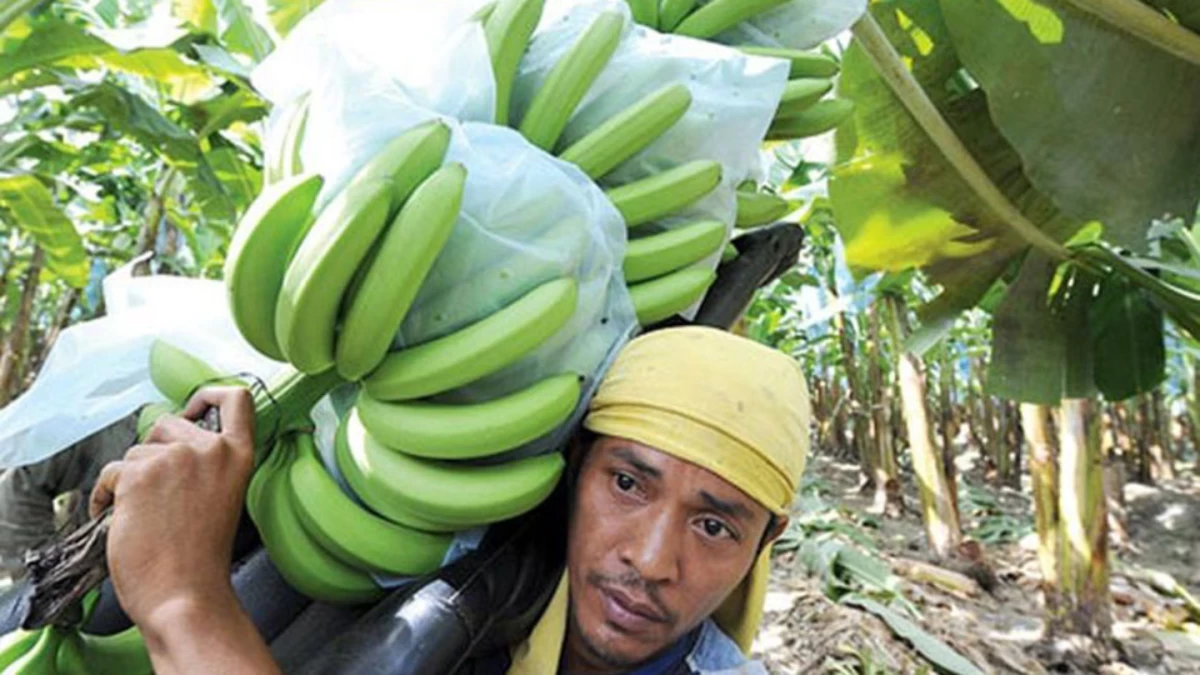
The Philippines regained its position as the second largest exporter of bananas in the world last year after overcoming setbacks from pests and adverse weather conditions, according to the Food and Agriculture Organization (FAO).
In its preliminary report on the global banana market, the FAO said the country regained its long-standing rank after slipping to third place in 2023, when it was overtaken by Guatemala, with Costa Rica taking second place the following year.
Based on FAO data, the Philippines shipped out 2.93 million metric tons (MT) of bananas last year, nearly 26 percent higher than the 2.33 million MT recorded in 2024.
The country’s export figure last year was up 49.5 percent from Costa Rica’s shipments of 1.96 million MT, and 34 percent higher than the 2.18 million MT in exports by Guatemala.
Last year, Ecuador remained the world’s top banana exporter with a total volume of 6.41 million MT. Colombia ranked second with exports reaching 2.48 million MT.
Meanwhile, the Philippines once again led Asia in banana shipments, accounting for more than half of the continent's total exports of 5.19 million MT.
The FAO attributed the rebound in the country’s exports last year to the recovery in banana production from the impact of plant diseases and weather disturbances over the past two years.
The foreign agency previously reported that the country has been struggling to control the spread of Banana Fusarium Wilt Tropical Race 4 (TR4), a soil-borne fungus that affects banana growth.
Banana plantations are also affected by occasional flooding, which leads to crop losses, higher recovery costs, and reduced export volumes.
Citing industry sources, the FAO said the Department of Agriculture (DA) poured in “substantial investments” to make the country’s banana sector more resilient to these threats.
For one, the FAO noted strong initiatives to expand production in Cagayan Valley, one of the country's top banana-producing regions, through the provision of organic fertilizer and other inputs.
Agriculture Secretary Francisco Tiu Laurel earlier said the DA will invest more in research, particularly in disease tolerance, breeding strategies, and new technologies to secure the industry’s long-term viability.
In addition, he also committed to advocating for fairer trade terms with export partners to further expand the country’s banana shipments.
The Philippines is particularly keen to maintain its market share in Japan, which accounts for roughly 75-80 percent of its import demand.
The FAO said Vietnam, which shipped 500,000 MT of bananas last year, is now an emerging exporter of bananas to Japan.
Starting in 2028, Vietnam will further expand its presence in the Japanese market, as it will be able to export bananas tariff-free, owing to both countries’ membership in the Comprehensive and Progressive Agreement for Trans-Pacific Partnership (CPTPP).
The Philippines applied to join the CPTPP in August last year, with the aim of securing preferential tariff treatment.
The country could lose its market dominance as Japan imposes higher tariffs on its banana exports, with an 18 percent tariff applied to shipments from April to September and an 8 percent tariff from October to March.
As a temporary measure, Tiu Laurel said last week that he will negotiate to lower the duties to between five and eight percent.
Through these efforts, the Philippines hopes to avoid another loss of market share to Vietnam, after being displaced as the top banana supplier to China.