






Manila Bulletin
 Philippines
National
'Mahiya naman kayo!': DILG orders removal of names, photos of politicians from gov't-funded projects
Philippines
National
'Mahiya naman kayo!': DILG orders removal of names, photos of politicians from gov't-funded projects
Philippines
National
'Mahiya naman kayo!': DILG orders removal of names, photos of politicians from gov't-funded projects
'Mahiya naman kayo!': DILG orders removal of names, photos of politicians from gov't-funded projects
By Chito Chavez
Published Jan 31, 2026 01:57 pm


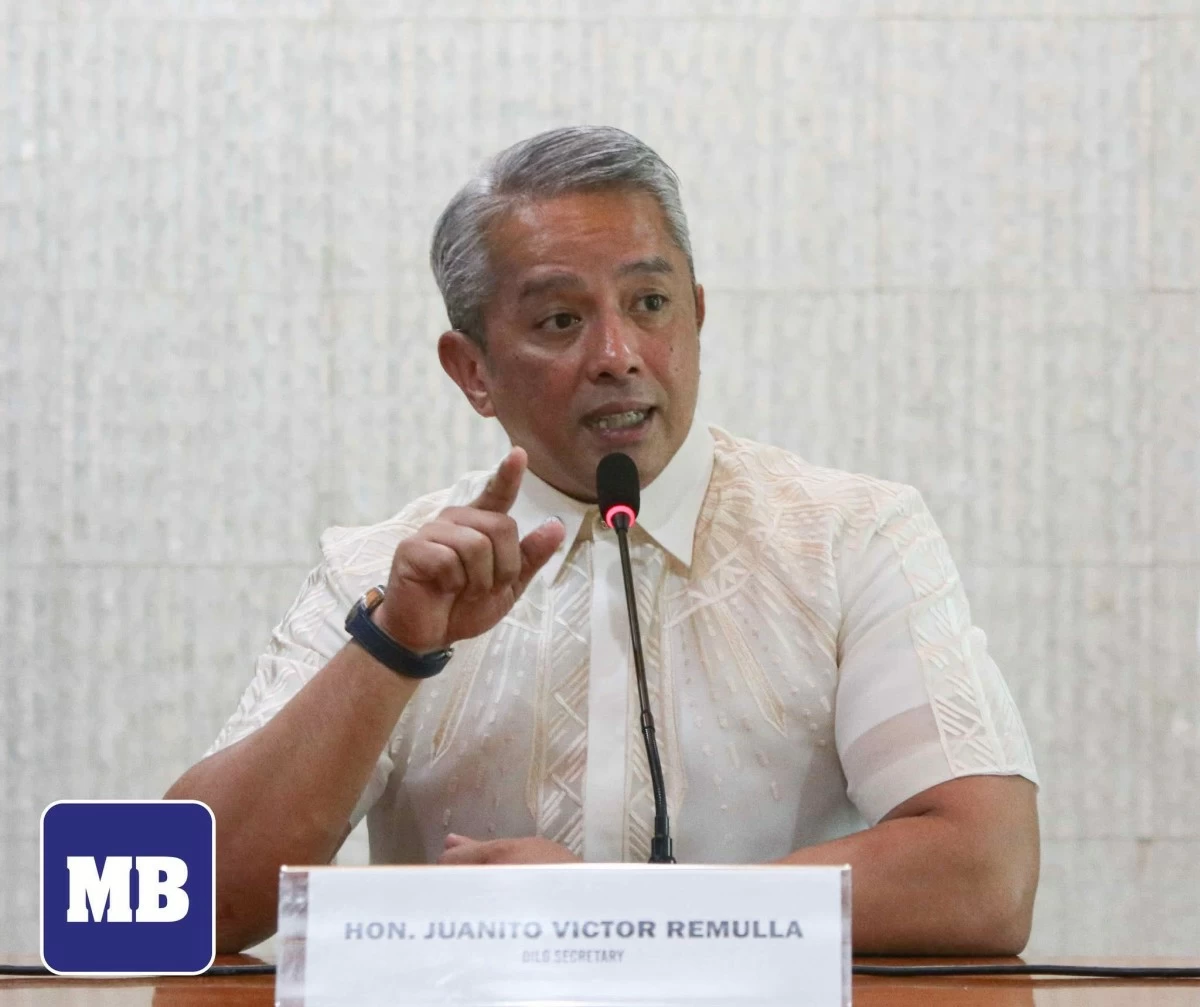
DILG Secretary Jonvic Remulla (Manila Bulletin)
The Department of the Interior and Local Government (DILG) ordered on Saturday, Jan. 31, all its regional officials to ensure that all local government units (LGUs) will strictly observe the provisions of the government’s "Anti-Epal' policy.
This means that DILG local officials will take the lead in immediately removing the names, images, of public officials from all government funded projects, programs, activities and properties.
“Epal’’ is a Filipino term used to describe attention-seekers, credit-grabbers or scene-stealers, who crave recognition and often insert themselves into situations to gain attention or glorification, synonymous with government officials who inappropriately attach their names to publicly funded projects.
DILG Secretary Juanito Victor “Jonvic’’ Remulla stressed that government projects are paid for by the people and must never be used for personal promotion, "These are funded by taxpayers and must reflect public service, not political credit grabbing."
Under DILG Memorandum Circular No. 2026-006, all provincial, city, municipal, and barangay officials, including DILG central, regional, and field offices and attached agencies, are required to ensure that no public official’s name, photo, logo, initials, color motif, slogan, or any identifying symbol appears on project signages, markers, tarpaulins, and similar materials funded by public money.
The circular cites the 1987 Constitution’s principle that public office is a public trust, the Code of Conduct and Ethical Standards for Public Officials and Employees, and Commission on Audit rules that classify such personalized displays as unnecessary expenses. It is further reinforced by the 2026 General Appropriations Act which explicitly prohibits attaching officials’ names and images to government funded projects.“Government programs are not personal billboards.
“All concerned officials and employees are directed to cause the immediate removal and correction of non-compliant materials,’’ Remulla said.
Remulla warned that heads of offices are accountable for full and prompt compliance, as well as for cascading the directive to all units under their supervision.
Previously, Remulla called on the public to file “epal’’ charges against rogue local and barangay officials using government funds to project reputable images and other similar personal gains, as he emphasized that “epal’’ charges against local officials down to the barangay constitute administrative cases and preventive suspension that must be filed in the proper forum.
He noted that the filing of complaints against erring “epal’’ elected and appointed officials of the barangays should be filed in the proper forum as prescribed by Republic Act 7160 or “The Local Government Code (LGC) of 1991, instituting the protocol in filing complaints for all local government officials, including barangay leaders.
DILG National Barangay Operations Office (NBOO) Director Dennis Villaseñor explained that for elected barangay officials, like punong barangay, sangguniang barangay members and sangguniang kabataan chair persons, residents are welcome to file their complaints in higher level of governance within the locality.
"Section 61 (c) of the code states that a complaint against any elective barangay official shall be filed before the sangguniang panlungsod or sangguniang bayan concerned. It also underscored that the decision on the complaint shall be final and executory,’’ the DILG said.
Further, the DILG emphasized that the code also states that if the evidence of guilt is strong, a single preventive suspension can be imposed against the barangay official which can be extended to 60 days.
Likewise, Villasenor said that possible complaints against barangay officials may be lodged in the Office of the Ombudsman.“
However, Villasenor emphasized that complaints against barangay officials must not be filed in both the higher sanggunian and the Office of the Ombudsman, as this may result in the dismissal of the complaint, "Kung nai-file ninyo po sa parehong forum, sa aming pananaw, baka madi-dismiss lang po iyan dahil magiging ‘forum ‘shopping (If you had filed the complaints in both fora, I believe that the case may be dismissed since this will constitute forum shopping)."