






Manila Bulletin
 Business
The Stock Market
High-rollers face more than just visa hurdles in Philippines
Business
The Stock Market
High-rollers face more than just visa hurdles in Philippines
Business
The Stock Market
High-rollers face more than just visa hurdles in Philippines
High-rollers face more than just visa hurdles in Philippines
Beyond airport gates:
Published Jan 31, 2026 08:24 am


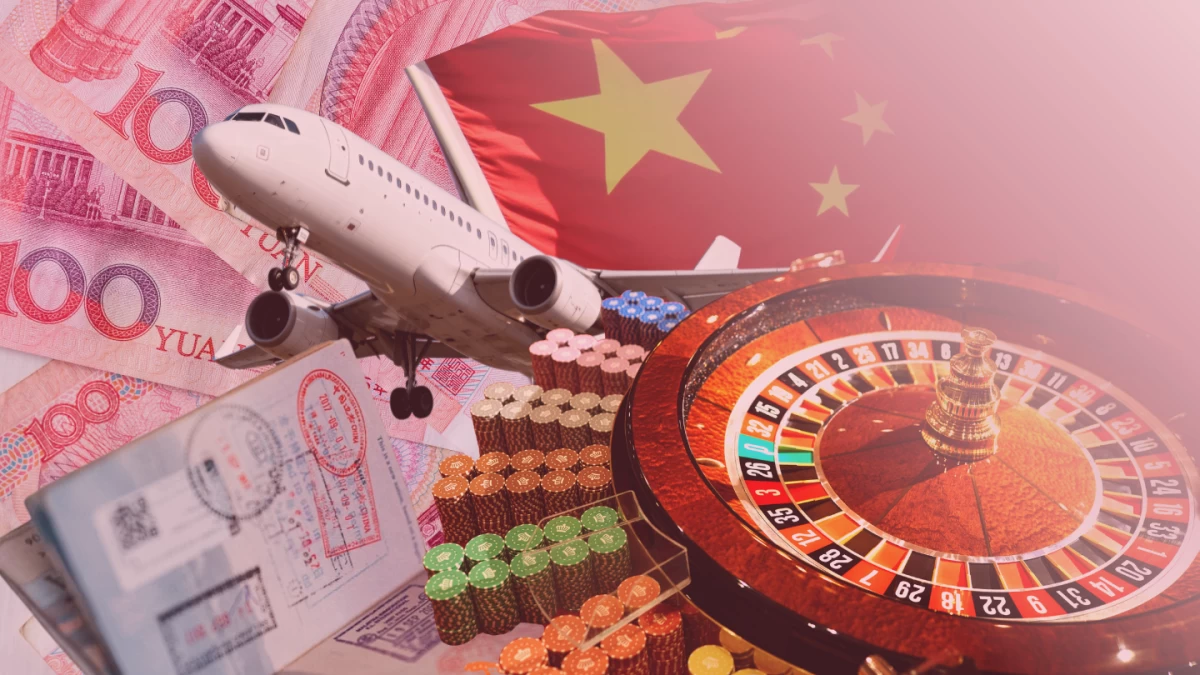
Analysts warn that while visa waivers have boosted local stocks, geopolitical tensions and tighter capital controls remain major “landmines” for the Philippines’ integrated resort industry.
The Philippines is rolling the dice on a sweeping visa waiver for Chinese nationals, a move designed to revive its gaming and tourism ecosystem, which has remained stuck in a post-pandemic slump.
While the policy shift triggered an immediate, optimistic spike in local equities, the path to a full-scale recovery for integrated resorts is cluttered with geopolitical landmines, tightening capital controls, and a regional landscape that has grown significantly more competitive since 2019.
For years, the gaming floors of Entertainment City in Parañaque—the country’s answer to Macau’s Cotai Strip—were fueled by steady stream of high-rollers from the mainland. But as the Bureau of Immigration moves to dismantle entry barriers, the industry faces a troubling question: Is the “missing” Chinese tourist stayed away because of red tape, or has the market fundamentally moved on?
In 2019, China was the country’s fastest-growing source of visitors, accounting for 1.7 million arrivals—roughly 20 percent of the total market. Today, that figure has declined to less than 300,000, leaving substantial gap in the balance sheets of hotel operators and casino giants alike.
“The Chinese market is a major driver of casinos’ VIP revenues, which have been very weak since the second half of 2023,” said April Lynn Tan, Chief Equity Strategist at COL Financial Group Inc.
Tan noted that the absence of these players cannot be easily offset by other nationalities. “Chinese tourist growth before the pandemic was around 30 percent annually. It is so hard to find offsets from other countries.”
The dependence on this single demographic has left local integrated resorts (IRs) vulnerable. While domestic mass-market gaming has shown resilience, the high-margin VIP segment—where single bets can exceed a middle-wage earner’s annual salary—requires the “fly-in” player. Richard Laneda, Senior Research Manager at COL, noted that this segment has “basically vanished” because visa restrictions and tighter fund-transfer controls have made the Philippines an arduous destination for the Chinese elite.
Market sprints, then pauses
The announcement last Jan. 15 of the visa waiver acted as temporary adrenaline shot for the Philippine Stock Exchange (PSE). Razon-led Bloomberry Resorts Corp., which operates the flagship Solaire Resort Entertainment City, saw its shares climb 8.5 percent. Investors initially cheered the news as the long-awaited catalyst to revive the VIP segment.
However, analysts are also urging a “sell on strength" approach as Nicky Franco, Vice President and Head of Research at Abacus Securities Corp., remains decidedly cautious due to mixed track record for similar policies across Asia.
“It remains to be seen,” Franco noted. “Singapore and Malaysia saw a surge in Chinese tourists after waiving visas. But Thailand saw a drop even after doing the same. Japan saw a 30 percent drop in Chinese arrivals last year, which was attributed to friction between the two countries.”
Franco argues that the “new normal” for the industry might be far less glamorous than the 2018-2019 peak. With the Marcos government’s crackdown and total ban on Philippine offshore gaming operations (POGOs)—an industry largely run by and for Chinese nationals—the ecosystem that once supported the massive influx of mainlanders has been dismantled.
“It is highly unlikely that we would ever see these numbers back to 2019 levels given current tensions and the POGO ban,” he added.
Beyond the logistics of visas, the Philippines is also fighting an uphill battle for “wallet share.” Regional neighbors are not just competing for the same tourists; they are offering more stable diplomatic environments.
Ongoing territorial disputes in the West Philippine Sea have also cooled sentiment toward travel in Beijing, a factor that no amount of eased immigration policy can fully resolve.
Furthermore, moving money out of China has become a high-wire act amid Beijing’s relentless crackdown on cross-border gambling, and capital flight remains primary deterrent. Even if a player can enter the Philippines without a visa, they still face the challenge of accessing the liquidity required for high-stakes play.
“Moving funds between China and the Philippines is still difficult,” Laneda noted. “Therefore, there are still risks on the recovery.”
Infra of rebound
For the recovery to take hold, the “soft” policy of visa waivers must be met by “hard” infrastructure: flights. The aviation sector, led by Gokongwei group’s Cebu Air Inc., is watching the data closely.
“Finally, it puts us at par with our Southeast Asian neighbors,” said Xander Lao, President of Cebu Air.
While Lao admitted that overall bookings haven’t shifted in the days immediately following the announcement, the airline is ready to pivot. “If we see a build-up in traffic, we have the capacity to add flights. China was a key market back in 2019, and that’s something we would love to re-establish.”
The resumption of high-frequency flights between Manila and major Chinese cities is the essential “plumbing” for a tourism revival. Without it, the visa waiver remains theoretical rather than practical.
While the focus is often on the baccarat tables, the ripple effects of Chinese return would be felt across the broader economy. Jonathan Ravelas, Senior Adviser at Reyes, Tacandong & Co., views the move as timely boost for the entire hospitality sector.
“Chinese travelers have always been among the highest-spending visitors,” Ravelas said. “Making it easier for them to return should lift gaming floors, hotel occupancy, and resort revenues. It won’t solve everything overnight, but it reopens a critical pipeline of demand.”
Japhet Tantiangco, Research Manager at Philstocks Financial, echoed this sentiment, noting that the synergy between tourism and gaming is inseparable.
“The entry of more Chinese tourists under visa-free benefits may lead to more gaming activities, which in turn helps the gaming sector,” he said.
Verdict: Necessary but insufficient step
As the Philippines’ skyline continues to fill with ambitious new resort projects, the reliance on the Chinese gambler remains the industry’s greatest paradox. To thrive, these resorts need the scale that only China can provide; yet relying on that market is to be at the mercy of Beijing’s policy whims and bilateral temperature checks.
Juan Paolo Colet, Managing Director at Chinabank Capital Corp., sums up the prevailing sentiment of “guarded optimism.”
“We have to wait and see how robust the tourism rebound will be and whether that will translate into significant revenues,” Colet said. “If these two align, then that could be the catalyst for a strong recovery. But for now, we wait.”
For the Philippines, the visa waiver signals that the country is open for business. Whether the high-rollers will choose to answer that call—or whether they will take their business to the increasingly attractive floors of Singapore or the upcoming developments in Japan—remains the billion-dollar question hanging over Entertainment City.