

ADVERTISEMENT

Meg Fernandez on how Manila Bulletin affected her: 'It boosted my confidence'

Published Jan 30, 2026 08:17 pm
If you ever tried Googling who the first Filipina was to open for Taylor Swift, there was a good chance the internet confidently gave you the wrong answer. For a while, search results pointed to alt-rock artist beabadoobee, which sounds plausible enough if you don’t look too closely at the timeline.

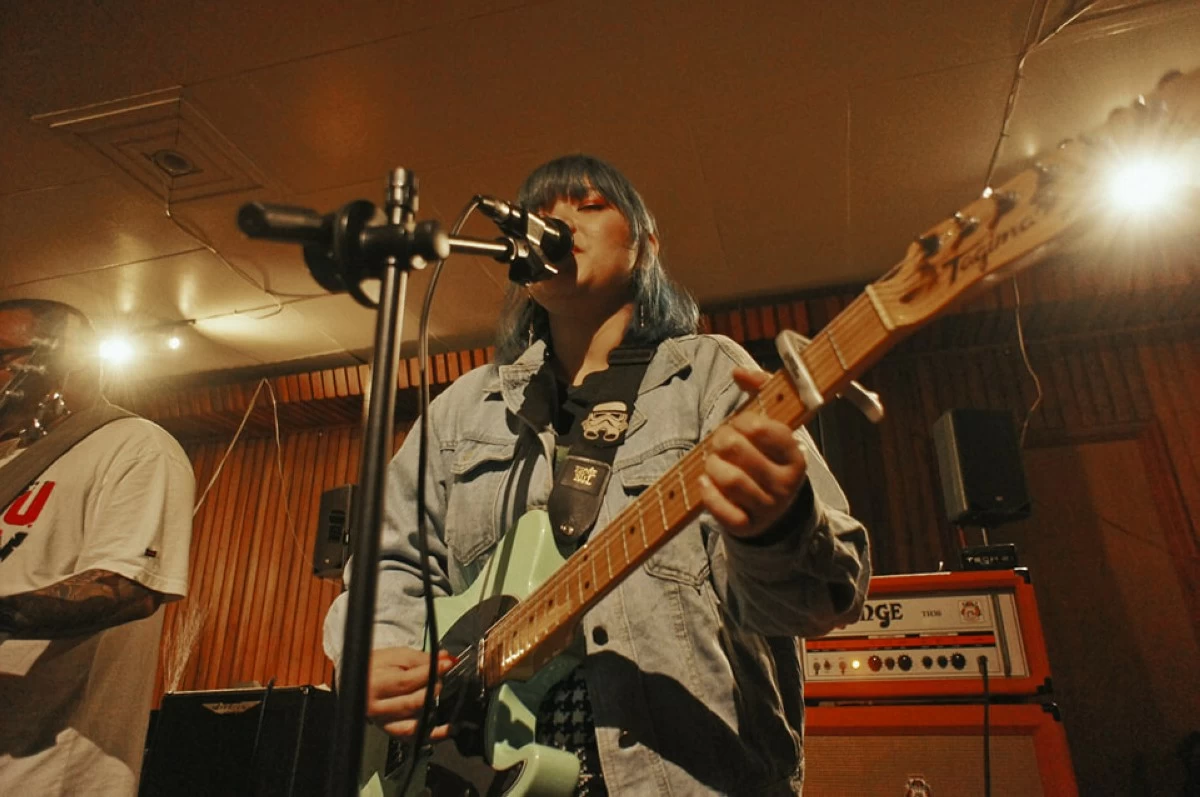
Meg Fernandez (Facebook)
The actual answer is much simpler, more specific, and very Filipino: 22-year-old Meg Fernandez opened for Taylor Swift during The Red Tour in Manila on June 6, 2014, at the Mall of Asia Arena.
Meg didn’t just randomly end up on that stage; she earned the slot by winning the Selecta Cornetto Ride to Fame contest. At the time, it was a massive deal; a young local artist performing in front of a sold-out arena, ahead of one of the biggest pop stars on the planet, who turns out would only get bigger from 2014. It was the kind of moment people assume would be permanently etched into pop history. Unfortunately, the Internet may have had other plans.
As the years passed and beabadoobee’s international career took off, the online narrative got…sloppy. Algorithms did what algorithms do, context vanished, and suddenly Meg’s very real achievement became a trivia footnote that barely showed up at all.
Instead of quietly accepting that digital shrug, Meg spoke up. She didn’t frame it as a rivalry or a callout; she just asked if the facts could be presented correctly. And in a genuinely rare internet win, that’s exactly what happened.
A content producer from Manila Bulletin published a piece in their Entertainment section, laying out the timeline and setting the record straight. The article picked up traction quickly, went semi-viral, and suddenly people were talking not just about Meg Fernandez, but also about how easily local history could be erased online.
The ripple effect was immediate. Search results were updated. The narrative shifted. And just like that, reality caught up with the algorithm.
Mich Bringas (Facebook)
As Manila Bulletin marks its 126th anniversary, the same writer checked back in with now 34-year-old Meg to ask how that article and the correction actually affected her life as an artist.
Her answer was refreshingly honest and very human: “The article helped me with bookings ganyan… mas dumami siya ngayon, and mas mastablish ko yung image ko as an artist kasi pag whenever I say that I was the first Filipina to open for Taylor Swift, they’re like really impressed with it, like, wow, really ganyan ganyan, and also it helped clarify kasi if you Google it at first it would say beabadoobee right, so yun din na clear lang mas factual na yung masearch mo sa google and it helped me… it boosted my confidence…”
(The article really helped me with bookings and stuff. I started getting more opportunities, and it helped me establish my image as an artist. When I say now that I was the first Filipina to open for Taylor Swift, people are genuinely impressed—like, “Wow, really?” Before, if you Googled it, it would show "beabadoobee," which caused confusion. Now it’s clearer and more factual, and that helped me a lot. It really boosted my confidence.)"
That’s the part people don’t always talk about when it comes to factual reporting. It’s not just about trivia being wrong on the internet. It’s about how those inaccuracies quietly shape careers, self-worth, and credibility, especially for artists working outside the global spotlight.
When your biggest milestone gets buried by an algorithm, it could mess with how you’re seen and how you see yourself.
In Meg Fernandez’s case, getting the story corrected didn’t just fix a Google result. It restored context. It affirmed a moment that mattered. And it proved that sometimes, journalism doesn’t need to expose scandals or break massive news to have an impact. Sometimes, it just needs to say: this happened, and this person was there. And honestly? That shouldn’t be too much to ask. (Ian Ureta)
ADVERTISEMENT
.most-popular .layout-ratio{ padding-bottom: 79.13%; } @media (min-width: 768px) and (max-width: 1024px) { .widget-title { font-size: 15px !important; } }

{{ articles_filter_1561_widget.title }}

.most-popular .layout-ratio{ padding-bottom: 79.13%; } @media (min-width: 768px) and (max-width: 1024px) { .widget-title { font-size: 15px !important; } }

{{ articles_filter_1562_widget.title }}

.most-popular .layout-ratio{ padding-bottom: 79.13%; } @media (min-width: 768px) and (max-width: 1024px) { .widget-title { font-size: 15px !important; } }

{{ articles_filter_1563_widget.title }}

{{ articles_filter_1564_widget.title }}

.mb-article-details { position: relative; } .mb-article-details .article-body-preview, .mb-article-details .article-body-summary{ font-size: 17px; line-height: 30px; font-family: "Libre Caslon Text", serif; color: #000; } .mb-article-details .article-body-preview iframe , .mb-article-details .article-body-summary iframe{ width: 100%; margin: auto; } .read-more-background { background: linear-gradient(180deg, color(display-p3 1.000 1.000 1.000 / 0) 13.75%, color(display-p3 1.000 1.000 1.000 / 0.8) 30.79%, color(display-p3 1.000 1.000 1.000) 72.5%); position: absolute; height: 200px; width: 100%; bottom: 0; display: flex; justify-content: center; align-items: center; padding: 0; } .read-more-background a{ color: #000; } .read-more-btn { padding: 17px 45px; font-family: Inter; font-weight: 700; font-size: 18px; line-height: 16px; text-align: center; vertical-align: middle; border: 1px solid black; background-color: white; } .hidden { display: none; }
function initializeAllSwipers() { // Get all hidden inputs with cms_article_id document.querySelectorAll('[id^="cms_article_id_"]').forEach(function (input) { const cmsArticleId = input.value; const articleSelector = '#article-' + cmsArticleId + ' .body_images'; const swiperElement = document.querySelector(articleSelector); if (swiperElement && !swiperElement.classList.contains('swiper-initialized')) { new Swiper(articleSelector, { loop: true, pagination: false, navigation: { nextEl: '#article-' + cmsArticleId + ' .swiper-button-next', prevEl: '#article-' + cmsArticleId + ' .swiper-button-prev', }, }); } }); } setTimeout(initializeAllSwipers, 3000); const intersectionObserver = new IntersectionObserver( (entries) => { entries.forEach((entry) => { if (entry.isIntersecting) { const newUrl = entry.target.getAttribute("data-url"); if (newUrl) { history.pushState(null, null, newUrl); let article = entry.target; // Extract metadata const author = article.querySelector('.author-section').textContent.replace('By', '').trim(); const section = article.querySelector('.section-info ').textContent.replace(' ', ' '); const title = article.querySelector('.article-title h1').textContent; // Parse URL for Chartbeat path format const parsedUrl = new URL(newUrl, window.location.origin); const cleanUrl = parsedUrl.host + parsedUrl.pathname; // Update Chartbeat configuration if (typeof window._sf_async_config !== 'undefined') { window._sf_async_config.path = cleanUrl; window._sf_async_config.sections = section; window._sf_async_config.authors = author; } // Track virtual page view with Chartbeat if (typeof pSUPERFLY !== 'undefined' && typeof pSUPERFLY.virtualPage === 'function') { try { pSUPERFLY.virtualPage({ path: cleanUrl, title: title, sections: section, authors: author }); } catch (error) { console.error('ping error', error); } } // Optional: Update document title if (title && title !== document.title) { document.title = title; } } } }); }, { threshold: 0.1 } ); function showArticleBody(button) { const article = button.closest("article"); const summary = article.querySelector(".article-body-summary"); const body = article.querySelector(".article-body-preview"); const readMoreSection = article.querySelector(".read-more-background"); // Hide summary and read-more section summary.style.display = "none"; readMoreSection.style.display = "none"; // Show the full article body body.classList.remove("hidden"); } document.addEventListener("DOMContentLoaded", () => { let loadCount = 0; // Track how many times articles are loaded const offset = [1, 2, 3, 4, 5, 6, 7, 8, 9, 10]; // Offset values const currentUrl = window.location.pathname.substring(1); let isLoading = false; // Prevent multiple calls if (!currentUrl) { console.log("Current URL is invalid."); return; } const sentinel = document.getElementById("load-more-sentinel"); if (!sentinel) { console.log("Sentinel element not found."); return; } function isSentinelVisible() { const rect = sentinel.getBoundingClientRect(); return ( rect.top < window.innerHeight && rect.bottom >= 0 ); } function onScroll() { if (isLoading) return; if (isSentinelVisible()) { if (loadCount >= offset.length) { console.log("Maximum load attempts reached."); window.removeEventListener("scroll", onScroll); return; } isLoading = true; const currentOffset = offset[loadCount]; window.loadMoreItems().then(() => { let article = document.querySelector('#widget_1690 > div:nth-last-of-type(2) article'); intersectionObserver.observe(article) loadCount++; }).catch(error => { console.error("Error loading more items:", error); }).finally(() => { isLoading = false; }); } } window.addEventListener("scroll", onScroll); });

Sign up by email to receive news.