







Boxing: The Philippines' unofficial sport of choice
Published Jan 30, 2026 06:48 pm


At A Glance
- In a country that adores its boxers like heroes of modern age, the sport has long been a reflection of the Filipinos' unmatched fortitude in the most challenging times we have been through.
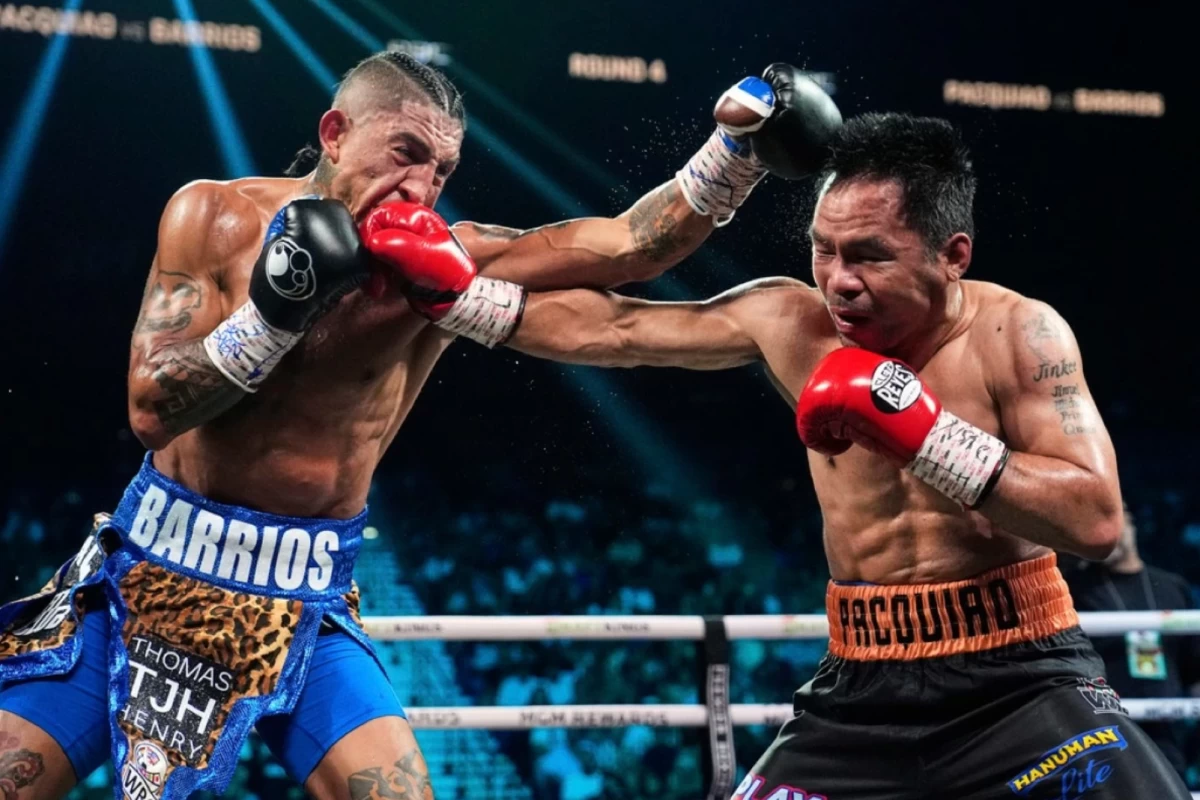
Manny Pacquiao (right) in action during his welterweight bout against Mario Barrios. (AP/File)
In a country that adores its boxers like heroes of modern age, the sport has long been a reflection of the Filipinos' unmatched fortitude in the most challenging times we have been through.
Bruised and battered, from natural disasters, foreign invasions, and political turmoil, the Philippines stood ground through the highs and lows, and has emphatically proven, from our ancestors to the present age, that we could always beat the 10 count.
The sport introduced more than a century ago by American soldiers, boxing followed a path similar to that of Daily Bulletin, now the Manila Bulletin.
Both have stood the test of time.
Starting from scratch
Boxing grew into one of the country's best sources of medals on the international stage, consistently landing on the podium highlighted by the 10 medals — four silvers and six bronzes — we have so far won in the Olympics.
It took nine editions of the Summer Games before the Philippines earned its first medal courtesy of José Villanueva’s bronze in the men’s bantamweight class of the Los Angeles Games in 1932.
With Association of Boxing Alliances in the Philippines (ABAP), which founded in 1977, leading the program, the Filipino pugs displayed brilliance from the past years which was highlighted by Carlo Paalam and Nesthy Petecio’s silver medals in the Covid-delayed Tokyo Games in 2021.
On the same Japanese soil, Eumir Marcial added a bronze to make it a three-medal haul, marking the most successful stint of Filipino boxers in Olympic history which was capped off by Hidilyn Diaz-Naranjo’s gold in women’s 55kg weightlifting event that ended the country’s 97-year gold medal drought.
Their success gave the Philippines the momentum it needed, following it up with two bronze medals from Petecio and Olympic debutant Aira Villegas in the 2024 edition held in Paris.
In a span of two editions of the Summer Games, those achievements already leveled the feat from the pioneers in Villanueva, Anthony Villanueva (1964 Tokyo), Leopoldo Serrantes (1988 Seoul), and siblings Roel (1992 Barcelona) and Mansueto "Onyok" Velasco (1996 Atlanta).
Though there has been superb improvement, the boxers are hoping to shine even more by capturing the elusive gold, which for Marcial, was an ultimate dream after falling short in his last two Olympic appearances.
"I will never stop chasing that dream," said Marcial, who recently bagged his fifth straight gold medal at the 33rd Southeast Asian Games in Thailand. "It is my ultimate goal of winning the gold for the Philippines."
The Philippine Sports Commission, headed by chairman Patrick “Pato” Gregorio, is also consistent with its job and recently partnered with the province of Bukidnon to establish a regional training hub for boxers in Malaybalay.
Overflowing potential
The extraordinary eight-division world title feat of Manny “Pacman” Pacquiao is an achievement too hard to reach for a boxer even in this age.
And his success was never meant to be replicated, but rather serve as an inspiration for hidden gems across the country that has produced legends in the sport like Pancho Villa, Ceferino Garcia, Gabriel “Flash” Elorde, and Nonito Donaire Jr.
The next force in the ring? The country has plenty, with fighters steadily making waves, like Weljon Mindoro, Mark Magsayo, Melvin Jerusalem, Pedro Taduran, Kenneth Llover, and Carl Jammes Martin, who could all become the poster boys of Philippine boxing.
More than glory, boxing is a life-changing sport
Like in life, boxing rewards those brave enough to take bold risks, even when success is uncertain.
Despite its deadly nature, many aspiring athletes step into the ring with the hope that boxing can one day change their lives, particularly in terms of financial stability.
One of the greatest epitomes is the story of Pacquiao, who once struggled to look for his daily meals as he worked several odd jobs including being a construction worker and a street vendor, while often sleeping in boxing gyms.
Pacquiao's journey sparked a movement of dreamers, fueling the hopes of thousands of prodigies who aim for a better life, because more than glory, boxing is a way out of hardships.