ADVERTISEMENT

Union Bank cuts 2026 growth outlook to 3.7% on structural malaise

Published Jan 30, 2026 12:50 pm  |  Updated Jan 30, 2026 01:03 pm
Ruben Carlo O. Asuncion
A widening divide is opening between domestic and international observers over the outlook for the Philippine economy, as local lenders turn increasingly bearish following a late-2025 slump that dragged growth to its lowest non-pandemic level in more than a decade.
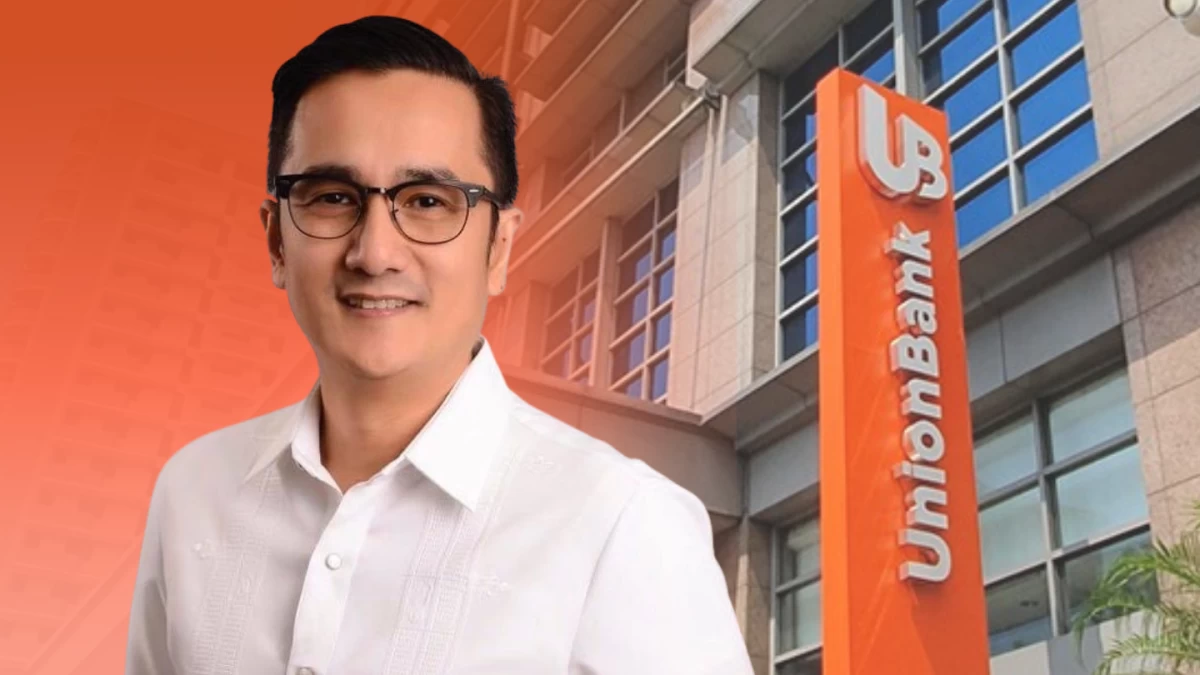
Ruben Carlo O. Asuncion, chief economist at Union Bank of the Philippines, has revised his gross domestic product (GDP) growth forecast downward to 3.7 percent in 2026 from 4.9 percent previously—even weaker than the unexpected 4.4 percent print in 2025.
“A weak base set by post-pandemic low growth in the fourth quarter of 2025, combined with the absence of strong growth catalysts, underpins the downward revisions across the forecast horizon,” Asuncion told Manila Bulletin.
Excluding the pandemic years, growth last year was the slowest pace since 2011’s 3.9 percent growth rate. The national government blamed this slump on loss of confidence, which was dragging down both private and public investment.
Asuncion said he lowered his GDP forecast as growth is expected to remain muted “at below three percent” before it picks up gradually toward the second half of 2026. His full-year assumption, however, remains well below the minimum target of five percent and the local economy’s six-percent potential.
“Even into 2027, growth is likely to remain below potential unless the government is better positioned to deliver a strong fiscal impulse through accelerated infrastructure spending,” Asuncion said.
He expects output to pick up to 4.5 percent in 2027, but this would still fall short of the downscaled growth goal for the year of 5.5 percent to 6.5 percent.
“Public construction is likely to remain a headwind, while private non-residential projects and a potential inventory rebuild may offer partial support,” he said in a commentary published on Friday, Jan. 30.
Public construction, as executed by the Department of Public Works and Highways (DPWH), was hurt by the deepening graft probe. This led public construction to plunge by more than a fourth in the third quarter of 2025, before falling further by 10.1 percent in the fourth quarter.
He added that external demand may slow, but business process outsourcing (BPO) and remittances from Filipinos working abroad are expected to remain resilient, supporting output growth.
Meanwhile, Singapore-based UOB has maintained its expectation that the economy will slightly recover to five percent.
This pickup will be propped up by the Bangko Sentral ng Pilipinas’ (BSP) “more accommodative policy stance,” subdued price movements, and the Philippines’ chairmanship of the Association of Southeast Asian Nations (ASEAN) this year.
UOB senior economist Julia Goh and economist Loke Siew Ting wrote in a Jan. 29 commentary that the latest output slump “reinforces the case for further monetary easing, albeit with limited room.”
“However, any rate cut is unlikely to be immediate, given the BSP’s cautious guidance in December and a global monetary policy environment nearing the end of the easing cycle,” the economists noted.
UOB maintained its projection that the BSP will deliver a measured quarter-point reduction in the key borrowing cost to a terminal rate of 4.25 percent from the current 4.5 percent, after which the rate is expected to remain unchanged indefinitely.
Goh and Ting said the risks to their rosier outlook include “prolonged weakness in investment activity, renewed political or governance setbacks, slower external demand, and spillovers from global financial volatility and geopolitical tensions.”
Even as the BSP decides to continue easing by a quarter point in February, Asuncion said this will not affect his assumption of slower growth ahead. It is “unlikely to deliver a ‘GDP cure’ when a cumulative 200 bps of easing since late 2024 has not prevented growth from slipping below potential,” he asserted.
ADVERTISEMENT
.most-popular .layout-ratio{ padding-bottom: 79.13%; } @media (min-width: 768px) and (max-width: 1024px) { .widget-title { font-size: 15px !important; } }

{{ articles_filter_1561_widget.title }}

.most-popular .layout-ratio{ padding-bottom: 79.13%; } @media (min-width: 768px) and (max-width: 1024px) { .widget-title { font-size: 15px !important; } }

{{ articles_filter_1562_widget.title }}

.most-popular .layout-ratio{ padding-bottom: 79.13%; } @media (min-width: 768px) and (max-width: 1024px) { .widget-title { font-size: 15px !important; } }

{{ articles_filter_1563_widget.title }}

{{ articles_filter_1564_widget.title }}

.mb-article-details { position: relative; } .mb-article-details .article-body-preview, .mb-article-details .article-body-summary{ font-size: 17px; line-height: 30px; font-family: "Libre Caslon Text", serif; color: #000; } .mb-article-details .article-body-preview iframe , .mb-article-details .article-body-summary iframe{ width: 100%; margin: auto; } .read-more-background { background: linear-gradient(180deg, color(display-p3 1.000 1.000 1.000 / 0) 13.75%, color(display-p3 1.000 1.000 1.000 / 0.8) 30.79%, color(display-p3 1.000 1.000 1.000) 72.5%); position: absolute; height: 200px; width: 100%; bottom: 0; display: flex; justify-content: center; align-items: center; padding: 0; } .read-more-background a{ color: #000; } .read-more-btn { padding: 17px 45px; font-family: Inter; font-weight: 700; font-size: 18px; line-height: 16px; text-align: center; vertical-align: middle; border: 1px solid black; background-color: white; } .hidden { display: none; }
function initializeAllSwipers() { // Get all hidden inputs with cms_article_id document.querySelectorAll('[id^="cms_article_id_"]').forEach(function (input) { const cmsArticleId = input.value; const articleSelector = '#article-' + cmsArticleId + ' .body_images'; const swiperElement = document.querySelector(articleSelector); if (swiperElement && !swiperElement.classList.contains('swiper-initialized')) { new Swiper(articleSelector, { loop: true, pagination: false, navigation: { nextEl: '#article-' + cmsArticleId + ' .swiper-button-next', prevEl: '#article-' + cmsArticleId + ' .swiper-button-prev', }, }); } }); } setTimeout(initializeAllSwipers, 3000); const intersectionObserver = new IntersectionObserver( (entries) => { entries.forEach((entry) => { if (entry.isIntersecting) { const newUrl = entry.target.getAttribute("data-url"); if (newUrl) { history.pushState(null, null, newUrl); let article = entry.target; // Extract metadata const author = article.querySelector('.author-section').textContent.replace('By', '').trim(); const section = article.querySelector('.section-info ').textContent.replace(' ', ' '); const title = article.querySelector('.article-title h1').textContent; // Parse URL for Chartbeat path format const parsedUrl = new URL(newUrl, window.location.origin); const cleanUrl = parsedUrl.host + parsedUrl.pathname; // Update Chartbeat configuration if (typeof window._sf_async_config !== 'undefined') { window._sf_async_config.path = cleanUrl; window._sf_async_config.sections = section; window._sf_async_config.authors = author; } // Track virtual page view with Chartbeat if (typeof pSUPERFLY !== 'undefined' && typeof pSUPERFLY.virtualPage === 'function') { try { pSUPERFLY.virtualPage({ path: cleanUrl, title: title, sections: section, authors: author }); } catch (error) { console.error('ping error', error); } } // Optional: Update document title if (title && title !== document.title) { document.title = title; } } } }); }, { threshold: 0.1 } ); function showArticleBody(button) { const article = button.closest("article"); const summary = article.querySelector(".article-body-summary"); const body = article.querySelector(".article-body-preview"); const readMoreSection = article.querySelector(".read-more-background"); // Hide summary and read-more section summary.style.display = "none"; readMoreSection.style.display = "none"; // Show the full article body body.classList.remove("hidden"); } document.addEventListener("DOMContentLoaded", () => { let loadCount = 0; // Track how many times articles are loaded const offset = [1, 2, 3, 4, 5, 6, 7, 8, 9, 10]; // Offset values const currentUrl = window.location.pathname.substring(1); let isLoading = false; // Prevent multiple calls if (!currentUrl) { console.log("Current URL is invalid."); return; } const sentinel = document.getElementById("load-more-sentinel"); if (!sentinel) { console.log("Sentinel element not found."); return; } function isSentinelVisible() { const rect = sentinel.getBoundingClientRect(); return ( rect.top < window.innerHeight && rect.bottom >= 0 ); } function onScroll() { if (isLoading) return; if (isSentinelVisible()) { if (loadCount >= offset.length) { console.log("Maximum load attempts reached."); window.removeEventListener("scroll", onScroll); return; } isLoading = true; const currentOffset = offset[loadCount]; window.loadMoreItems().then(() => { let article = document.querySelector('#widget_1690 > div:nth-last-of-type(2) article'); intersectionObserver.observe(article) loadCount++; }).catch(error => { console.error("Error loading more items:", error); }).finally(() => { isLoading = false; }); } } window.addEventListener("scroll", onScroll); });

Sign up by email to receive news.