ADVERTISEMENT

Japan warns Philippine land rows threaten railway timeline

Published Jan 26, 2026 12:01 am  |  Updated Jan 24, 2026 01:46 pm
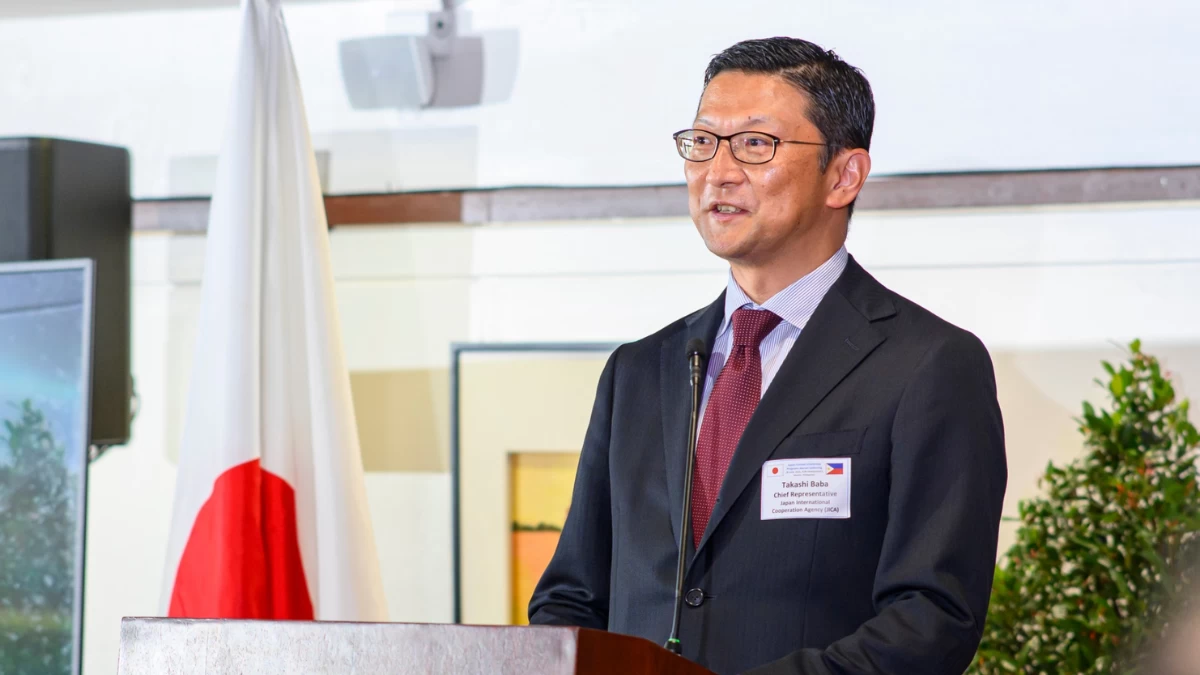
Takashi Baba
Takashi Baba
The Japanese government’s lead development agency said that right-of-way (ROW) hurdles, rather than the tightening Philippine fiscal envelope, pose the primary risk to the completion of multibillion-peso infrastructure flagship projects.
Takashi Baba, the Japan International Cooperation Agency (JICA) chief representative in the Philippines, said that while budget reductions are sovereign prerogative, the legal obligations of bilateral agreements necessitate that Manila provides sufficient funding for land acquisition.
“At this moment, we do not see any kind of delay because of the delay of the budget, but the delay of the ROW, [and] the process, JICA Philippines chief representative Takashi Baba told Manila Bulletin last Thursday, Jan. 22.
He noted, however, that delays in ROW acquisition have already had an impact on project implementation.
“We already observed the kind of delay of the progress of the project itself. That's why we are carefully monitoring the progress,” Baba added.
The assurance comes as the Marcos administration navigates a tighter fiscal landscape. The national government reduced unprogrammed appropriations in the 2026 budget to ₱150.9 billion, the lowest level of standby funding since 2019.
The contraction in the budget’s “standby” category directly affects the accounting of projects like the Metro Manila Subway and the North-South Commuter Railway, which rely heavily on Official Development Assistance (ODA) under JICA.
Baba added that the budget cut in the Philippines should be respected, noting that it reflects a sovereign decision.
“It should be respected,” he said, adding that the move represents “the GOP [government of the Philippines] or the government or the Philippine people’s decision in general.”
However, Baba emphasized that under the legal requirements of bilateral agreements, “the necessary budget should be allocated by the Philippine government,” particularly for ROW financing.
“When we look at the current GAA [General Appropriations Act], we notice that it's not sufficient to cover everything like necessary budget, [the] necessary amount should be prepared by the Philippine government,” he added, noting that they are closely monitoring the situation.
Baba also highlighted that executive agencies may face difficulties in securing sufficient funding by the middle of the year, raising concerns that funding shortfalls could lead to delays in project implementation.
He said JICA is closely coordinating with the Philippine government to secure additional funding in line with agreements between the two countries.
“We are closely monitoring and also we are keeping good relationship and discussion with the Philippine government to secure another budget to cover the necessary one, which in accordance with agreed between the two countries,” Baba said.
Meanwhile, the Philippine government earlier also sought to reassure international lenders that major infrastructure works will proceed on schedule despite a significant reduction in standby funds within the national budget.
Economic Planning Secretary Arsenio Balisacan said last Jan. 16, that foreign-funded initiatives, particularly those backed by the JICA, face no further risks of delay.
“The foreign-funded projects will be funded, and there will be no further delays,” he added.
Balisacan said that the government is committed to honoring its obligations to foreign partners even as it manages limited resources.
The Marcos administration will work within the current fiscal space to ensure that flagship projects remain on track, he added.
The Department of Budget and Management (DBM) said the reduction in unprogrammed funds was a deliberate strategy to enhance transparency. These funds are not guaranteed outlays; rather, they serve as spending authority that can only be tapped if revenue collections exceed targets or if new loans are secured.
Budget Secretary Rolly Toledo said the move aims to "clean up" the budget and prevent the potential for abuse.
The 2026 allocation represents a sharp pivot from recent fiscal years. Unprogrammed appropriations peaked at ₱807.2 billion in 2023 and stood at ₱731.4 billion as recently as 2024. The current ₱150.9 billion figure is even lower than the ₱176.3 billion recorded in 2021 during the height of the pandemic.
Toledo dismissed concerns that these funds function as discretionary “pork barrel” spending, asserting that strict legal conditions govern any disbursement.
He described the unprogrammed fund as a safety net rather than a shortcut for political spending, promising that every release will be documented and justified to maintain fiscal discipline.
ADVERTISEMENT
.most-popular .layout-ratio{ padding-bottom: 79.13%; } @media (min-width: 768px) and (max-width: 1024px) { .widget-title { font-size: 15px !important; } }

{{ articles_filter_1561_widget.title }}

.most-popular .layout-ratio{ padding-bottom: 79.13%; } @media (min-width: 768px) and (max-width: 1024px) { .widget-title { font-size: 15px !important; } }

{{ articles_filter_1562_widget.title }}

.most-popular .layout-ratio{ padding-bottom: 79.13%; } @media (min-width: 768px) and (max-width: 1024px) { .widget-title { font-size: 15px !important; } }

{{ articles_filter_1563_widget.title }}

{{ articles_filter_1564_widget.title }}

.mb-article-details { position: relative; } .mb-article-details .article-body-preview, .mb-article-details .article-body-summary{ font-size: 17px; line-height: 30px; font-family: "Libre Caslon Text", serif; color: #000; } .mb-article-details .article-body-preview iframe , .mb-article-details .article-body-summary iframe{ width: 100%; margin: auto; } .read-more-background { background: linear-gradient(180deg, color(display-p3 1.000 1.000 1.000 / 0) 13.75%, color(display-p3 1.000 1.000 1.000 / 0.8) 30.79%, color(display-p3 1.000 1.000 1.000) 72.5%); position: absolute; height: 200px; width: 100%; bottom: 0; display: flex; justify-content: center; align-items: center; padding: 0; } .read-more-background a{ color: #000; } .read-more-btn { padding: 17px 45px; font-family: Inter; font-weight: 700; font-size: 18px; line-height: 16px; text-align: center; vertical-align: middle; border: 1px solid black; background-color: white; } .hidden { display: none; }
function initializeAllSwipers() { // Get all hidden inputs with cms_article_id document.querySelectorAll('[id^="cms_article_id_"]').forEach(function (input) { const cmsArticleId = input.value; const articleSelector = '#article-' + cmsArticleId + ' .body_images'; const swiperElement = document.querySelector(articleSelector); if (swiperElement && !swiperElement.classList.contains('swiper-initialized')) { new Swiper(articleSelector, { loop: true, pagination: false, navigation: { nextEl: '#article-' + cmsArticleId + ' .swiper-button-next', prevEl: '#article-' + cmsArticleId + ' .swiper-button-prev', }, }); } }); } setTimeout(initializeAllSwipers, 3000); const intersectionObserver = new IntersectionObserver( (entries) => { entries.forEach((entry) => { if (entry.isIntersecting) { const newUrl = entry.target.getAttribute("data-url"); if (newUrl) { history.pushState(null, null, newUrl); let article = entry.target; // Extract metadata const author = article.querySelector('.author-section').textContent.replace('By', '').trim(); const section = article.querySelector('.section-info ').textContent.replace(' ', ' '); const title = article.querySelector('.article-title h1').textContent; // Parse URL for Chartbeat path format const parsedUrl = new URL(newUrl, window.location.origin); const cleanUrl = parsedUrl.host + parsedUrl.pathname; // Update Chartbeat configuration if (typeof window._sf_async_config !== 'undefined') { window._sf_async_config.path = cleanUrl; window._sf_async_config.sections = section; window._sf_async_config.authors = author; } // Track virtual page view with Chartbeat if (typeof pSUPERFLY !== 'undefined' && typeof pSUPERFLY.virtualPage === 'function') { try { pSUPERFLY.virtualPage({ path: cleanUrl, title: title, sections: section, authors: author }); } catch (error) { console.error('ping error', error); } } // Optional: Update document title if (title && title !== document.title) { document.title = title; } } } }); }, { threshold: 0.1 } ); function showArticleBody(button) { const article = button.closest("article"); const summary = article.querySelector(".article-body-summary"); const body = article.querySelector(".article-body-preview"); const readMoreSection = article.querySelector(".read-more-background"); // Hide summary and read-more section summary.style.display = "none"; readMoreSection.style.display = "none"; // Show the full article body body.classList.remove("hidden"); } document.addEventListener("DOMContentLoaded", () => { let loadCount = 0; // Track how many times articles are loaded const offset = [1, 2, 3, 4, 5, 6, 7, 8, 9, 10]; // Offset values const currentUrl = window.location.pathname.substring(1); let isLoading = false; // Prevent multiple calls if (!currentUrl) { console.log("Current URL is invalid."); return; } const sentinel = document.getElementById("load-more-sentinel"); if (!sentinel) { console.log("Sentinel element not found."); return; } function isSentinelVisible() { const rect = sentinel.getBoundingClientRect(); return ( rect.top < window.innerHeight && rect.bottom >= 0 ); } function onScroll() { if (isLoading) return; if (isSentinelVisible()) { if (loadCount >= offset.length) { console.log("Maximum load attempts reached."); window.removeEventListener("scroll", onScroll); return; } isLoading = true; const currentOffset = offset[loadCount]; window.loadMoreItems().then(() => { let article = document.querySelector('#widget_1690 > div:nth-last-of-type(2) article'); intersectionObserver.observe(article) loadCount++; }).catch(error => { console.error("Error loading more items:", error); }).finally(() => { isLoading = false; }); } } window.addEventListener("scroll", onScroll); });

Sign up by email to receive news.