






Manila Bulletin
 Philippines
National
How expanding education vouchers could help solve classroom overcrowding
Philippines
National
How expanding education vouchers could help solve classroom overcrowding
Philippines
National
How expanding education vouchers could help solve classroom overcrowding
How expanding education vouchers could help solve classroom overcrowding
EDCOM 2 pushes for 'strategic' voucher expansion to address congestion in double- and triple-shift public schools
Published Jan 21, 2026 04:16 pm


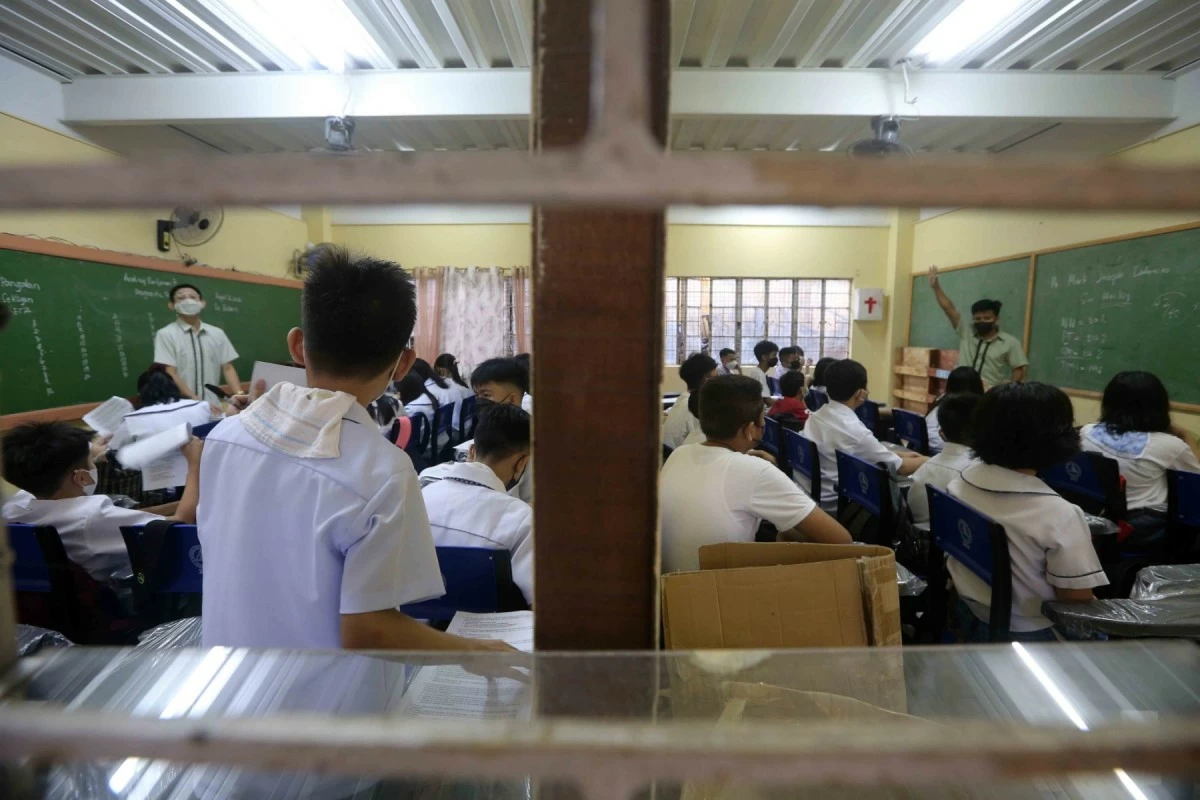
Strategic voucher expansion could provide urgent relief to overcrowded public schools, especially in Metro Manila, according to EDCOM 2. (MANILA BULLETIN/file photo)
Expanding the education voucher program strategically could significantly reduce overcrowding in public schools operating on double and triple shifts, according to the Second Congressional Commission on Education (EDCOM 2).
During a joint public hearing of the Senate Committee on Basic Education on January 21, EDCOM 2 said it presented key amendments to the proposed voucher bill --- highlighting the need to align voucher expansion with classroom construction, repair, and leasing efforts by the Department of Education (DepEd).
EDCOM 2 Executive Director Dr. Karol Mark Yee shared findings from a new analysis conducted with the Education Center for AI Research (ECAIR), which mapped learner congestion against private school capacity using DepEd data.
The study revealed that in highly congested regions — the National Capital Region (NCR), Region 3, and Region 4A — around 536,000 learners are enrolled in public elementary schools, while private schools have 136,573 available seats.
“Based on ECAIR findings, if all private schools are considered, up to 22.5% of students can be accommodated,” Yee said.
He noted that this potential for decongestion drops to 9.4% if limited only to schools currently offering the Education Service Contracting (ESC) program, emphasizing the need for a nuanced approach.
“It is important that plans for voucher expansion be formulated strategically alongside — and not separate from — efforts on classroom construction, repair, and leasing, currently being developed by DepEd,” Yee added.
“Data shows that voucher expansion can provide urgent relief in the most congested regions, especially in schools with double, triple, and multishifts.”
Yee also stressed that voucher expansion should complement, not replace, infrastructure initiatives. He urged DepEd to map congested public schools against nearby private schools, factoring in travel time, to identify isolated schools that require urgent interventions.
“This exercise will enable DepEd to see where it is most urgent to prioritize construction and ensure that there are no overlaps in our interventions,” Yee said.
Senator Bam Aquino, Committee Chairperson and Co-Chair of EDCOM, welcomed the recommendations.
“We have to look at all of the different methodologies for decongestion together as one program… and hopefully that will make this program more strategic down the line,” he said.
Aquino also highlighted the EDCOM recommendation to consider travel time in the program’s design.
Addressing equity and leakage in voucher programs
Meanwhile, Senator Sherwin Gatchalian, who also serves as EDCOM 2 Co-Chairperson, raised concerns over inequity and fund leakage in the current voucher system.
He cited data showing that about 67 percent of voucher recipients come from non-poor families, resulting in roughly P12 billion in misallocated funds for the 2024–2025 school year.
“Some beneficiaries are enrolled in private schools charging tuition fees of P100,000 to P317,000. We need to use this program strategically to help poor but deserving students, while also addressing congestion in key areas like Metro Manila,” Gatchalian said in a mix of English and Filipino.
He also called for stricter targeting and quality assurance in the voucher system to ensure that public school decongestion and equity are prioritized.
DepEd is committed to issuing guidelines for the recognition of private Senior High Schools by January 30, 2026.
EDCOM 2, created under RA 11899, is tasked with a comprehensive assessment of the Philippine education sector and recommending policies and legislation to address the country’s ongoing education crisis.