

ADVERTISEMENT

Nearly 4 in 10 Filipino children face parental violence, cutting school enrollment by up to 57%

New PIDS–EDCOM II study shows domestic violence at home significantly reduces school attendance, highlighting the urgent need for early interventions

Published Jan 21, 2026 03:08 pm

At A Glance

  • A new study finds that nearly 4 in 10 Filipino children experience parental violence, which lowers school enrollment by 52–57%
  • Boys exposed to violence are 48% less likely to stay in school, while girls drop out at a rate of 66%
  • Early interventions, such as PES and Masayang Pamilya (MaPa), can help prevent domestic violence and support children's education
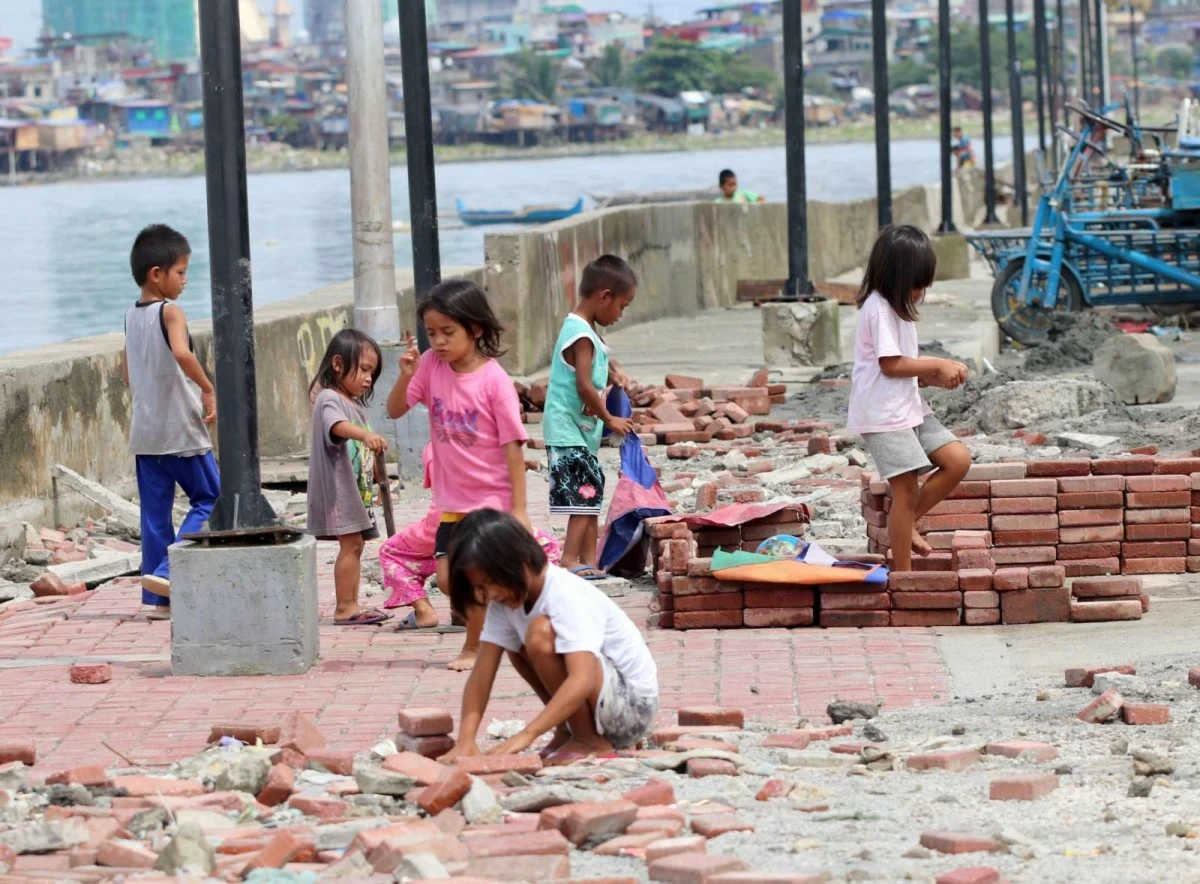
A new PIDS study, supported by EDCOM II, highlights that children exposed to domestic violence are significantly less likely to stay in school, underscoring the urgent need for interventions beyond the classroom. (Manila Bulletin / file photo)
A new study has revealed a stark reality: violence at home is pushing Filipino children out of school, with enrollment rates dropping by as much as 57 percent among those exposed to parental abuse.
In a statement issued by the Second Congressional Commission on Education (EDCOM II) on Tuesday, January 21, the commission cited the findings of a study showing that children who experience violence at home are far less likely to remain in school. This highlights that the country’s education crisis begins long before students reach the classroom.
Backed by EDCOM II, the Philippine Institute for Development Studies (PIDS) conducted the study, titled “Early Harm, Lasting Impact: The Effect of Parental Violence on Educational Outcomes Among Filipino Children.”
What the study reveals
Using data from the Longitudinal Cohort Study on the Filipino Child, EDCOM II explained that researchers examined how exposure to physical and emotional violence at age 10 affects school participation by age 14.
The findings are sobering: nearly 40 percent of Filipino children experienced some form of parental violence at age 10. Among these children, the odds of being enrolled in school by age 14 dropped by 52 to 57 percent, even after accounting for demographic, cognitive, health, and socioeconomic factors.
Gender disparities in education impact
The study also revealed notable gender differences. Boys exposed to parental violence were 48 percent less likely to remain in school, while girls faced an even steeper decline, with a 66 percent lower likelihood of enrollment.
Although both sexes are significantly affected, statistical analysis highlighted that the risk remains particularly pronounced for boys after adjusting for sample attrition.
While the research suggested a negative trend in academic proficiency in math, reading, and science among affected adolescents, the relationship between parental violence and test scores was not statistically significant.
The study also noted that the impact on academic performance may emerge gradually or through pathways not fully captured in current survey data.
Addressing roots of the education crisis beyond classrooms
EDCOM II emphasized that the study highlights the need for interventions that extend beyond school walls to tackle the Philippines' education crisis. Experts advocate for nationwide, multi-sectoral programs aimed at preventing domestic violence and improving parenting skills.
Programs such as the Department of Social Welfare and Development’s Parent Effectiveness Service (PES) and the locally adapted Parenting for Lifelong Health initiative, Masayang Pamilya (MaPa), are highlighted as evidence-based approaches that can support children’s long-term educational success.
The researchers concluded that while “violence definitively disrupts school enrollment decisions, its impact on test scores might manifest more gradually or through mechanisms not fully captured in the current survey data.”
These findings will form part of the EDCOM II Final Report, set for release next week, January 26.
Created under RA 11899, EDCOM II is tasked with conducting a comprehensive national assessment of the Philippine education sector and recommending legislative measures to address the country’s persistent education challenges. 

Related Tags

Philippine education crisis student dropout parental violence child enrollment early intervention programs
ADVERTISEMENT
.most-popular .layout-ratio{ padding-bottom: 79.13%; } @media (min-width: 768px) and (max-width: 1024px) { .widget-title { font-size: 15px !important; } }

{{ articles_filter_1561_widget.title }}

.most-popular .layout-ratio{ padding-bottom: 79.13%; } @media (min-width: 768px) and (max-width: 1024px) { .widget-title { font-size: 15px !important; } }

{{ articles_filter_1562_widget.title }}

.most-popular .layout-ratio{ padding-bottom: 79.13%; } @media (min-width: 768px) and (max-width: 1024px) { .widget-title { font-size: 15px !important; } }

{{ articles_filter_1563_widget.title }}

{{ articles_filter_1564_widget.title }}

.mb-article-details { position: relative; } .mb-article-details .article-body-preview, .mb-article-details .article-body-summary{ font-size: 17px; line-height: 30px; font-family: "Libre Caslon Text", serif; color: #000; } .mb-article-details .article-body-preview iframe , .mb-article-details .article-body-summary iframe{ width: 100%; margin: auto; } .read-more-background { background: linear-gradient(180deg, color(display-p3 1.000 1.000 1.000 / 0) 13.75%, color(display-p3 1.000 1.000 1.000 / 0.8) 30.79%, color(display-p3 1.000 1.000 1.000) 72.5%); position: absolute; height: 200px; width: 100%; bottom: 0; display: flex; justify-content: center; align-items: center; padding: 0; } .read-more-background a{ color: #000; } .read-more-btn { padding: 17px 45px; font-family: Inter; font-weight: 700; font-size: 18px; line-height: 16px; text-align: center; vertical-align: middle; border: 1px solid black; background-color: white; } .hidden { display: none; }
function initializeAllSwipers() { // Get all hidden inputs with cms_article_id document.querySelectorAll('[id^="cms_article_id_"]').forEach(function (input) { const cmsArticleId = input.value; const articleSelector = '#article-' + cmsArticleId + ' .body_images'; const swiperElement = document.querySelector(articleSelector); if (swiperElement && !swiperElement.classList.contains('swiper-initialized')) { new Swiper(articleSelector, { loop: true, pagination: false, navigation: { nextEl: '#article-' + cmsArticleId + ' .swiper-button-next', prevEl: '#article-' + cmsArticleId + ' .swiper-button-prev', }, }); } }); } setTimeout(initializeAllSwipers, 3000); const intersectionObserver = new IntersectionObserver( (entries) => { entries.forEach((entry) => { if (entry.isIntersecting) { const newUrl = entry.target.getAttribute("data-url"); if (newUrl) { history.pushState(null, null, newUrl); let article = entry.target; // Extract metadata const author = article.querySelector('.author-section').textContent.replace('By', '').trim(); const section = article.querySelector('.section-info ').textContent.replace(' ', ' '); const title = article.querySelector('.article-title h1').textContent; // Parse URL for Chartbeat path format const parsedUrl = new URL(newUrl, window.location.origin); const cleanUrl = parsedUrl.host + parsedUrl.pathname; // Update Chartbeat configuration if (typeof window._sf_async_config !== 'undefined') { window._sf_async_config.path = cleanUrl; window._sf_async_config.sections = section; window._sf_async_config.authors = author; } // Track virtual page view with Chartbeat if (typeof pSUPERFLY !== 'undefined' && typeof pSUPERFLY.virtualPage === 'function') { try { pSUPERFLY.virtualPage({ path: cleanUrl, title: title, sections: section, authors: author }); } catch (error) { console.error('ping error', error); } } // Optional: Update document title if (title && title !== document.title) { document.title = title; } } } }); }, { threshold: 0.1 } ); function showArticleBody(button) { const article = button.closest("article"); const summary = article.querySelector(".article-body-summary"); const body = article.querySelector(".article-body-preview"); const readMoreSection = article.querySelector(".read-more-background"); // Hide summary and read-more section summary.style.display = "none"; readMoreSection.style.display = "none"; // Show the full article body body.classList.remove("hidden"); } document.addEventListener("DOMContentLoaded", () => { let loadCount = 0; // Track how many times articles are loaded const offset = [1, 2, 3, 4, 5, 6, 7, 8, 9, 10]; // Offset values const currentUrl = window.location.pathname.substring(1); let isLoading = false; // Prevent multiple calls if (!currentUrl) { console.log("Current URL is invalid."); return; } const sentinel = document.getElementById("load-more-sentinel"); if (!sentinel) { console.log("Sentinel element not found."); return; } function isSentinelVisible() { const rect = sentinel.getBoundingClientRect(); return ( rect.top < window.innerHeight && rect.bottom >= 0 ); } function onScroll() { if (isLoading) return; if (isSentinelVisible()) { if (loadCount >= offset.length) { console.log("Maximum load attempts reached."); window.removeEventListener("scroll", onScroll); return; } isLoading = true; const currentOffset = offset[loadCount]; window.loadMoreItems().then(() => { let article = document.querySelector('#widget_1690 > div:nth-last-of-type(2) article'); intersectionObserver.observe(article) loadCount++; }).catch(error => { console.error("Error loading more items:", error); }).finally(() => { isLoading = false; }); } } window.addEventListener("scroll", onScroll); });

Sign up by email to receive news.