






Manila Bulletin
 Business
The Economy
Remittances slip to half-year low in November 2025 despite holiday season
Business
The Economy
Remittances slip to half-year low in November 2025 despite holiday season
Business
The Economy
Remittances slip to half-year low in November 2025 despite holiday season
Remittances slip to half-year low in November 2025 despite holiday season
By Derco Rosal
Published Jan 15, 2026 04:40 pm


At A Glance
- Even as the Christmas season was already just around the corner, cash sent home by overseas Filipinos dropped to its lowest level in half a year, standing at $2.91 billion in November 2025.
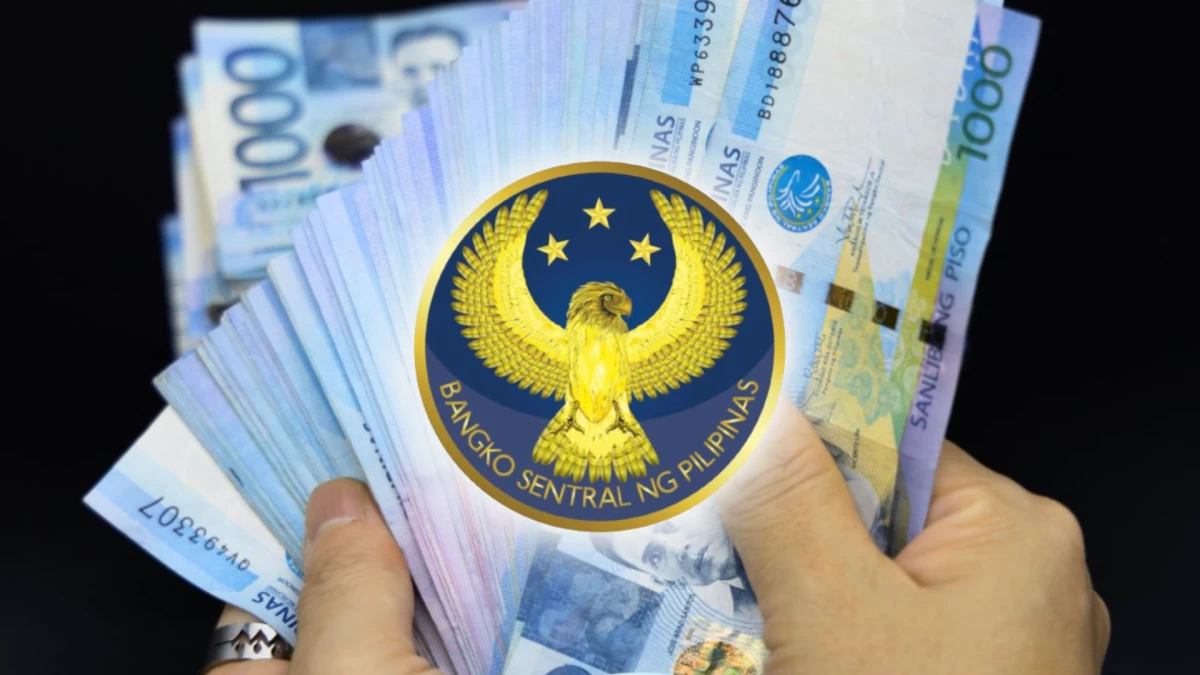
Even as the Christmas season was already just around the corner, cash sent home by overseas Filipinos (OFs) dropped to its lowest level in half a year, standing at $2.91 billion in November 2025.
According to the Bangko Sentral ng Pilipinas (BSP), total cash remittances in November last year were 3.6 percent higher than the $2.81 billion recorded in November 2024.
Cumulative cash remittances as of end-November 2025 increased by 3.2 percent to $32.11 billion from $31.11 billion during the same period in 2024. Notably, year-to-date 2025 remittances also emerged as the highest year-to-date figures since 2022.
This is equivalent to 90.5 percent of the central bank’s full-year remittance forecast of $35.5 billion in 2025.
As of the fourth quarter of 2025, the BSP projected cash remittances to expand by three percent in 2025 from $34.5 billion in 2024. It also forecasts remittances to grow by three percent to $36.6 billion in 2026.
Cash remittances as of end-November were predominantly from the United States (US), accounting for 40 percent of total, followed by Singapore at 7.1 percent, Saudi Arabia at 6.4 percent, Japan at five percent, and the United Kingdom (UK) at 4.6 percent.
Several money transfer centers in countries abroad send money through partner banks, known as correspondent banks, most of which are based in the US, the central bank noted in a statement on Thursday, Jan. 15.
It added that remittances sent through money couriers are recorded under the country where their main offices are based—often the US—rather than the actual country of origin.
“Therefore, the US would appear to be the main source of OF remittances because banks attribute the origin of funds to the most immediate source,” the BSP explained.
Higher cash remittances were also a key driver of the increase in personal remittances, which include “cash sent through banks and informal channels, along with remittances in kind.”
Personal remittances increased by 3.6 percent to $3.24 billion in November from $3.12 billion a year earlier. Personal remittances as of end-November also climbed by 3.2 percent to $35.73 billion from $34.61 billion during the same period in 2024.
Local analysts said this trend likely reflected the frontloading of remittances in October 2025.
Reyes Tacandong & Co. senior adviser Jonathan Ravelas said the drop last November had to do with timing, explaining that much of the holiday money “was already sent in October, which is why we saw that month heavy with remittances.”
Higher remittances last October, he said, were partly driven by early holiday sending and front-loaded transfers for typhoon relief, while inflows are expected to surge as usual in December 2025.
“[Lower November inflows are] not a red flag—just the usual seasonal lull after an early push from overseas Filipino workers (OFWs),” Ravelas added.
Philippine Institute for Development Studies (PIDS) senior research fellow John Paolo Rivera agreed with Ravelas’ view, particularly on timing. Rivera added that the dip also likely reflected base effects and weaker conditions in countries where OFWs work.
“Higher inflation and interest rates abroad constrained the disposable income of OFs,” Rivera said.
Rivera further said that “peso depreciation expectations may have led some remitters to delay conversions,” adding that remittances are likely to rebound in December.