






Manila Bulletin
 Business
Trade & Industry
Philippines carbon emissions to surge 142% by 2060 despite RE push—APEC
Business
Trade & Industry
Philippines carbon emissions to surge 142% by 2060 despite RE push—APEC
Business
Trade & Industry
Philippines carbon emissions to surge 142% by 2060 despite RE push—APEC
Philippines carbon emissions to surge 142% by 2060 despite RE push—APEC
Published Jan 7, 2026 02:59 pm


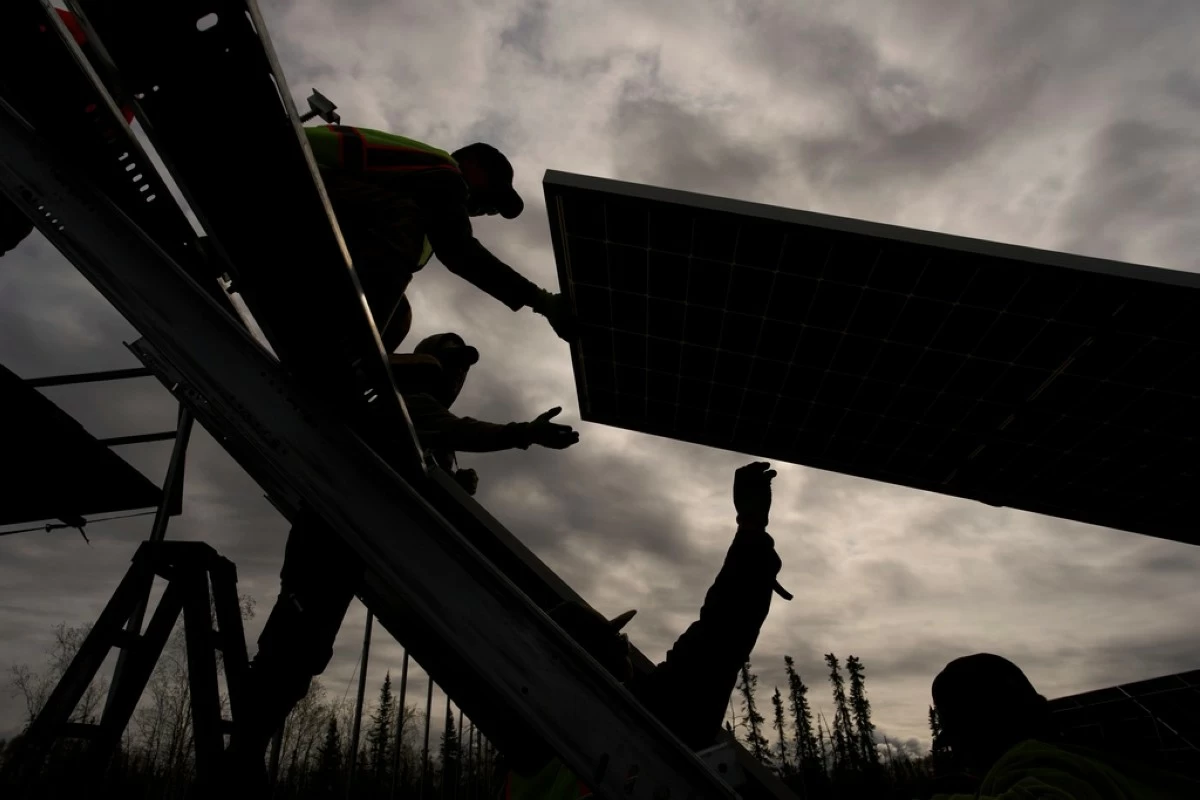
FILE - Workers install panels at a solar project May 21, 2025, in Galena, Alaska. (AP Photo/John Locher, File)
Carbon emissions in the country are projected to more than double over the next few decades despite the aggressive push for renewable energy integration, according to the Asia-Pacific Economic Cooperation. (APEC)
A study conducted by the regional bloc showed that CO2 emissions in the Philippines are set to surge 142 percent by 2060 under a reference scenario. In this outlook, the power sector is expected to consistently account for roughly 50 percent of total emissions.
Even under a more optimistic “target scenario,” emissions are still forecast to rise 78 percent over the next 29 years.
APEC analysts noted that the power sector’s share of emissions is expected to climb to more than 60 percent, from current levels of approximately 40 percent. This spike is driven by the electrification of several industries, most notably the transport sector.
Consequently, the transport sector’s share of emissions is projected to drop to 11 percent from more than 30 percent today. By 2060, emissions from the buildings, industry, and transport sectors are expected to equalize at around 11 percent each.
APEC attributed the persistent rise in greenhouse gases to rapid economic expansion and population growth. While gains in energy efficiency are expected to mitigate some of the impact, the increase in gross domestic product (GDP) per capita is likely to overwhelm those improvements.
The report cautioned that current adjustments to reduce energy intensity are insufficient to counterbalance the emissions resulting from sustained economic growth.
The Philippines is attempting to bridge this gap by courting renewable energy projects and implementing demand-side energy savings. However, industry leaders warn that the transition requires a massive influx of capital that has yet to fully materialize.
Alexander Ablaza, president of the Philippine Energy Efficiency Alliance, or PE2, said the country must balance its climate targets with the practical reality of mobilizing investment.
According to PE2, the Philippines requires no less than 13.9 trillion pesos in capital expenditures to achieve necessary energy efficiency gains by 2040. This funding would cover upgrades in cooling, heating, motors, lighting, and industrial processes.
Ablaza noted that without these investments, achieving meaningful reductions in energy intensity remains unrealistic.