






Manila Bulletin
 Business
Trade & Industry
Unlike surging Vietnam, Philippines registers only modest gains from ASEAN-China free-trade deal
Business
Trade & Industry
Unlike surging Vietnam, Philippines registers only modest gains from ASEAN-China free-trade deal
Business
Trade & Industry
Unlike surging Vietnam, Philippines registers only modest gains from ASEAN-China free-trade deal
Unlike surging Vietnam, Philippines registers only modest gains from ASEAN-China free-trade deal
Published Jan 7, 2026 01:23 pm


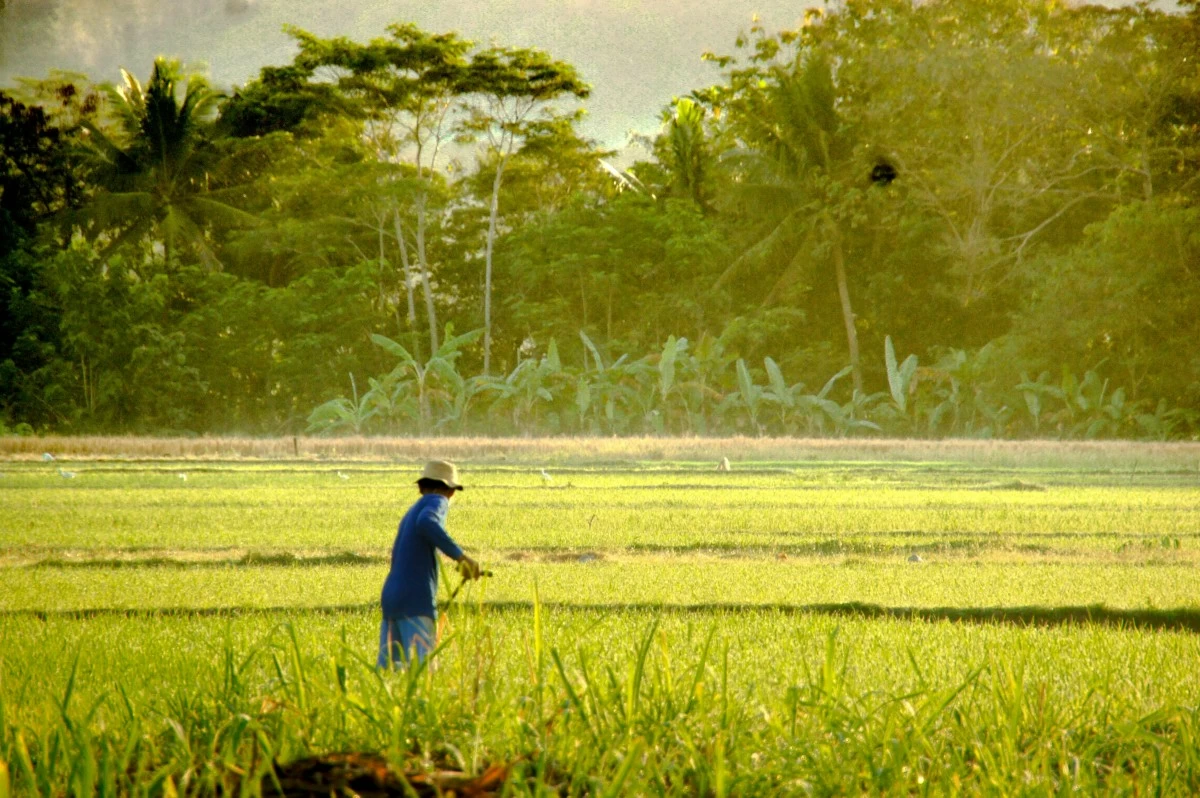
(Unsplash)
The Philippines registered only modest gains in agricultural trade under the Association of Southeast Asian Nations (ASEAN)-China Free Trade Agreement (ACFTA), lagging behind regional peers such as Vietnam, which have capitalized on the deal to strengthen their competitiveness in the global market.
In a study published by the Southeast Asian Regional Center for Graduate Study and Research in Agriculture (SEARCA) last month, authors Paul Neilmer Feliciano and Manuel Leonard Albis said the benefits of ACFTA were found to be unevenly distributed across ASEAN.
Since ACFTA’s agreement on trade in goods entered into force in 2004, total trade between China and ASEAN members surged to around $863 billion in 2018 from $213 billion more than two decades ago.
During the same period, agricultural trade increased nearly fivefold, from $14 billion to $68 billion.
Yet, the Philippines only contributed to this expansion through exports to markets outside the free-trade area, posting a 69-percentage-point increase (ppt) in its trade with the rest of the world.
The country’s total share ranks a distant fifth, trailing Malaysia, Thailand, Indonesia, and Vietnam.
Meanwhile, Vietnam emerged as the primary beneficiary of ACFTA, recording a massive 891-ppt increase across all channels of agricultural trade.
Vietnam stood out as the only country to generate higher agricultural trade within the regional bloc while simultaneously expanding both exports to and imports from the rest of the world.
By contrast, the study observed that ACFTA resulted in net trade diversion effects for Brunei Darussalam, Cambodia, Laos, and Myanmar, while having no significant effect on Singapore.
Vietnam’s success under the free trade area reflects the importance of FTAs in boosting agricultural trade with both member and nonmember economies, the study said.
To replicate Vietnam, the researchers suggested the need for a strategic agricultural policy aimed at creating an enabling environment for trade, boosting agricultural capacities, and strengthening competitiveness.
“This preparedness will allow economies to aptly respond to any FTA-induced structural changes, adapt to new competitive forces in domestic agricultural markets, and effectively capitalize on newly opened foreign markets,” the study read.
“Agriculture authorities should strongly view FTAs as a strategic policy instrument to significantly expand agricultural trade,” it added.
Beyond this framework, the Philippines could better seize opportunities under ACFTA by funneling more investments into agricultural technology, particularly mechanization and new farming techniques.
Another key aspect is infrastructure development, such as farm-to-market roads (FMRs), water and irrigation systems, ports, and support facilities.
The study also cited the need for further enhancing the sector’s workforce by providing comprehensive training and extension services.
Department of Agriculture (DA) Secretary Francisco Tiu Laurel earlier said that these are among his agency’s initiatives this year, in line with affirming the country’s long-term food security agenda.