






Manila Bulletin
 Philippines
National
DepEd 2025 yearender: A year of quiet heroes, system reforms, and a stronger push for Philippine education
Philippines
National
DepEd 2025 yearender: A year of quiet heroes, system reforms, and a stronger push for Philippine education
Philippines
National
DepEd 2025 yearender: A year of quiet heroes, system reforms, and a stronger push for Philippine education
DepEd 2025 yearender: A year of quiet heroes, system reforms, and a stronger push for Philippine education
Published Dec 27, 2025 01:43 pm


At A Glance
- In 2025, DepEd honored teachers, learners, and private citizens who went beyond their duties, highlighting acts of quiet heroism that sustained schools and communities amid challenges.
- DepEd said that, in 2025, long-overdue promotions under the Expanded Career Progression Law benefited over 16,000 teachers, while plans for large-scale teacher recruitment aimed to reduce classroom congestion and teacher workload.
- Before the year ended, DepEd said initiatives such as the Bayang Bumabasa Fund, inclusive education programs for marginalized learners, and cautious AI adoption through ECAIR targeted learning gaps, improved efficiency, and promoted data-driven governance.
- DepEd also noted that the 2026 budget rose by P86.8 billion to P961.3 billion, supporting school feeding, classroom construction, disaster resilience, teacher hiring, and inclusive education—signaling a strong foundation for continued improvements in the education system.

In a system serving over 25 million learners, DepEd, under the leadership of Secretary Sonny Angara, said 2025 may be remembered not as a year of instant transformation—but as the year the foundations were firmly set. (DepEd / MB Visual Content Group)
As 2025 draws to a close, the Department of Education (DepEd) reflects on a year defined not by sweeping rhetoric, but by steady reforms, quiet heroism, and a renewed national commitment to strengthening basic education—anchored on teachers, learners, and long-overdue system improvements.
Marking his first full year at the helm, DepEd Secretary Sonny Angara described 2025 as a transition year—one that laid the groundwork for a more inclusive, resilient, and better-supported education system moving into 2026.
2026 budget: A turning point for education
In an interview earlier this month, Angara highlighted the 2026 DepEd budget as a major reversal from previous constraints.
“Sa 2026 DepEd budget, doon pa lang, lamang na tayo kumpara sa ipinasa noong 2025 budget kung saan nabawasan pa ang computerization budget (In the 2026 DepEd budget, we are already ahead compared to the 2025 budget, where the computerization budget was reduced),” he said.
He recalled President Marcos’s strong reaction to the 2025 budget cuts: “Nagalit nga si Presidente. Sabi niya, huwag nating bawasan ang edukasyon—tulungan natin ang ating mga bata at mga guro (The President was indeed angered. He said, let us not cut education—let us help our children and our teachers),” he said.
With Congress reinforcing allocations for school feeding, classroom construction, disaster resilience, teacher hiring, and inclusive education, Angara said prospects for DepEd—and for learners nationwide—look significantly brighter in 2026.
On December 13, the bicameral conference committee reconciling the proposed P6.793-trillion national budget for 2026 approved an P86.8-billion increase for DepEd, raising its final allocation to P961.3 billion.
Honoring the ‘DepEd Heroes’ of 2025
While policy reforms advanced, DepEd closed the year by honoring individuals whose acts of service, often unheralded, kept schools and communities afloat.

DepEd Secretary Sonny Angara recognizes teachers, learners, and private citizens whose quiet acts of heroism kept schools and communities thriving in 2025. (photo from DepEd)
In a December 27 statement, DepEd marked the first anniversary of Angara’s term by recognizing its “DepEd Heroes”—teachers, learners, and private citizens who went beyond duty in moments of quiet urgency.
“Kapag may isang tumulong, may sumusunod. Hanggang sa maramdaman ang epekto nito sa ating mga paaralan at komunidad. Iyan ang diwa ng ating DepEd Heroes (When one person helps, others follow—until the impact is felt in our schools and communities. That is the spirit of our DepEd Heroes),” Angara said.
Since August, the program has honored 12 individuals, including teachers who braved floods, illness, earthquakes, and isolation to keep learning alive; learners who saved lives during disasters; and private citizens who supported schools through volunteerism, legal aid, and personal resources.
From a Samar teacher walking for hours through floodwaters to ALS educators opening livelihood paths for out-of-school youth, the stories reflected a system sustained by dedication even amid scarcity.
Teachers at the center of reform
Teacher welfare emerged as one of DepEd’s defining priorities in 2025.
After decades of stalled advancement, the Expanded Career Progression (ECP) law finally began clearing promotion backlogs. By year-end, over 16,000 teachers had been promoted, with more than 41,000 additional cases lined up for processing—many achieving long-delayed multi-step salary upgrades while still in active service.
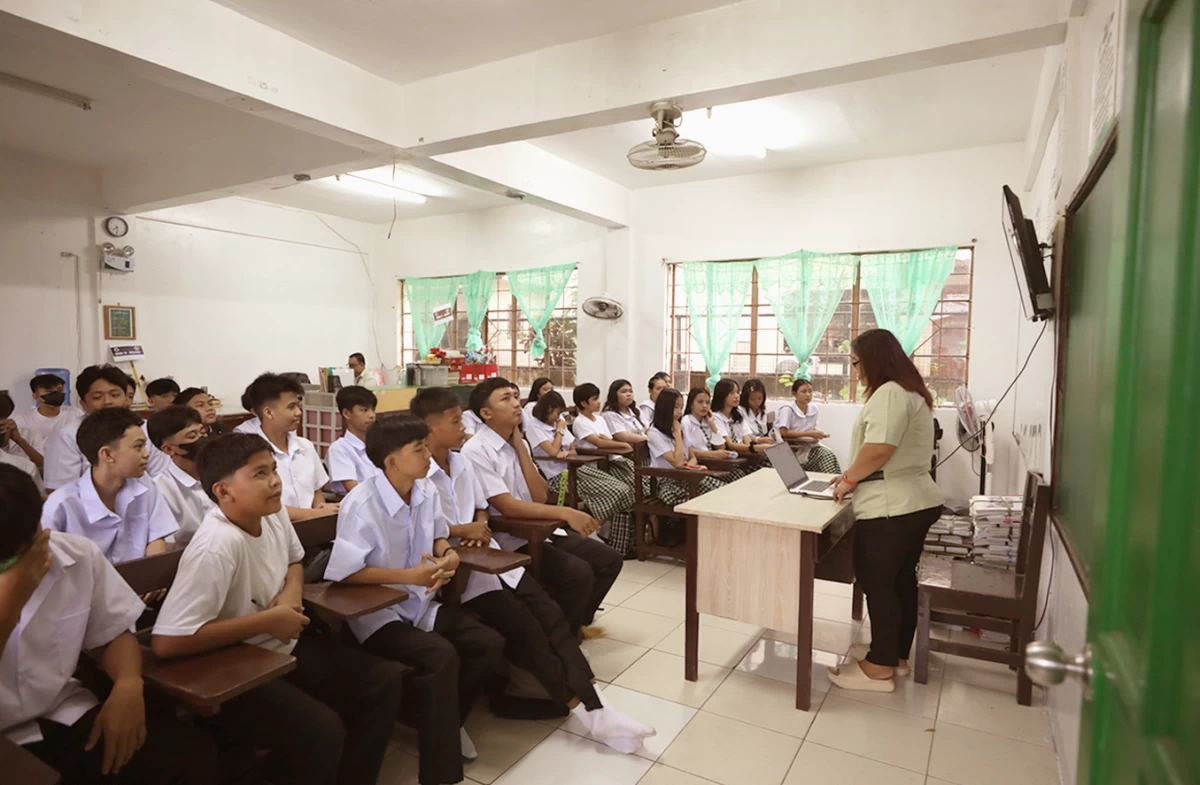
Over 16,000 educators received long-overdue promotions under the Expanded Career Progression law, marking a milestone in teacher welfare reforms. (photo from DepEd)
Angara noted that President Marcos’s directive was clear: no public school teacher should retire without meaningful career progression.
For educators like Nardito Tomampil Jr. of Iligan City—who taught for decades while gradually losing his vision—the reform represented long-overdue recognition of service that had long gone unseen.
Complementing career reforms, DepEd also set the stage for its largest teacher recruitment drive in years. Under the proposed 2026 budget, more than 32,000 new Teacher I items are planned, alongside thousands of school heads, counselors, and administrative staff, to ease workloads and classroom congestion.
Literacy, inclusion, and catching learners early
Addressing learning gaps remained a core focus for DepEd in 2025.

Early-grade literacy initiatives, supported by the Bayang Bumabasa Fund, provide targeted interventions to help learners catch up and succeed. (photo from DepEd)
Last week, DepEd announced the release of guidelines for the P100-million Bayang Bumabasa Fund, allowing 131 priority schools to access up to P1 million each for targeted early-grade literacy interventions. Grounded in data from the Comprehensive Rapid Literacy Assessment, the initiative reinforced DepEd’s shift toward needs-based, accountable support.
Parallel to literacy efforts, DepEd’s proposed 2026 budget advanced inclusive education programs for learners with disabilities, Indigenous communities, Muslim learners, and out-of-school youth. Expanded funding for Special Needs Education, ALS, Madrasah, and Indigenous Peoples Education underscored the administration’s commitment to widening access—especially for those historically left behind.
Technology, AI, and data-driven governance
Less than a year after its creation, DepEd’s Education Center for Artificial Intelligence Research (ECAIR) began reshaping how the department uses data.
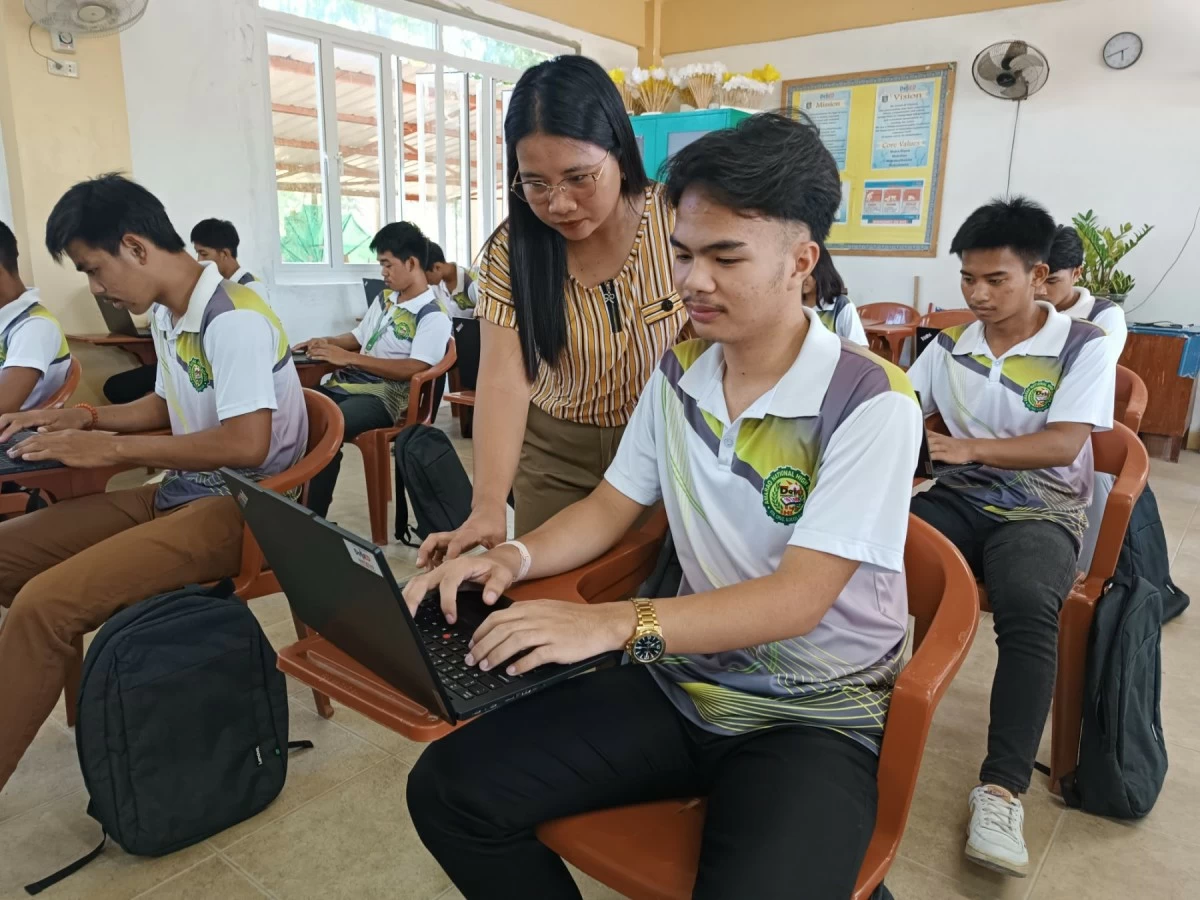
DepEd’s Education Center for AI Research streamlines school leadership appointments, reduces administrative burdens, and strengthens data-driven governance. (photo from DepEd)
Rather than chasing trends, Angara emphasized cautious, practical AI adoption—streamlining school leadership selection, cleaning learner data, and reducing teachers’ administrative workload. Early results included faster school head appointments, improved data accuracy, and measurable time savings for teachers.
Looking ahead, DepEd plans to expand proven AI tools in 2026, ensuring technology remains a support—not a burden—to educators.
Rebuilding schools, faster and smarter
With climate shocks intensifying, DepEd said disaster resilience moved to the forefront.
The proposed 2026 budget includes a massive increase in funding for school disaster preparedness and resilient infrastructure. DepEd also revived large-scale public-private partnerships (PPPs) to address the country’s estimated 165,000-classroom deficit—aiming to deliver over 100,000 classrooms within a few years instead of decades.

With disaster resilience at the forefront, DepEd accelerates classroom construction and infrastructure upgrades through public-private partnerships. (photo from DepEd)
DepEd stressed that beyond speed, PPPs offer stronger governance, transparency, and long-term value—especially critical as school damage from typhoons and earthquakes continues to rise.
Strengthening partnerships, public and private
DepEd also expanded support for private schools, recognizing their role in decongesting public classrooms. Increased funding for vouchers and subsidies in 2026 is expected to support nearly 2.6 million learners, while tighter safeguards were introduced to prevent fraud and ensure funds reach legitimate beneficiaries.
Over 16,000 educators received long-overdue promotions under the Expanded Career Progression law, marking a milestone in teacher welfare reforms. (photo from DepEd)
Meanwhile, partnerships with institutions such as Khan Academy, Google.org, the ASEAN Foundation, MIT, and civil society groups signaled a more collaborative approach to reform—one that blends public responsibility with private expertise.
Looking ahead to 2026
As the year closes, Angara said 2025 was about restoring trust—among teachers, learners, and partners—that the system can still change.
From honoring everyday heroes to clearing career backlogs, from rebuilding classrooms to strengthening literacy and inclusion, DepEd enters 2026 with reforms underway and momentum on its side.
DepEd reaffirmed its commitment to continue recognizing and supporting these everyday heroes in 2026, strengthening a culture where service is seen, named, and valued.
“With every story we honor, we hope more acts of kindness and dedication will follow,” Angara said. “The ripple effects of these heroes will continue into the new year, touching even more lives and communities,” he added.