






Manila Bulletin
 Business
The Economy
PIDS urges proactive reforms to improve Philippines' electricity subsidies
Business
The Economy
PIDS urges proactive reforms to improve Philippines' electricity subsidies
Business
The Economy
PIDS urges proactive reforms to improve Philippines' electricity subsidies
PIDS urges proactive reforms to improve Philippines' electricity subsidies
Published Dec 22, 2025 12:08 pm
|
Updated Dec 22, 2025 03:23 pm


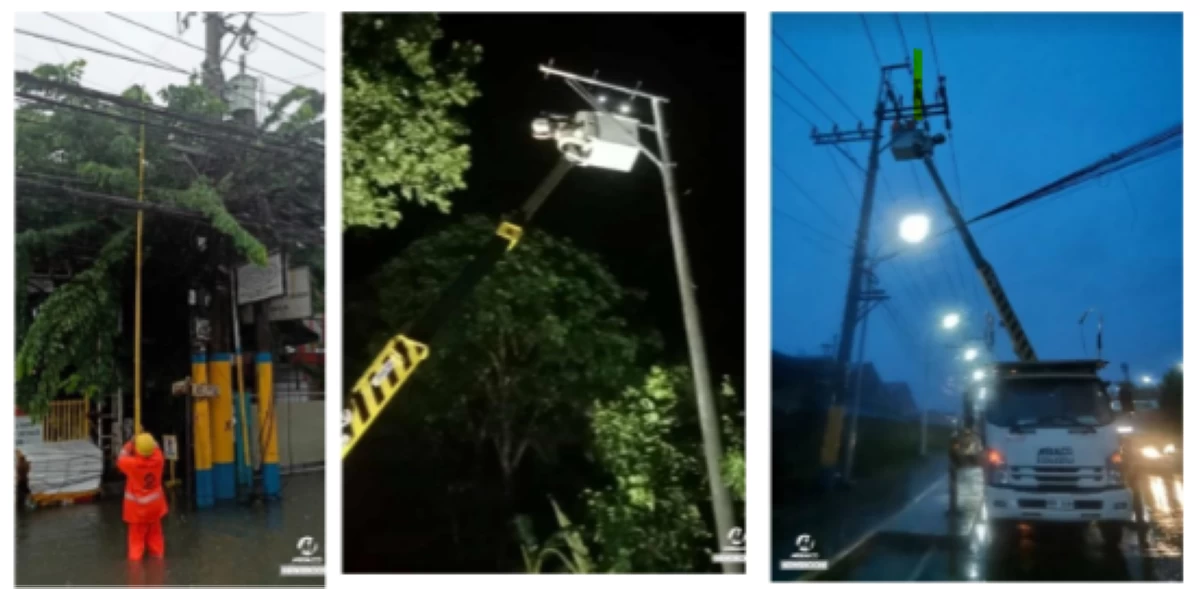
ROUND-THE-CLOCK RESTORATION EFFORTS. Meralco crews and personnel brave the floods and storm to restore electricity service in flood-stricken areas.
The Philippines’ electricity subsidy system, while crucial for social protection and ensuring universal access, is facing significant challenges, according to the state-run policy think tank Philippine Institute for Development Studies (PIDS).
In a Dec. 17 discussion paper titled “Making Electricity Subsidies Work: Cross-Country Lessons for Philippine Energy Policy,” PIDS senior research fellow Kris A. Francisco and research specialist Patricia Thea A. Basilio highlighted that the country’s eclectic subsidy system suffers from targeting failures, rising fiscal costs, and administrative fragmentation.
PIDS emphasized the need to improve the efficiency and equity of the country’s three major electricity subsidies—universal charge for missionary electrification (UCME), lifeline rates, and senior citizen discounts—while also pointing out both the potential benefits and limitations of subsidies as policy tools.
“The choice facing Philippine policymakers is not between maintaining current programs unchanged or eliminating subsidies entirely,” the think tank said. “Rather, the decision involves selecting between proactive reform, gradual improvements, phased adjustments, strategic sequencing, and reactive adjustment forced by fiscal pressures or crisis.”
It cited international experience showing that proactive subsidy reforms are less costly and achieve better equity outcomes, warning that countries that delay action until fiscal pressures force changes often harm vulnerable populations and risk political backlash that undermines long-term program viability.
Given the Philippines’ current subsidy system—with identifiable challenges, intact institutions, rising costs, and operational programs—early reform is favored, PIDS stressed. It added that UCME costs have tripled in nine years, senior citizen benefits have quadrupled without targeting improvements, and lifeline leakages persist despite known inefficiencies.
The think tank warned that the key question is whether reforms will occur through planned, gradual adjustments that protect vulnerable populations, or through crisis-driven measures forced by fiscal pressures.
To address these challenges, PIDS urged reforms to improve electricity subsidies, including better data integration, reducing inefficiencies, and linking the family income and expenditure survey (FIES), Pantawid Pamilyang Pilipino Program (4Ps), and utility databases. The think tank added that existing systems could be optimized without major restructuring, but success hinges on interagency coordination and political will.
PIDS highlighted the need to fix “unacceptable inefficiencies” in electricity subsidies—such as UCME aid to Palawan province and Mindoro Island, lifeline rates going to wealthy households, and senior citizen discounts reaching high-income elderly—to build reform credibility. Correcting these misallocations could save funds, improve the system, and demonstrate that reforms strengthen social equity, it said.
The think tank also recommended implementing degression mechanisms to prevent subsidies from continuing indefinitely. UCME support should gradually decrease as areas show economic progress, while lifeline and senior citizen benefits need periodic reassessment to ensure eligibility reflects current circumstances. PIDS noted that international experience shows systems without such adjustments face rising costs, and that proactive degression is less disruptive than crisis-driven reform.
It further recommended streamlining subsidy administration, including single-window UCME disbursement and unified checks for lifeline and senior citizen programs. The think tank added that with 31 percent of beneficiaries overlapping, consolidation could cut costs and better target the most vulnerable.
Finally, PIDS recommended introducing performance-based incentives to address inefficiencies in current subsidies. For UCME, benchmark-based support would encourage cost minimization while still aiding challenging areas. Lifeline and senior citizen programs should enforce revenue neutrality to protect utility finances, balancing equity with efficiency and sustainability.
The PIDS paper concluded that careful, evidence-based reforms can improve poverty reduction, market efficiency, and economic competitiveness while keeping subsidies accessible, while cautioning that delaying action risks rising costs, persistent leakages, and forced adjustments—underscoring proactive reform as the clearest path forward.