ADVERTISEMENT

Philippines faces ₱17-billion annual loss over climate-risk roads—ATO report

Published Dec 22, 2025 12:00 am  |  Updated Dec 21, 2025 06:42 am
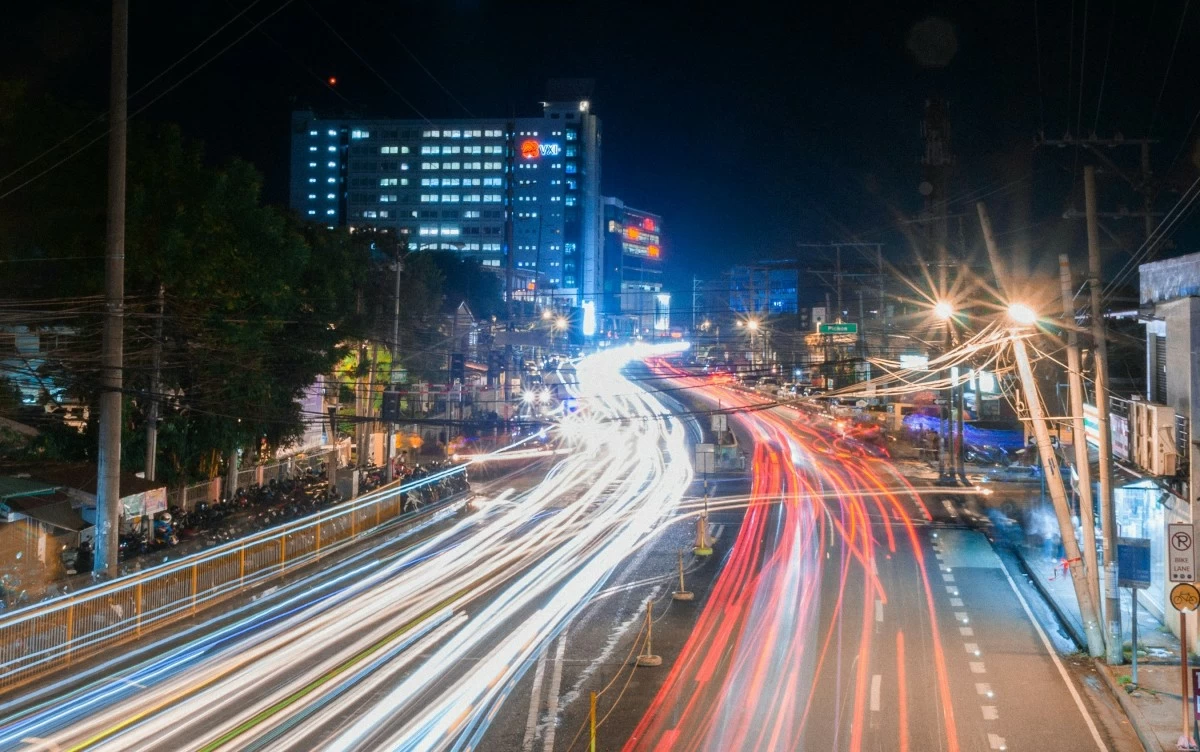
(Unsplash)
(Unsplash)
The country could lose an estimated $295.6 million, or roughly ₱17.33 billion, in road maintenance costs each year if the government fails to upgrade the road network to withstand climate risks associated with global warming, according to the Asian Transport Observatory (ATO).
In its 2025 Green Roads Profile for the Philippines, the ATO said the country urgently needs eco-friendly roads in the near term to prevent future losses that could otherwise have gone to critical government programs.
The ATO noted that the world is on the brink of heating up by 4.5 degrees, meaning more than 15 percent of road and rail assets would be exposed to frequent and extreme precipitation.
“This reality transforms road maintenance from a routine engineering task into a critical climate adaptation strategy,” the think tank said.
On the government’s part, the ATO said this would require a strong pivot from straightforward expansion activities to developing “green roads.”
“Policy frameworks must therefore evolve from simple connectivity targets to a holistic green roads standard,” it said.
It is estimated that the country uses around 30.9 million tons of construction materials to build and repair roads each year, resulting in roughly 1.2 million tons of carbon emissions embedded in their production and use.
Instead of what it calls “indiscriminate” expansion, the ATO said the government’s focus should be on making existing road infrastructure more resilient.
In a toolkit published by the Manila-based Asian Development Bank (ADB), which initiated the ATO, green roads refer to sustainable road projects that reduce emissions and carbon footprint.
Aside from construction and design, green roads cover road network planning and transport management, increased roadside stabilization, agricultural water management, and flood mitigation, among others.
Making roads green also means shifting the country’s vehicle fleet toward electric vehicles (EVs).
Based on ATO data, motorcycles dominate the country’s roads with a 49 percent share of the total fleet, followed by light-duty vehicles at a distant second with 14 percent.
“Although EV imports reached $523 million between 2015 and 2024, they still represent only 4 percent of road vehicle imports, largely skewed toward light-duty vehicles rather than the two-wheelers that dominate the streetscape,” the report read.
Latest industry data showed that sales of EVs now account for 6.68 percent as of November, with 28,102 units sold.
The ATO said this reflects the need for the government to accelerate the country’s clean energy transition to support the burgeoning EV market.
In addition, the think tank said there should be a more concerted effort to address the stark inequity of access in the country’s road network, despite it covering some 324,200 kilometers.
It noted that around seven million rural residents are beyond the reach of all-season roads, essentially cutting their access to healthcare and markets.
For urban areas, it found that only 20 percent of residents have adequate access to public transportation, with transport costs consuming nearly eight percent of household expenditures.
“A truly green road network is one that serves the economy without bankrupting the environment or leaving the most vulnerable populations behind,” the report read.
ADVERTISEMENT
.most-popular .layout-ratio{ padding-bottom: 79.13%; } @media (min-width: 768px) and (max-width: 1024px) { .widget-title { font-size: 15px !important; } }

{{ articles_filter_1561_widget.title }}

.most-popular .layout-ratio{ padding-bottom: 79.13%; } @media (min-width: 768px) and (max-width: 1024px) { .widget-title { font-size: 15px !important; } }

{{ articles_filter_1562_widget.title }}

.most-popular .layout-ratio{ padding-bottom: 79.13%; } @media (min-width: 768px) and (max-width: 1024px) { .widget-title { font-size: 15px !important; } }

{{ articles_filter_1563_widget.title }}

{{ articles_filter_1564_widget.title }}

.mb-article-details { position: relative; } .mb-article-details .article-body-preview, .mb-article-details .article-body-summary{ font-size: 17px; line-height: 30px; font-family: "Libre Caslon Text", serif; color: #000; } .mb-article-details .article-body-preview iframe , .mb-article-details .article-body-summary iframe{ width: 100%; margin: auto; } .read-more-background { background: linear-gradient(180deg, color(display-p3 1.000 1.000 1.000 / 0) 13.75%, color(display-p3 1.000 1.000 1.000 / 0.8) 30.79%, color(display-p3 1.000 1.000 1.000) 72.5%); position: absolute; height: 200px; width: 100%; bottom: 0; display: flex; justify-content: center; align-items: center; padding: 0; } .read-more-background a{ color: #000; } .read-more-btn { padding: 17px 45px; font-family: Inter; font-weight: 700; font-size: 18px; line-height: 16px; text-align: center; vertical-align: middle; border: 1px solid black; background-color: white; } .hidden { display: none; }
function initializeAllSwipers() { // Get all hidden inputs with cms_article_id document.querySelectorAll('[id^="cms_article_id_"]').forEach(function (input) { const cmsArticleId = input.value; const articleSelector = '#article-' + cmsArticleId + ' .body_images'; const swiperElement = document.querySelector(articleSelector); if (swiperElement && !swiperElement.classList.contains('swiper-initialized')) { new Swiper(articleSelector, { loop: true, pagination: false, navigation: { nextEl: '#article-' + cmsArticleId + ' .swiper-button-next', prevEl: '#article-' + cmsArticleId + ' .swiper-button-prev', }, }); } }); } setTimeout(initializeAllSwipers, 3000); const intersectionObserver = new IntersectionObserver( (entries) => { entries.forEach((entry) => { if (entry.isIntersecting) { const newUrl = entry.target.getAttribute("data-url"); if (newUrl) { history.pushState(null, null, newUrl); let article = entry.target; // Extract metadata const author = article.querySelector('.author-section').textContent.replace('By', '').trim(); const section = article.querySelector('.section-info ').textContent.replace(' ', ' '); const title = article.querySelector('.article-title h1').textContent; // Parse URL for Chartbeat path format const parsedUrl = new URL(newUrl, window.location.origin); const cleanUrl = parsedUrl.host + parsedUrl.pathname; // Update Chartbeat configuration if (typeof window._sf_async_config !== 'undefined') { window._sf_async_config.path = cleanUrl; window._sf_async_config.sections = section; window._sf_async_config.authors = author; } // Track virtual page view with Chartbeat if (typeof pSUPERFLY !== 'undefined' && typeof pSUPERFLY.virtualPage === 'function') { try { pSUPERFLY.virtualPage({ path: cleanUrl, title: title, sections: section, authors: author }); } catch (error) { console.error('ping error', error); } } // Optional: Update document title if (title && title !== document.title) { document.title = title; } } } }); }, { threshold: 0.1 } ); function showArticleBody(button) { const article = button.closest("article"); const summary = article.querySelector(".article-body-summary"); const body = article.querySelector(".article-body-preview"); const readMoreSection = article.querySelector(".read-more-background"); // Hide summary and read-more section summary.style.display = "none"; readMoreSection.style.display = "none"; // Show the full article body body.classList.remove("hidden"); } document.addEventListener("DOMContentLoaded", () => { let loadCount = 0; // Track how many times articles are loaded const offset = [1, 2, 3, 4, 5, 6, 7, 8, 9, 10]; // Offset values const currentUrl = window.location.pathname.substring(1); let isLoading = false; // Prevent multiple calls if (!currentUrl) { console.log("Current URL is invalid."); return; } const sentinel = document.getElementById("load-more-sentinel"); if (!sentinel) { console.log("Sentinel element not found."); return; } function isSentinelVisible() { const rect = sentinel.getBoundingClientRect(); return ( rect.top < window.innerHeight && rect.bottom >= 0 ); } function onScroll() { if (isLoading) return; if (isSentinelVisible()) { if (loadCount >= offset.length) { console.log("Maximum load attempts reached."); window.removeEventListener("scroll", onScroll); return; } isLoading = true; const currentOffset = offset[loadCount]; window.loadMoreItems().then(() => { let article = document.querySelector('#widget_1690 > div:nth-last-of-type(2) article'); intersectionObserver.observe(article) loadCount++; }).catch(error => { console.error("Error loading more items:", error); }).finally(() => { isLoading = false; }); } } window.addEventListener("scroll", onScroll); });

Sign up by email to receive news.