






Manila Bulletin
 Philippines
National
First Lady hosts luncheon for China's new envoy as PH–China ties mark 50th year
Philippines
National
First Lady hosts luncheon for China's new envoy as PH–China ties mark 50th year
Philippines
National
First Lady hosts luncheon for China's new envoy as PH–China ties mark 50th year
First Lady hosts luncheon for China's new envoy as PH–China ties mark 50th year
Published Dec 21, 2025 10:22 am


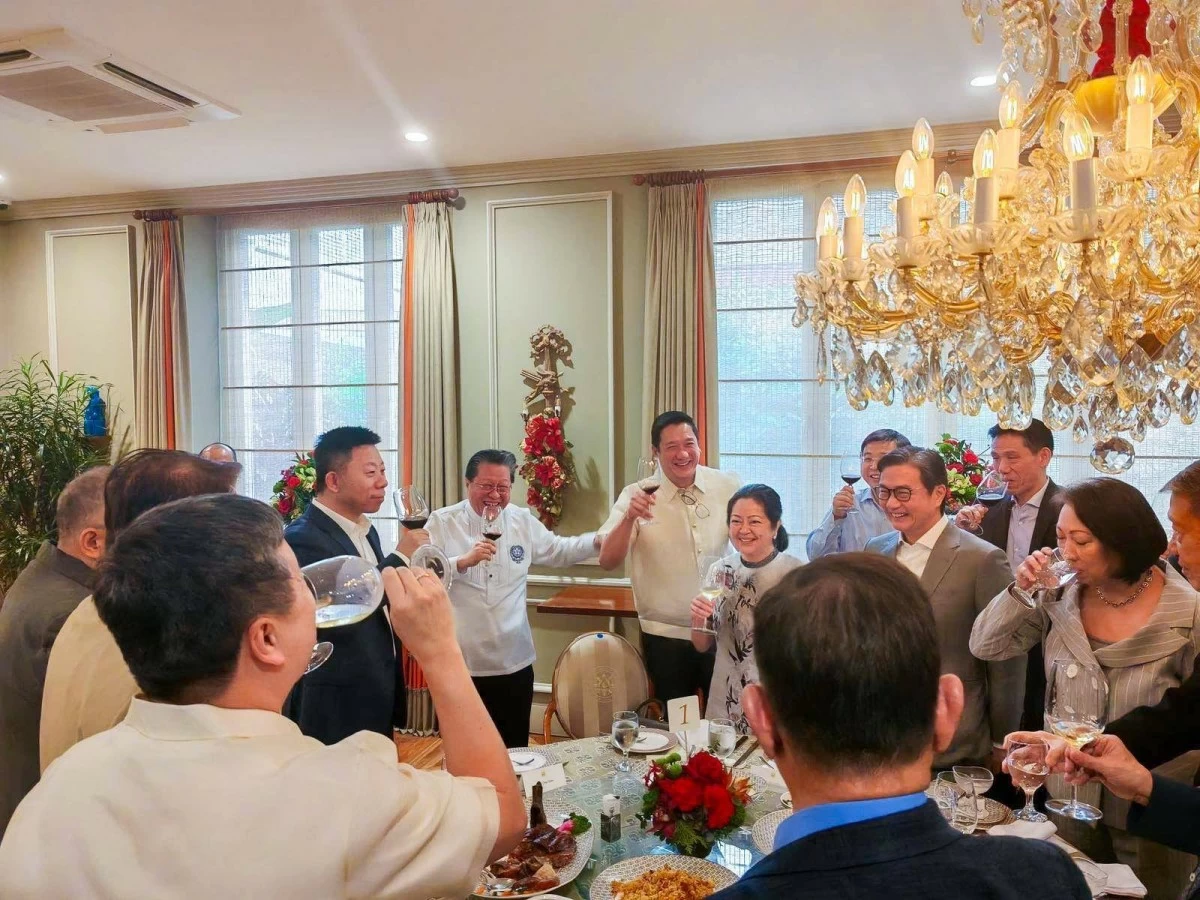
First Lady Liza Araneta-Marcos hosts a luncheon for Chinese Ambassador to the Philippines Jing Quan and the government's partners in the Chinatown revitalization project, at the Laperal Mansion in Manila, on Dec. 17. (Facebook)
First Lady Liza Araneta-Marcos hosted a luncheon for Chinese Ambassador Jing Quan, blending diplomacy and cultural exchange as the Philippines and China mark 50 years of formal relations.
In an Instagram post, the First Lady described the gathering as a “lovely luncheon surrounded by friends — both old and new,” welcoming the envoy as he begins his tenure at what she called a meaningful moment for both countries.
The luncheon, held at the historic Laperal Mansion on Dec. 17, was attended by diplomats from the Chinese Embassy in Manila and leaders of the Filipino-Chinese community, underscoring the people-to-people dimension of bilateral ties.
In a separate Facebook post, the Chinese Embassy said Ambassador Jing Quan was “honored to attend” the luncheon and thanked the First Lady for her hospitality, noting the presence of Filipino-Chinese community leaders.
The First Lady highlighted the role of the Filipino-Chinese community in sustaining cultural initiatives, thanking them for their continued support for projects that celebrate shared heritage.
She also expressed gratitude for the community’s commitment to the revitalization of Manila Chinatown, recognized as the oldest Chinatown in the world.
The luncheon came days after Ambassador Jing Quan formally presented his credentials to President Marcos at Malacañan Palace on Dec. 11.
During that ceremony, President Marcos underscored China’s importance as one of the Philippines’ key partners, while acknowledging the need to manage differences.
“I’m sure that there will be many opportunities for us to make the relationship between our two countries stronger, deeper, and more important as the years go by,” the President said.
“I look forward to working with you in managing the differences and intensifying the cooperation between our two countries,” he added, stressing that disagreements should remain “the exception rather than the norm.”
The Philippines and China established diplomatic relations in 1975 and continue to cooperate in areas such as trade, agriculture, tourism, and cultural exchanges, despite ongoing disagreements in the West Philippine Sea.
Chinatown revival part of broader cultural push
The First Lady’s remarks echoed the administration’s broader efforts to restore and highlight Filipino-Chinese heritage, particularly in Binondo.
In June this year, President Marcos and the First Lady led the ceremonial lighting of the iconic Jones Bridge to mark the 50th anniversary of Philippine-China diplomatic relations.
“This is what the Chinatown Revitalization Project is all about,” the President said at the time, describing the effort as a way to restore Binondo and reaffirm its cultural and historical significance to shared heritage.
As part of the “Pasig: Bigyang Buhay Muli” campaign, weekly lights and sounds shows at Jones Bridge were launched to help transform the area into a vibrant hub for tourism and commerce.
The Chinatown restoration has been supported by fundraising initiatives led by the Federation of Filipino Chinese Chambers of Commerce and Industry Inc., alongside major private sector partners.
President Marcos has urged Filipinos, especially the youth, to rediscover Binondo and its historic streets, saying understanding history and culture requires experiencing them firsthand.