






Manila Bulletin
 Philippines
Metro Manila
Mayor Vico calls for culture shift to make corruption unacceptable
Philippines
Metro Manila
Mayor Vico calls for culture shift to make corruption unacceptable
Philippines
Metro Manila
Mayor Vico calls for culture shift to make corruption unacceptable
Mayor Vico calls for culture shift to make corruption unacceptable
By Hannah Nicol
Published Dec 15, 2025 03:15 pm


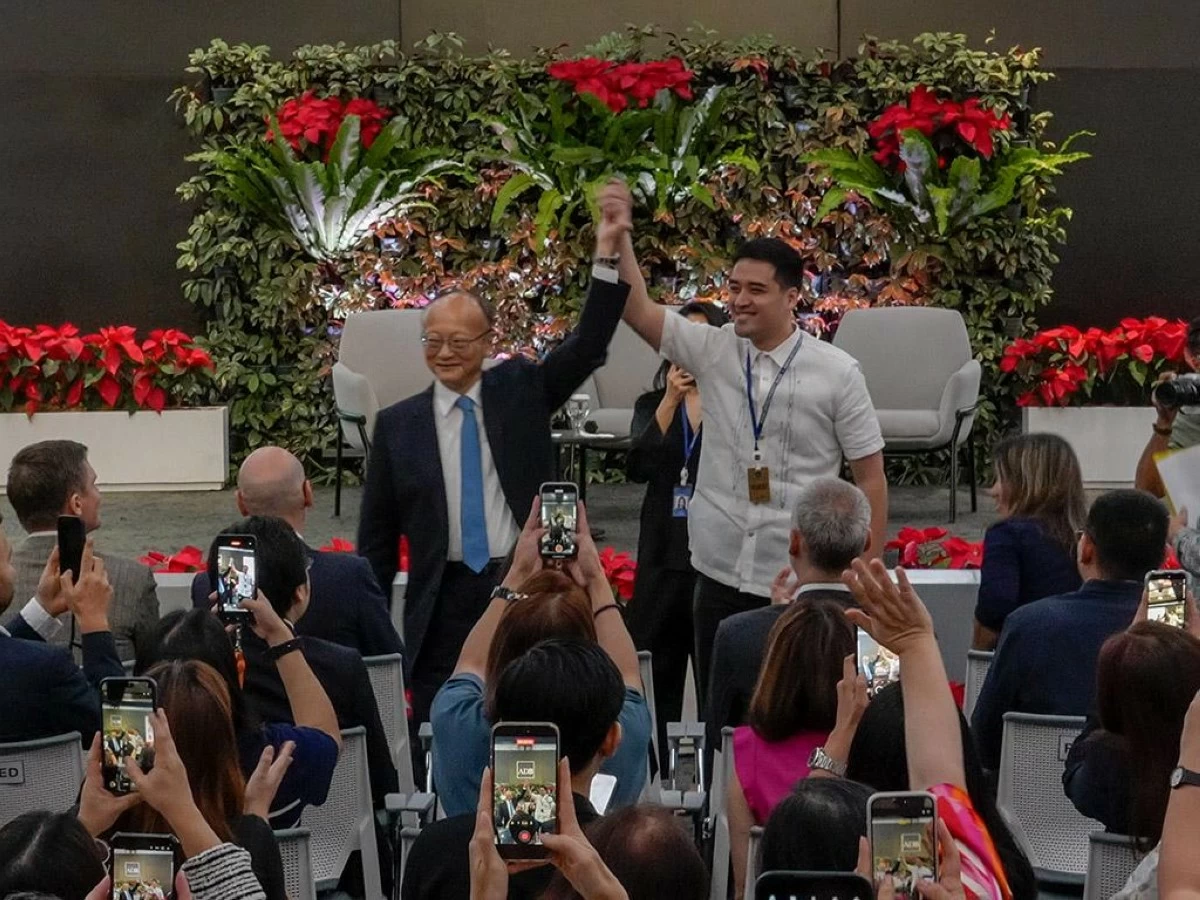
ADB President Masato Kanda and Pasig City Mayor Victor Ma. Regis Sotto at ADB’s International Anticorruption Day 2025. (Photo from ADB website)
Pasig City Mayor Vico Sotto called on institutions and individuals to help make corruption socially unacceptable, stressing that real change comes from daily actions and sustained commitment.
During a panel discussion entitled “Embedding a Culture of Integrity: Lessons from Local Government and Procurement” held at the Asian Development Bank (ADB) headquarters on Dec. 12, Sotto said corruption has become deeply rooted in society and cannot be addressed through quick fixes or short-term solutions.
“Corruption has been deeply ingrained in our culture and our institutions,” he said.
“There is not going to be an easy way. There is not going to be any shortcut that we can take to get there tomorrow,” he added.
Sotto said progress depends on consistent efforts, whether small or big, carried out every day.
“But the goal is to work on it every day to make it not normal to be corrupt. In this normal, maging nakakadiri maging corrupt. Before we know it, baka nagbago na ang Pilipinas (The goal is to work on it every day to make corruption abnormal. In doing so, corruption should become repulsive. Before we know it, the Philippines may have already changed),” the mayor said.
He stressed that integrity should be embedded within institutions and reflected in everyday work.
“It’s not just a value we promote externally. It is something we must embed into every ADB staff member and every layer of our organization,” Sotto said.
According to the mayor, this approach ensures that good governance is reflected in decisions, contracts, and partnerships.
Sotto also called for stronger institutions that promote transparency, participation, and accountability.
“We should go back to the basics of changing the culture slowly but surely, increasing our expectations from the government and strengthening our institutions for transparency, participation, and accountability,” he said.
He also urged stakeholders to work together to sustain reforms and build public trust.
“Let’s not waste the opportunity to push the envelope forward. Let’s work together for a better, more honest Philippines,” Sotto said.
ADB President Masato Kanda described corruption as a “tax on the poor,” saying it siphons away resources intended for development outcomes and undermines efforts to lift people out of poverty.
“Every year, corruption diverts funds meant to pave roads, build schools, and shield the vulnerable from economic shocks,” he said.
“The loss of these funds is not an accounting error. It is a tax on the poor that siphons away the future. Without integrity, our work is fragile and short-lived,” Kanda added.
Kanda emphasized that corruption remains a major barrier to sustainable growth and accountability in the region.
He called on governments, private sector partners, and civil society to work collectively to address corruption’s complex challenges through strong institutions and transparent governance.