






Manila Bulletin
 Business
Banking & Finance
As Philippines faces widening climate finance gap, PIDS urges stronger policies
Business
Banking & Finance
As Philippines faces widening climate finance gap, PIDS urges stronger policies
Business
Banking & Finance
As Philippines faces widening climate finance gap, PIDS urges stronger policies
As Philippines faces widening climate finance gap, PIDS urges stronger policies
Published Dec 15, 2025 12:00 am
|
Updated Dec 13, 2025 02:43 pm


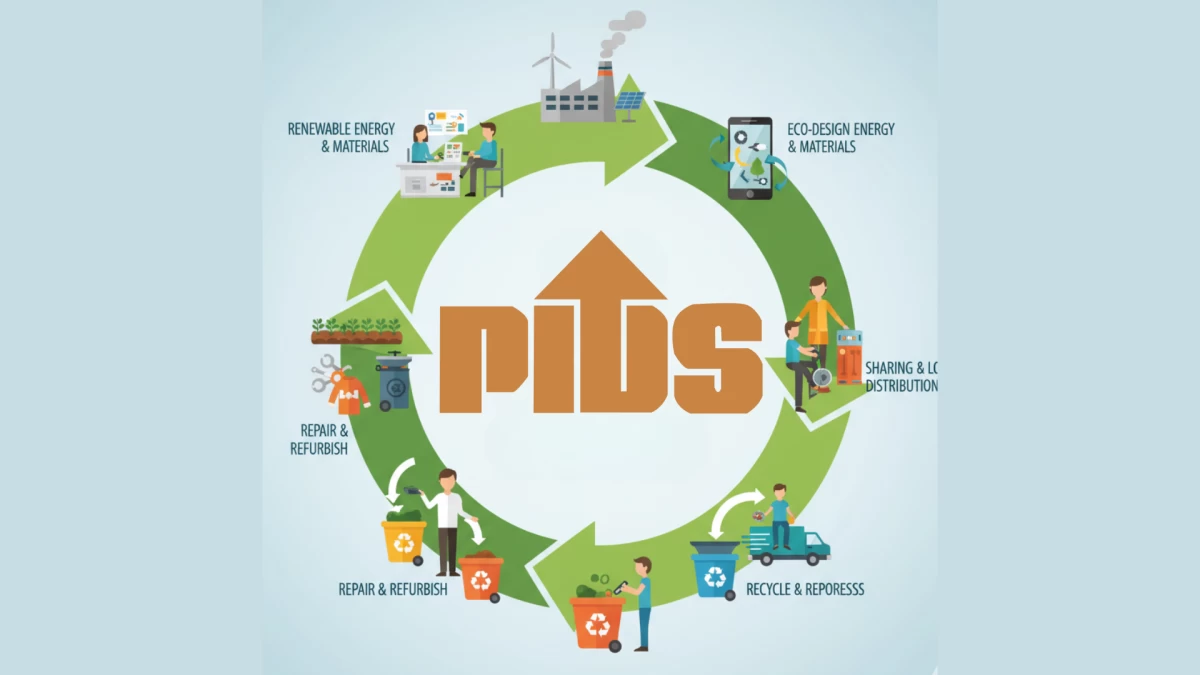
The Philippines is at a critical juncture for developing climate finance, state-run policy think tank Philippine Institute for Development Studies (PIDS) said in a new report, highlighting both strong public awareness and institutional limitations.
In a Dec. 10 discussion paper titled “Climate Change Perceptions and Climate Finance Mechanisms in the Philippines: A 2025 Assessment,” PIDS senior research fellows Jose Ramon G. Albert and Sonny N. Domingo, supervising research specialist Deanne Lorraine D. Cabalfin, and research analysts Mohammad A. Mahmoud and Roselle F. Guadalupe said the Philippines is at a crucial point in advancing climate finance.
PIDS noted that strong public awareness of climate change offers significant opportunities to implement related policies, but existing institutional limitations could prevent the country from fully capitalizing on this potential.
“Successful climate finance development requires careful attention to both social acceptance factors and institutional capacity constraints, with policy interventions that can bridge the gap between public readiness and institutional capability,” the think tank said.
It recommended “enhancing public engagement and climate communication,” saying the Philippines’ exceptionally high climate awareness—90 percent of respondents recognizing climate change as a serious problem and 81 percent viewing it as very serious—offers an unprecedented foundation for implementing climate policies through targeted communication strategies.
“The strong public concern about flooding (71 percent of respondents) should guide adaptation finance priorities, ensuring that climate finance mechanisms prioritize flood protection infrastructure and early warning systems that resonate directly with public concerns and maintain political support for climate finance initiatives,” it added.
The think tank also identified key knowledge gaps, noting that awareness of policies strongly predicts support for specific climate measures. It urged comprehensive climate finance literacy programs to demonstrate how various financing mechanisms directly address the climate risks Filipinos worry about most, particularly flooding and extreme weather events.
The PIDS paper added that regional communication strategies should consider demographic differences in climate concern, noting that Filipinos aged 35 to 54 show higher levels of awareness than other age groups. This calls for age-specific approaches to maximize engagement across the population.
Climate finance literacy programs should also focus on transparency and accountability, “given public preferences for anti-corruption measures (45.55-percent support) and international support (44.7-percent support) in climate finance funding, ensuring that communication strategies address public concerns about resource management while building support for specific climate finance mechanisms,” PIDS said.
The paper urged boosting institutional capacity for climate finance, recommending that the Bangko Sentral ng Pilipinas (BSP) explore targeted measures to support climate projects, following successful examples from Malaysia and Singapore.
“The BSP should accelerate integration of climate risk into Financial Stability Reports by developing proprietary climate scenarios tailored to Philippine conditions, building on existing research that demonstrates significant macroeconomic impacts from temperature shocks, including 0.37-percentage-point (ppt) reductions in aggregate output growth and 0.46-ppt increases in inflation from each one-degree-Celsius temperature increase,” it added.
While the BSP can use existing Network of Central Banks and Supervisors for Greening the Financial System (NGFS) scenarios, the think tank emphasized that creating country-specific scenarios would improve risk assessments and guide climate finance policy more precisely. It also recommended aligning regulations with International Sustainability Standards Board (ISSB) standards beyond current Task Force on Climate-related Financial Disclosures (TCFD) compliance to strengthen disclosures and enhance climate risk transparency in the financial sector.
“Enhanced coordination mechanisms between the Climate Change Commission (CCC), the BSP, the Department of Finance (DOF), and other relevant agencies should ensure coherent climate finance policy development and implementation that leverages each institution’s comparative advantages,” PIDS added.
It also called for expanding CCC’s climate change expenditure tagging (CCET) system to track private and international climate finance and to strengthen technical expertise across agencies and financial institutions.
The think tank further recommended developing innovative climate finance mechanisms, noting that the Philippines faces an annual climate finance gap of $9 billion to $12 billion, while current flows are around $2.8 billion. It stressed that innovative mechanisms should prioritize adaptation finance to address strong public concern over flooding and the country’s climate vulnerabilities.
“The development of specialized adaptation finance mechanisms should channel resources toward flood protection infrastructure, early warning systems, and climate-resilient infrastructure that directly address public priorities while building demonstration effects for broader climate finance adoption,” the PIDS paper said.
PIDS added that progressive climate finance mechanisms should reflect public priorities, including preferences for progressive taxation and anti-corruption measures, to ensure equitable burden-sharing and transparent resource allocation.
“The expansion of green bond markets should build on the Philippines’ successful Green Energy Auction Program (GEAP), which mobilized $6.6 billion in renewable energy investments, by developing standardized frameworks for adaptation bonds and resilience bonds that can attract both domestic and international capital for climate resilience projects,” PIDS said.
The paper urged the Philippines to improve coordination and access to international climate finance, highlighting the country’s opportunity to leverage its vice chair role in the Association of Southeast Asian Nations (ASEAN) Taxonomy Board to shape regional standards.
“The development of a national climate finance strategy should align domestic priorities with international funding requirements, ensuring that project pipelines are developed systematically to maximize international climate finance absorption while addressing national adaptation and mitigation priorities,” it added.
Finally, the PIDS paper called for stronger coordination with multilateral development banks (MDBs) to maximize the impact of the $3.5 billion in climate finance provided by the Manila-based Asian Development Bank (ADB) from 2019 to 2023, ensuring it effectively leverages domestic resources and private sector participation.
“Technical assistance and capacity-building support from international partners should focus on developing specialized expertise in climate finance mechanism design, monitoring and evaluation (M&E) systems, and regional coordination that can enhance both domestic climate finance effectiveness and international climate finance access over time,” PIDS said.