







How comedy heals past wounds
Finding joy in laughter, light roasts, and stand-up comedians
By Poch Eulalia
Published Oct 10, 2025 10:25 am


At A Glance
- There were stories of traumatic events, tragic losses, heart-wrenching break-ups, nightmare workloads, and somehow the performers onstage managed to work their magic and turn each crushing moment into punchlines we all enjoyed.
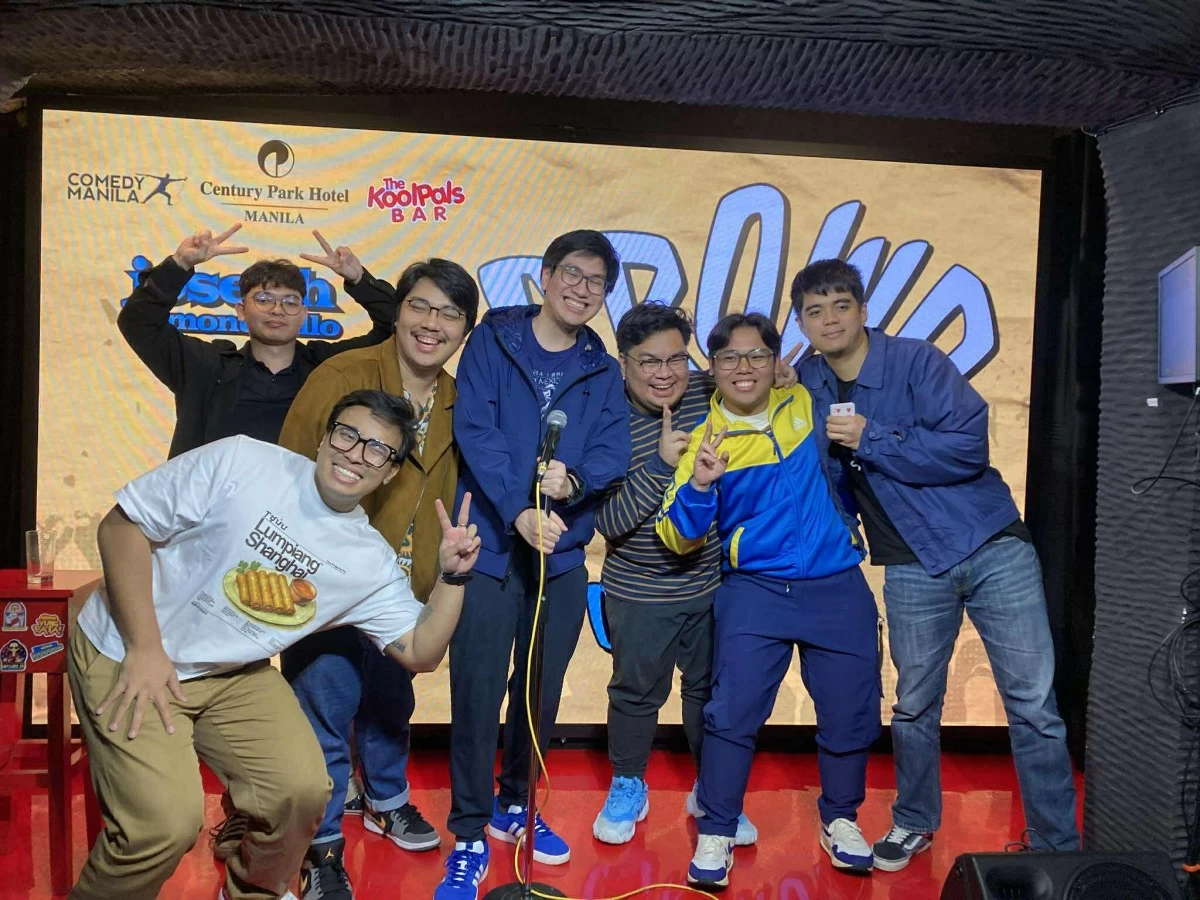
MODERN DAY PHILOSOPHERS (From left) Dex Conche, Emman Lauz, River Cruz, Joseph Montecillo, Russel Arabis, Ron Dulatre, and Jasper Reyes
Though a crowd of 11 people might not seem much for a comedy show, we felt an immense joy that let us escape our mundane lives for even just a short while.
From reels online, a crowd work show might seem like a risk to watch live, in fear that you become targeted by the performer’s playful jabs. There are those who might find themselves turning viral and immortalized online over what should’ve been a five-second gag. Others could be bold enough to heckle the performer, oftentimes unsuccessfully, and end up making a proper fool of themselves. This recent crowd work performance we caught live at the Koolpals Bar at Cellar, Century City Hotel, however, shows us these risks are worth taking.
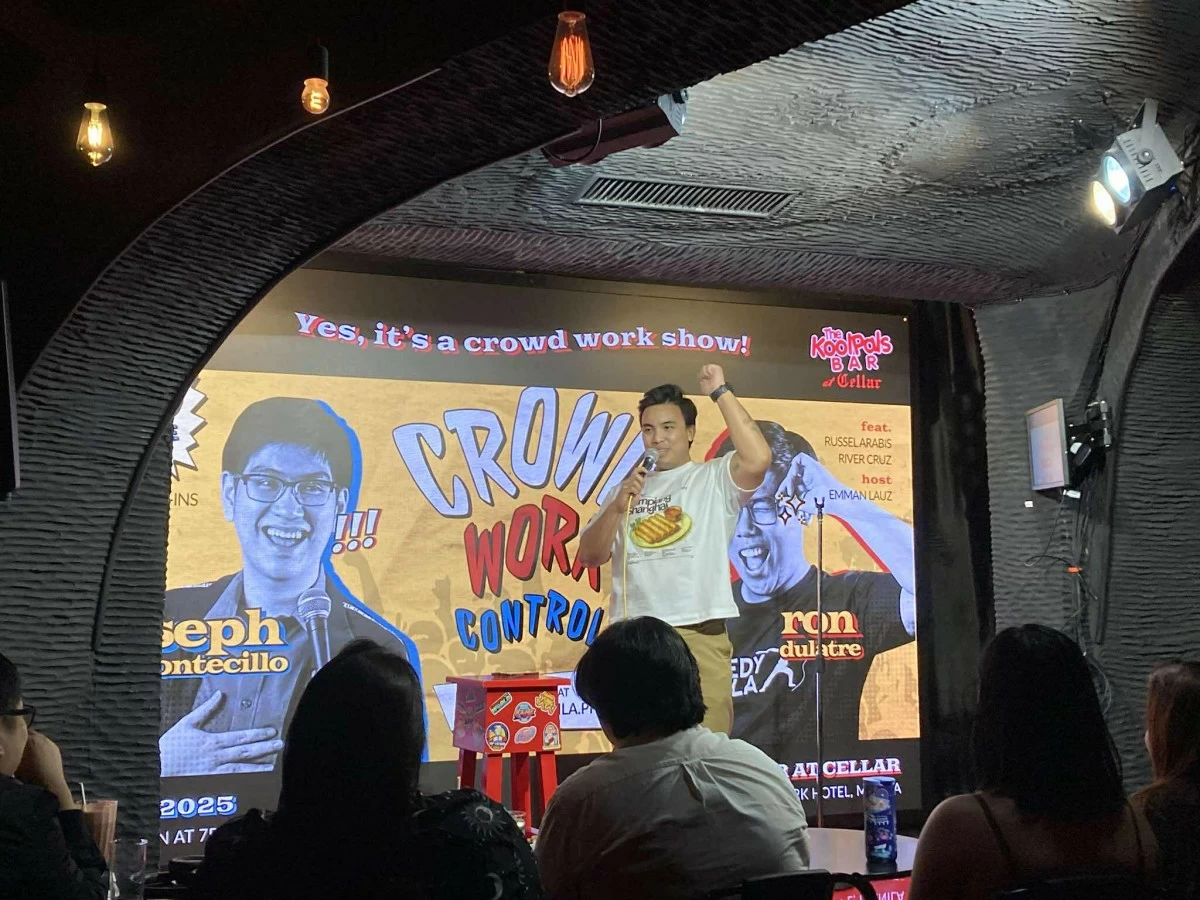
STARTING THINGS UP Pencilbox Comedy's Emman Lauz acts as the emcee for the night.
In one night, seven stand-up comedians (Joseph Montecillo, Ron Dulatre, Emman Lauz, Dex Conche, Russel Arabis, Jasper Reyes, and River Cruz) took to the mic and gave their all in making sure everyone in the room had a good laugh. No one was spared from each performer’s act, as much of the show was interactive, with those onstage asking members of the audience about their personal lives to find material to work with. Yet, even with all the light roasts being thrown, it almost felt like a therapeutic experience for those present to share aspects of their life willingly as material for quick jokes. There were stories of traumatic events, tragic losses, heart-wrenching break-ups, nightmare workloads, and somehow the performers onstage managed to work their magic and turn each crushing moment into punchlines we all enjoyed. After the show, we sat down with the night’s main acts, Joseph and Ron, to see just how comedy manages to get us through hard times and what it’s like to be behind the mic.
What got you guys into comedy?
Joseph: It was Childish Gambino’s one-hour comedy special. In the middle of it he was talking about how he was a writer, an actor, a rapper… And I was like, I’m two out of three of those things. I guess I’ll fill the set and be a comedian.
Ron (interrupting): I’m also black!
Joseph: (sarcastically) I’m also partially black and hated for it! I was watching the special and I was like, “I could do that!” I could tell jokes for awhile and that just motivated me to seek out an open mic and I never really stopped after that.
Ron: I found out about stand-up through Solid OK’s “Blagag!” They had this open mic competition and when I saw it, I thought, “Oh ito na! It’s my chance! May stand-up na sa Pilipinas!”
Joseph: And it had been there for 10 years!
Ron: I didn’t really know the scene before then. Bakit ako nag stand-up? Well, ito, baka maka-relate mga other comedians, pero to the layman, it would sound narcissistic… I know nakakatawa ako, and kailangan 'ko ng outlet for it. Kaya 'kong magpatawa eh, para siyang may superpower ka pero kailangan mo i-testing kung totoo, “Alam ko pwede ako dumikit sa pader eh!” (Why did I do stand-up? Well, here, I know other comedians might relate, but to the layman, it would sound narcissistic… I know I’m funny, and I need an outlet for it. I can make people laugh, it's like when you have a superpower and you need to test if it’s true, “I know I can stick to walls!).
Joseph: And if I fall, I fall!
Ron: Yes, but I have to test it. It was instinct.
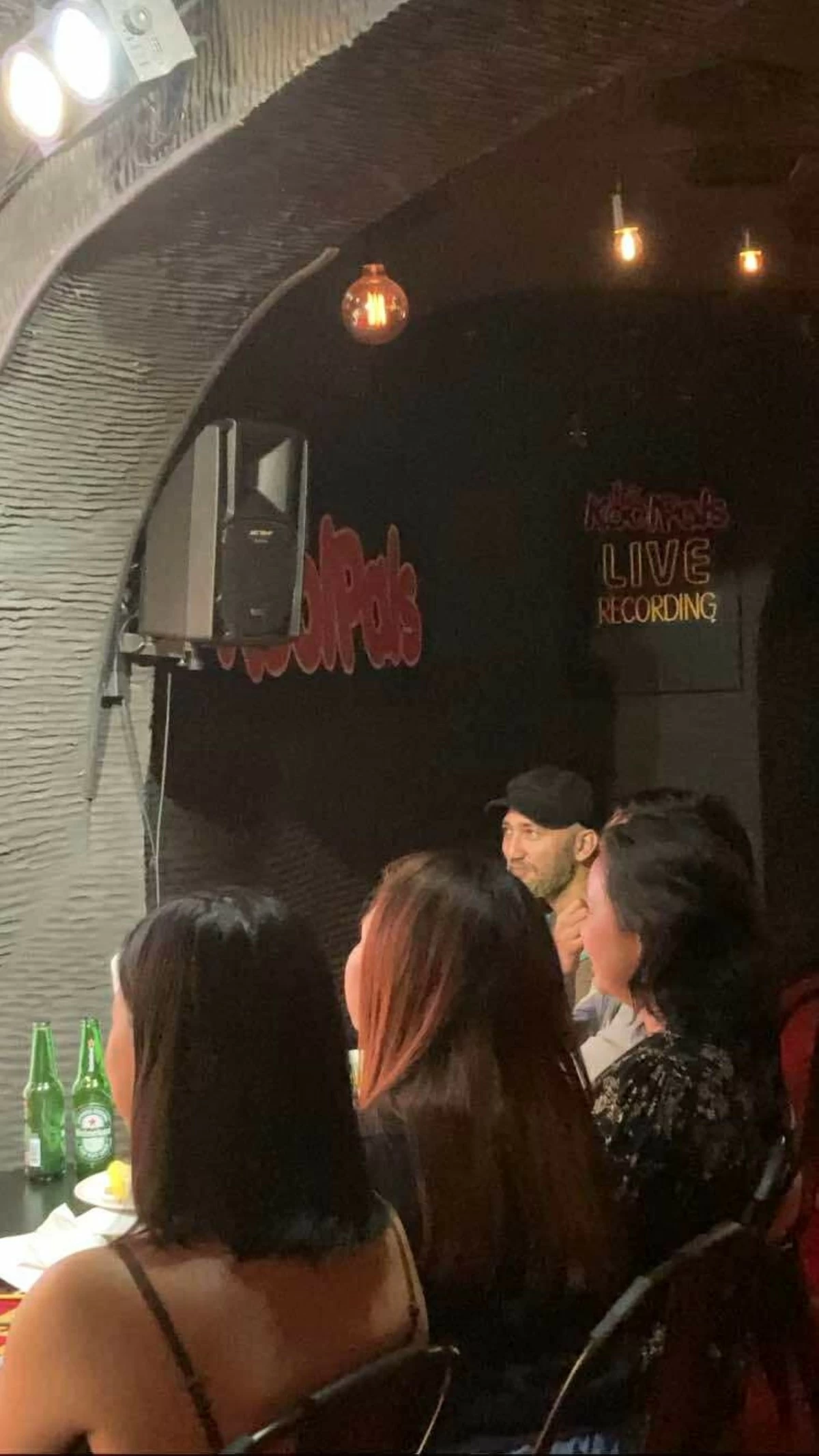
CROWD AT WORK Pura Luka Vega joins in on the fun.
Crowd work isn’t easy. Sometimes, you can have a dead audience or someone could get mad. How do you guys deal with working with a crowd, especially if it’s not in your favor?
Joseph: I think when you do a crowd work show, it’ll be leaning in your favor because people who buy a ticket know what the deal is. Like earlier, during my set, there were people who went, “Oh, don’t post this.” They know it might go online, that it’s all part of the show and all part of the fun. I think it’s much harder when it’s not advertised as a crowd work show and you’re just doing a set. Maybe someone heckles or is just not feeling the vibe. In that time, you can either go on the defensive and just plow through the jokes, or you can go on the offensive and point it out.
Ron: I really didn’t know that our crowd was going to be this good tonight. If it was your first time watching stand-up, hindi ganon 100 percent of the time mga crowd namin (our crowds aren’t like this 100 percent of the time). This was like, suntok sa buwan (a punch to the moon), one-in-a-million that the crowd was so good. Let’s be honest, there were only 11 people in the crowd, but they were laughing like there were 12 of them. In any case, with any crowd work show, the thing is to be prepared to talk to people. Be flexible about where they take their stories. Be prepared to make something funny. That’s the hard part, your instinct always has to be on. Usually, our instincts aren’t on when we do written material because we know the script, but here, our Spidey senses always have to be on. How do I make this funny?
Joseph: With crowd work, you have to give off the vibe that we’re not making fun of you, but we’re making fun with you. It has to feel inviting, almost like a social interaction. You can tease or even roast lightly, but a key part of it is doing it with the feeling of we’re all welcome.
Sometimes things can get ugly. Have you guys ever been heckled before?
Ron: (sarcastically) Crowds are always ugly!
Joseph: Especially when I look at their face!
Ron: Heckled? No, not in the traditional sense where the crowd gets angry at you. Heckling can come in many different forms. The closest I had was when an audience member kept talking to me enthusiastically, every time I was setting up a joke, they would go, “Oo nga eh! Ako rin (Yes, that also happened to me)!” As a good comedian, you have to weave in what they’re saying. I had to make them feel like they’re still part of it because if I say, “Hey ma’am, pwedeng ‘wag ka muna mag ganon nag-jojoke pa ako (Hey ma’am, please stop, I’m trying to do a show),” then that kills the vibe. They won’t laugh because you basically told them to shut up. I had to act like what they said was part of my setup, but it was really distracting. I tried to do a punchline, but they were talking so much that they didn’t hear it because they were talking so much, so I had to do it again.
Joseph: I’ve had two bad experiences with a crowd that stands out. The first was that I was booed off stage at a UP Maskipaps event, which is like 500 engineering students being like, “Boooo!” That was devastating. It was during my closer though, it was my first year doing comedy, so I was just going to finish the set, walk away, then cry. There have been hecklers through the years. It’s important to read the room. How does everyone else in the room feel about the heckler? If they’re also annoyed, they’ll be on your side if you give them a little hell. If the heckler has the same energy as the room, now I’m fighting all of you, and that’s a little bit weird. It’s all about reading the room and gauging whether you need to welcome them back in or stamp them down a little. I can be a lot more aggressive when I’m frustrated with the crowd.
Ron: It’s not like a heckler goes to a show just to heckle. Sometimes they just think they can contribute to the show, like, “I’m helping you!” That’s their mindset, but I have to put them down gently or find how to transition back without stepping on them too much.
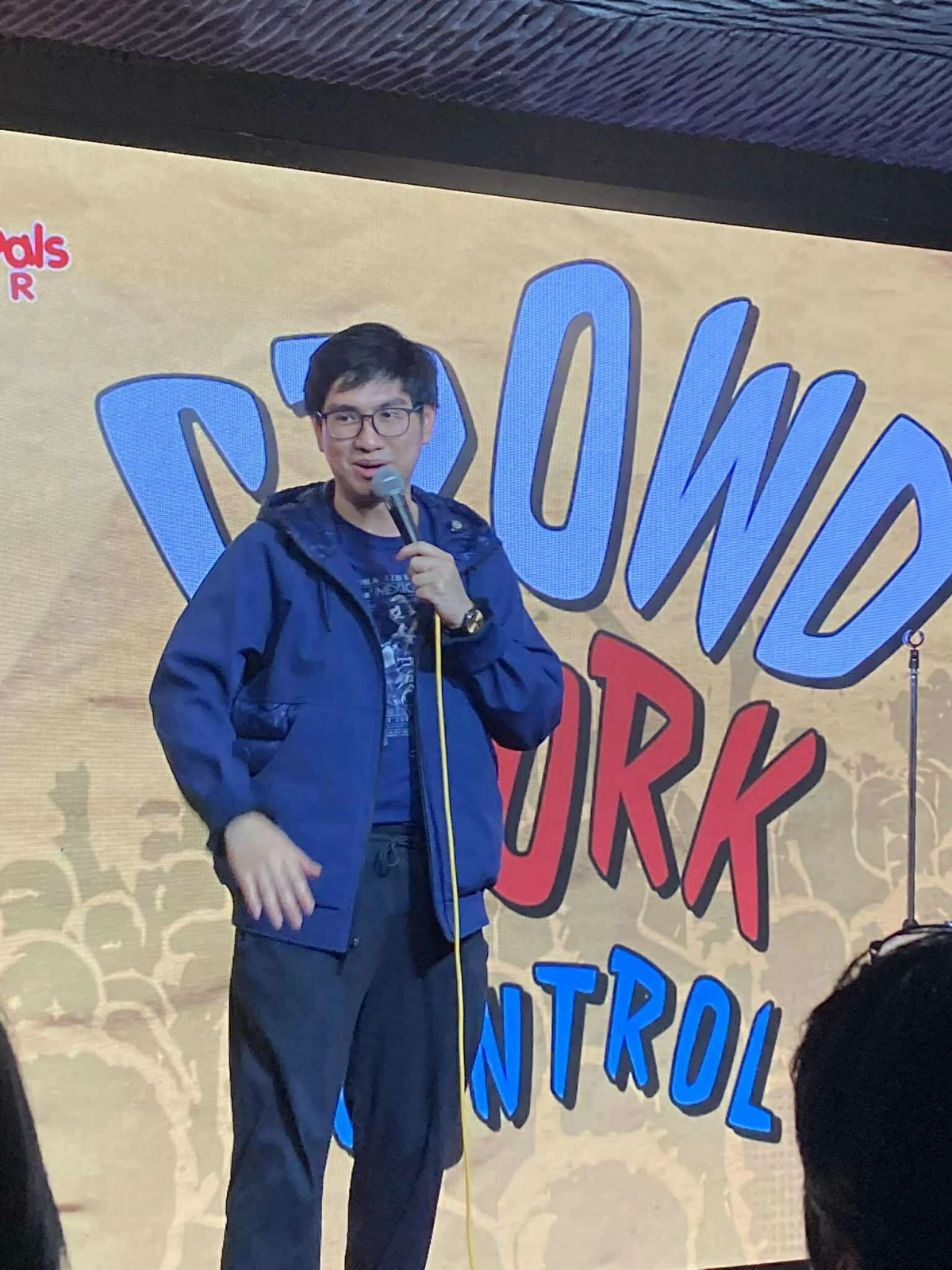
Joseph Montecillo
Some people might think some things shouldn’t be joked about. What are your opinions on that?
Ron: I think there’s nothing you cannot joke about. You can joke about anything. My only rule with dark humor is that it has to be funny first. I’ve known many dark comedians who enjoy the reaction. They love the fight. No, we’re stand-up comedians first. You can joke about anything so long as you’re funny, that’s the most important thing. When I started out as the edgy comedian, I got those same reactions and thought, maybe I should do clean so that I can laugh, but every time I wrote and progressed, it always ended up in dark humor. I’ve gotten good, and my jokes are funny, which doesn’t elicit a (negative) reaction. When you’re a new comedian, dark comedy is an easy hole to fall into because it’s the easiest thing to get a reaction from. It’s not even dark humor, just say offensive sh*t, swear at the crowd, say bad words… It can be anything just to elicit a reaction. The number one reaction you should always want to make is laughter.
Joseph: The way I’ve worked around it is that all my jokes have to come from a true place, that I actually feel this way. That’s not to say I don’t have jokes that step on the line, but maybe just a little. Certainly less than Ron. I would like to create an environment where people get what I’m saying is ironic. Or that I’m saying an offensive thing because it’s funny that someone would believe that. I have less experience towing that line; my stuff tends to lean more toward observational. It’s tricky. Sometimes things offend people that you don’t realize would. You just got to roll with the punches, see where you draw the line personally, and rewrite or adjust as needed.

Ron Dulatre
Some jokes might trigger a violent reaction, like in the case of Gold Dagal. What was it like for the comedy scene after such an event took place?
Ron: Friendships were tested. There were comedians who got really paranoid. There were comedians who wanted extra protection on shows. It really scared others, and it has this shockwave that is still felt until now. As a comedian, I’m f*cking pissed that someone would go to that length. I’m more angry than scared. Who would do that over a joke? Justice for Gold Dagal!
Joseph: I think it’s a shame that something so horrible had to happen in this particular creative field. It’s easy to hide behind the idea that we’re just telling jokes, but at the end of the day, who are we? Who are we that that’s the kind of awful event that would have to happen? It was a difficult thing that happened to the scene, and people were rightfully upset about it in many different ways. We can only hope to be stronger and safer as comedians together. You can’t let it taint everything.
Ron: We can add extra measures, be more careful about what we post, but we can’t let it stop (from making jokes). “Oh, ‘wag na kayo mag joke about this (Oh, don’t make jokes about this),” that’s what I was mostly scared of. That there would be comedians who would start acting like, “Don’t post this, don’t say that, etc.” I think we still should. We should be careful, yes, but I don’t think we should stop (making those jokes). Comedians… We’re the modern-day philosophers!
Joseph: (lengthy groan) No, we’re really not.
Ron: I’m Aristotle, he’s Socrates. This is our amphitheater!
Joseph: In no world are we anywhere close to philosophers! We tell d*ck jokes!
What do you think the local comedy scene will be like in the coming years?
Ron: Mas matanda na 'ko (I’ll be older).
(A short pause ensued as laughter filled the room)
Ron: I believe it will continue to grow. In the last two years, our open-mic numbers doubled. Every week we have a new open mic performer who tries, who was a viewer last time, and it’s their first time doing stand-up… They may not last very long, but they still tried. Some people would stick and would get good. I think it will grow in the next few years.
Joseph: It’ll be even more globally competitive, which is not to say that we cater to the humor of other countries or focus on English comedy, but just that the country is known for being a place that produces great, funny comedians. We’re well on that path. There are more venues, more shows happening, more comics popping up. It’s on the up, and it has been on the up since I started all those years ago. I think it will continue to get better.
Joseph is a writer and has been a comedian since 2014. He works on shows with Comedy Manila. Ron was born on a crisp June morning in 1999 and has been doing stand-up since 2021.