






Manila Bulletin
 Business
Trade & Industry
Over 900,000 new motorcycles hit Philippine roads in first half
Business
Trade & Industry
Over 900,000 new motorcycles hit Philippine roads in first half
Business
Trade & Industry
Over 900,000 new motorcycles hit Philippine roads in first half
Over 900,000 new motorcycles hit Philippine roads in first half
Industry group MDPPA targets 5% sales growth for 2025
Published Aug 18, 2025 12:00 am
|
Updated Aug 16, 2025 02:47 pm


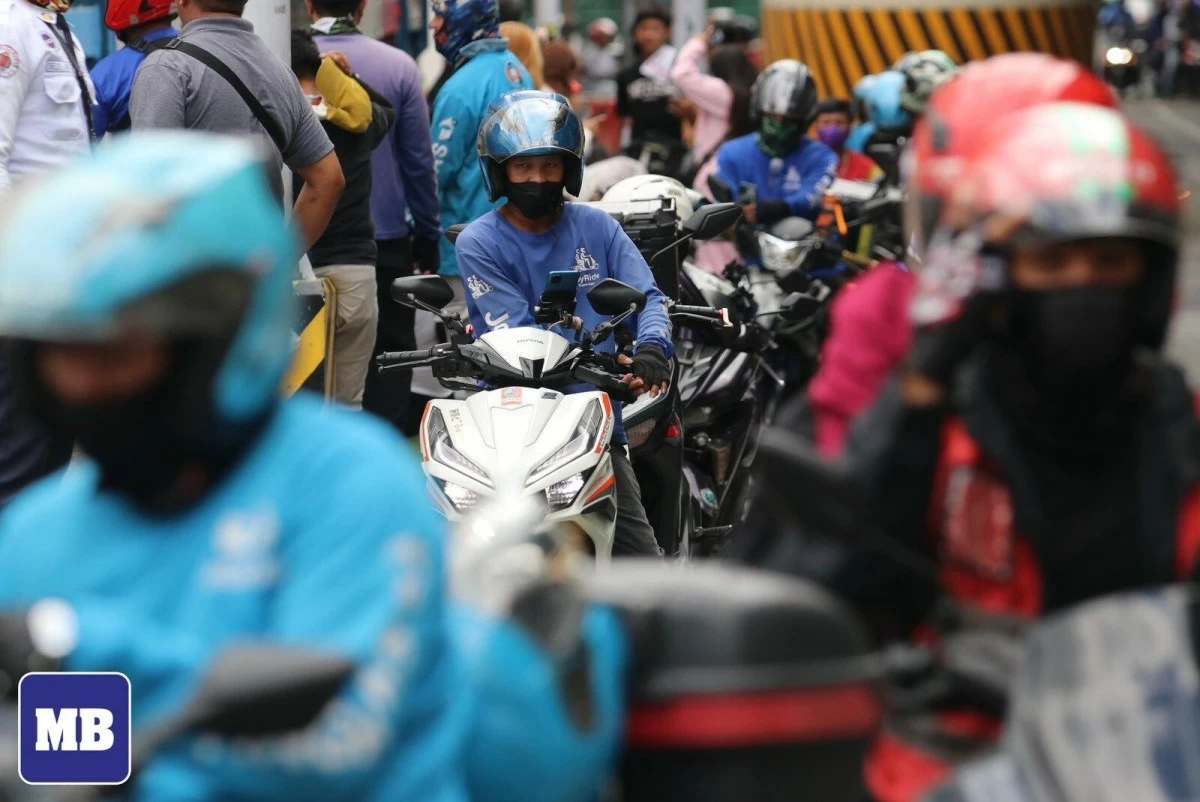
Over 900,000 motorcycles were added to Philippine roads in the first half of the year, driven by growing demand for greater mobility to navigate through heavy traffic and congested urban areas.
According to the Motorcycle Development Program Participants Association Inc. (MDPPA), 910,923 motorcycle units were sold from January to June this year, a 4.8-percent increase from last year’s 876,074 units.
In June, an estimated 164,907 motorcycles were purchased by consumers, an impressive increase from the 136,284 units sold in the same month last year, based on separate data from the Federation of Asian Motorcycle Industries (FAMI).
MDPPA’s sales report was sourced from the local subsidiaries of four giant Japanese motorcycle brands—Honda, Kawasaki, Suzuki, and Yamaha—along with Indian brand TVS.
The group accounts for approximately 80 to 90 percent of domestic motorcycle sales and production.
MDPPA President Alex Cumpas said the upward trend in sales this year reflects the robust demand for motorcycles as a “practical solution” to daily commuting challenges.
“Their affordability, fuel efficiency, and ability to weave through heavy traffic, among other advantages, make them an essential choice for urban mobility,” he said in a statement last week.
While it did not elaborate on specifics, MDPPA said there is sustained growth across various motorcycle categories such as automatic, moped, street, business, big bikes, and niche motorcycle types.
The automatic and scooter category, in particular, led the industry in sales.
Rizal Commercial Banking Corp. (RCBC) chief economist Michael Ricafort noted that scooters topped sales so far this year due to their affordability and capability to travel longer distances as an alternative to four-wheeled vehicles.
More broadly, Ricafort expects other motorcycle categories to maintain their strong demand given the country’s limited mass transportation system.
“The fallback is motorcycle ownership, which is more affordable than passenger cars and commercial vehicles, also cheaper on fuel consumption or electric consumption, and also cheaper to maintain,” Ricafort told Manila Bulletin.
Based on FAMI data, which was sourced directly from MDPPA, domestic motorcycle production reached 720,516 units as of end-June.
In comparison, the same six-month period last year saw an output of 652,374 motorcycles, reflecting a 10.5-percent increase.
Since MDPPA figures are limited to its five member firms, the gap between domestic manufacturing and actual sales was likely filled by imports from competing Chinese and Taiwanese brands.
Banking on the country’s ongoing economic recovery and accessible financing options, MDPPA is confident of sustained growth in the second half of the year.
The industry group is projecting record sales for the full year, estimating a five-percent increase from last year’s sales of 1,682,482 units.
MDPPA’s record year was in 2019—pre-pandemic—when it sold a total of 1,704,898 motorcycle units.
Meanwhile, among FAMI’s seven-member associations, Indonesia topped the list with 3,104,629 motorcycles sold in the first half. Vietnam came in second with 1,284,291 units, while the Philippines ranked third.
Rounding out the list, Malaysia recorded 277,793 motorcycle sales, followed by Japan with 178,406 units. FAMI members Thailand and Taiwan have yet to release their first-half data.