

ADVERTISEMENT

This new website lets you create pixel art over the world map

Tiny artworks shine around the globe

Published Aug 7, 2025 10:15 pm
UY, PHILIPPINES Sprite artworks appearing over various areas of the NCR
A newly-launched website allows users to create pixel art using the world map as its canvas.
Wplace is a Brazilian website that acts as a live canvas where users can paint over pixels anywhere in the world. Based on the launch video, there are over four trillion pixels just waiting to be filled in. The way the website works is simple. You just have to create an account and pick a place to start drawing your art. Users are presented with a select number of colors. As they continue to paint in more pixels, they gain access to other colors to fill their palette. There is a set limit on how many pixels they can fill in, with one pixel being recharged for use every 30 seconds. The mechanics are fairly similar to Reddit's r/place social experiment, where Reddit users worked together to fill in a blank canvas with pixels.
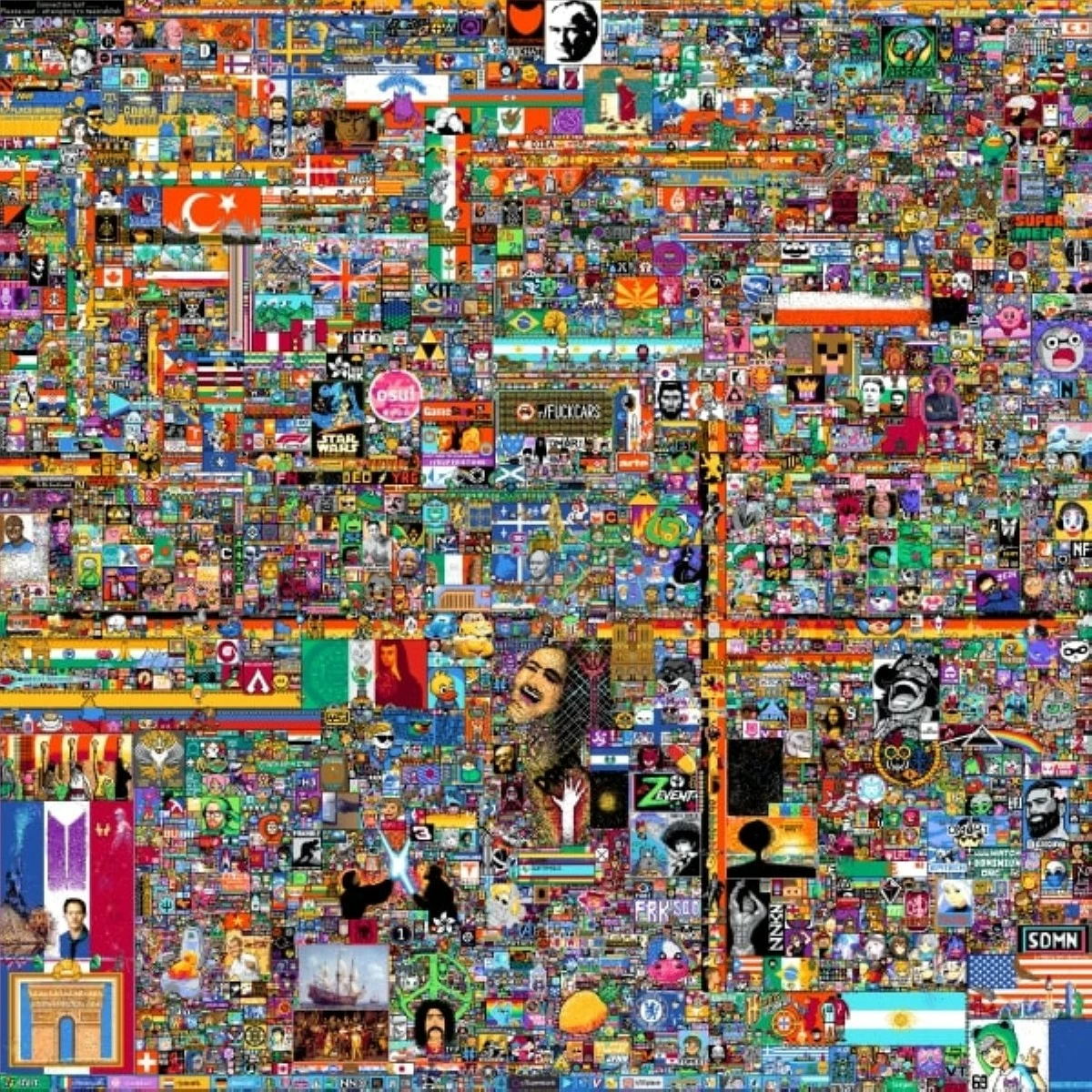
A FUN EXPERIMENT Reddit's r/place pixel art hub was initially launched as a social experiment
OH, BISCUITS Sprite artworks of Bluey and Bingo take over parts of the Australian map

DON'T TAP THE GLASS Fans of Tyler, the Creator place tributes to the rapper over the map of California

ENTER THE VOID A void-like creature appears to be overtaking some spots of the University of the Philippines Diliman
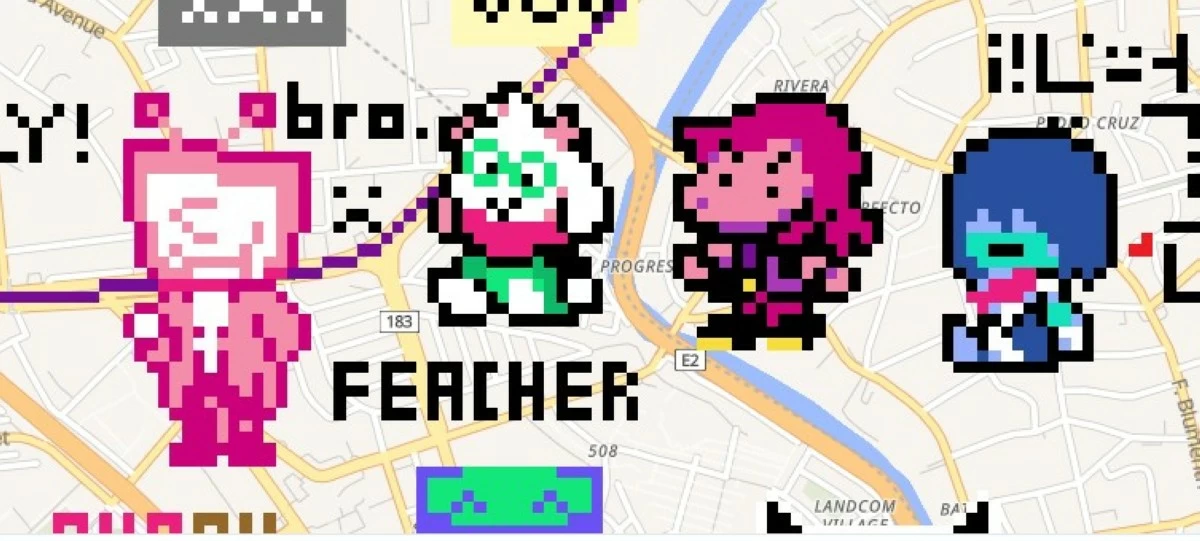
ALL FUN AND GAMES Sprite artworks of characters from 'Deltarune'
The world is your canvas
Already, there have been numerous sprites popping around over the Philippine map. Most of the art seen covering the map of the National Capital Region contains characters from video games like "Undertale," "Deltarune," "Among Us," and "Five Nights at Freddy's," to name a few. There are also fan arts of shows like "Dragon Ball" and webcomics like "Homestuck." Some even spend time trying to cement their alma mater, with icons representing the University of Santo Tomas and the University of the Philippines in their respective campus areas. Across the world, other artists are taking the time to create artworks representative of their local area. In Australia, there are multiple pixel artworks of the iconic Aussie children's show, "Bluey." Meanwhile, in the US, fans of Tyler, the Creator have dedicated a large chunk of California to cementing his albums.
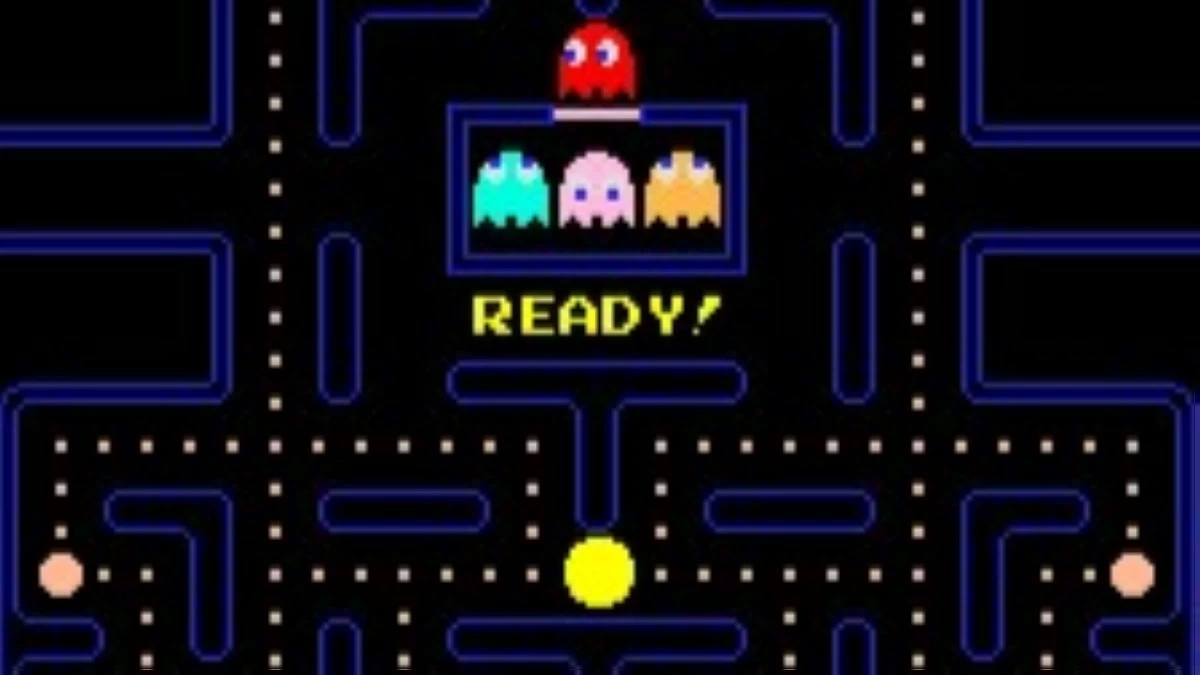
EARLY DAYS 'Pac-Man' is considered one of the highest-selling video games of all time since its launch in 1980
History of pixel art
Pixel art's beginnings can be attributed to even the earliest of art forms. Think back to all the early mosaic paintings, beadwork, and embroidery that made use of geometric patterns to create certain images. Though it was at the earliest roots of the video game era that pixel art flourished, as early video games like "Space Invaders" and "Pac-Man" paved the way. Throughout the 1980s, the surge of popularity in developing arcade games and home video games led to improvements in creating visuals. At the time, game developers had a limited palette of colors to work with, depending on the computer's graphics capabilities. These days, many might dismiss pixel art-style video games as outdated, though it continues to be a popular medium. Games like "Papers, Please," "Shovel Knight," "Terraria," and "Stardew Valley" continue to find success. 

Related Tags

Arts and Culture Wplace pixel art
ADVERTISEMENT
.most-popular .layout-ratio{ padding-bottom: 79.13%; } @media (min-width: 768px) and (max-width: 1024px) { .widget-title { font-size: 15px !important; } }

{{ articles_filter_1561_widget.title }}

.most-popular .layout-ratio{ padding-bottom: 79.13%; } @media (min-width: 768px) and (max-width: 1024px) { .widget-title { font-size: 15px !important; } }

{{ articles_filter_1562_widget.title }}

.most-popular .layout-ratio{ padding-bottom: 79.13%; } @media (min-width: 768px) and (max-width: 1024px) { .widget-title { font-size: 15px !important; } }

{{ articles_filter_1563_widget.title }}

{{ articles_filter_1564_widget.title }}

.mb-article-details { position: relative; } .mb-article-details .article-body-preview, .mb-article-details .article-body-summary{ font-size: 17px; line-height: 30px; font-family: "Libre Caslon Text", serif; color: #000; } .mb-article-details .article-body-preview iframe , .mb-article-details .article-body-summary iframe{ width: 100%; margin: auto; } .read-more-background { background: linear-gradient(180deg, color(display-p3 1.000 1.000 1.000 / 0) 13.75%, color(display-p3 1.000 1.000 1.000 / 0.8) 30.79%, color(display-p3 1.000 1.000 1.000) 72.5%); position: absolute; height: 200px; width: 100%; bottom: 0; display: flex; justify-content: center; align-items: center; padding: 0; } .read-more-background a{ color: #000; } .read-more-btn { padding: 17px 45px; font-family: Inter; font-weight: 700; font-size: 18px; line-height: 16px; text-align: center; vertical-align: middle; border: 1px solid black; background-color: white; } .hidden { display: none; }
function initializeAllSwipers() { // Get all hidden inputs with cms_article_id document.querySelectorAll('[id^="cms_article_id_"]').forEach(function (input) { const cmsArticleId = input.value; const articleSelector = '#article-' + cmsArticleId + ' .body_images'; const swiperElement = document.querySelector(articleSelector); if (swiperElement && !swiperElement.classList.contains('swiper-initialized')) { new Swiper(articleSelector, { loop: true, pagination: false, navigation: { nextEl: '#article-' + cmsArticleId + ' .swiper-button-next', prevEl: '#article-' + cmsArticleId + ' .swiper-button-prev', }, }); } }); } setTimeout(initializeAllSwipers, 3000); const intersectionObserver = new IntersectionObserver( (entries) => { entries.forEach((entry) => { if (entry.isIntersecting) { const newUrl = entry.target.getAttribute("data-url"); if (newUrl) { history.pushState(null, null, newUrl); let article = entry.target; // Extract metadata const author = article.querySelector('.author-section').textContent.replace('By', '').trim(); const section = article.querySelector('.section-info ').textContent.replace(' ', ' '); const title = article.querySelector('.article-title h1').textContent; // Parse URL for Chartbeat path format const parsedUrl = new URL(newUrl, window.location.origin); const cleanUrl = parsedUrl.host + parsedUrl.pathname; // Update Chartbeat configuration if (typeof window._sf_async_config !== 'undefined') { window._sf_async_config.path = cleanUrl; window._sf_async_config.sections = section; window._sf_async_config.authors = author; } // Track virtual page view with Chartbeat if (typeof pSUPERFLY !== 'undefined' && typeof pSUPERFLY.virtualPage === 'function') { try { pSUPERFLY.virtualPage({ path: cleanUrl, title: title, sections: section, authors: author }); } catch (error) { console.error('ping error', error); } } // Optional: Update document title if (title && title !== document.title) { document.title = title; } } } }); }, { threshold: 0.1 } ); function showArticleBody(button) { const article = button.closest("article"); const summary = article.querySelector(".article-body-summary"); const body = article.querySelector(".article-body-preview"); const readMoreSection = article.querySelector(".read-more-background"); // Hide summary and read-more section summary.style.display = "none"; readMoreSection.style.display = "none"; // Show the full article body body.classList.remove("hidden"); } document.addEventListener("DOMContentLoaded", () => { let loadCount = 0; // Track how many times articles are loaded const offset = [1, 2, 3, 4, 5, 6, 7, 8, 9, 10]; // Offset values const currentUrl = window.location.pathname.substring(1); let isLoading = false; // Prevent multiple calls if (!currentUrl) { console.log("Current URL is invalid."); return; } const sentinel = document.getElementById("load-more-sentinel"); if (!sentinel) { console.log("Sentinel element not found."); return; } function isSentinelVisible() { const rect = sentinel.getBoundingClientRect(); return ( rect.top < window.innerHeight && rect.bottom >= 0 ); } function onScroll() { if (isLoading) return; if (isSentinelVisible()) { if (loadCount >= offset.length) { console.log("Maximum load attempts reached."); window.removeEventListener("scroll", onScroll); return; } isLoading = true; const currentOffset = offset[loadCount]; window.loadMoreItems().then(() => { let article = document.querySelector('#widget_1690 > div:nth-last-of-type(2) article'); intersectionObserver.observe(article) loadCount++; }).catch(error => { console.error("Error loading more items:", error); }).finally(() => { isLoading = false; }); } } window.addEventListener("scroll", onScroll); });

Sign up by email to receive news.