








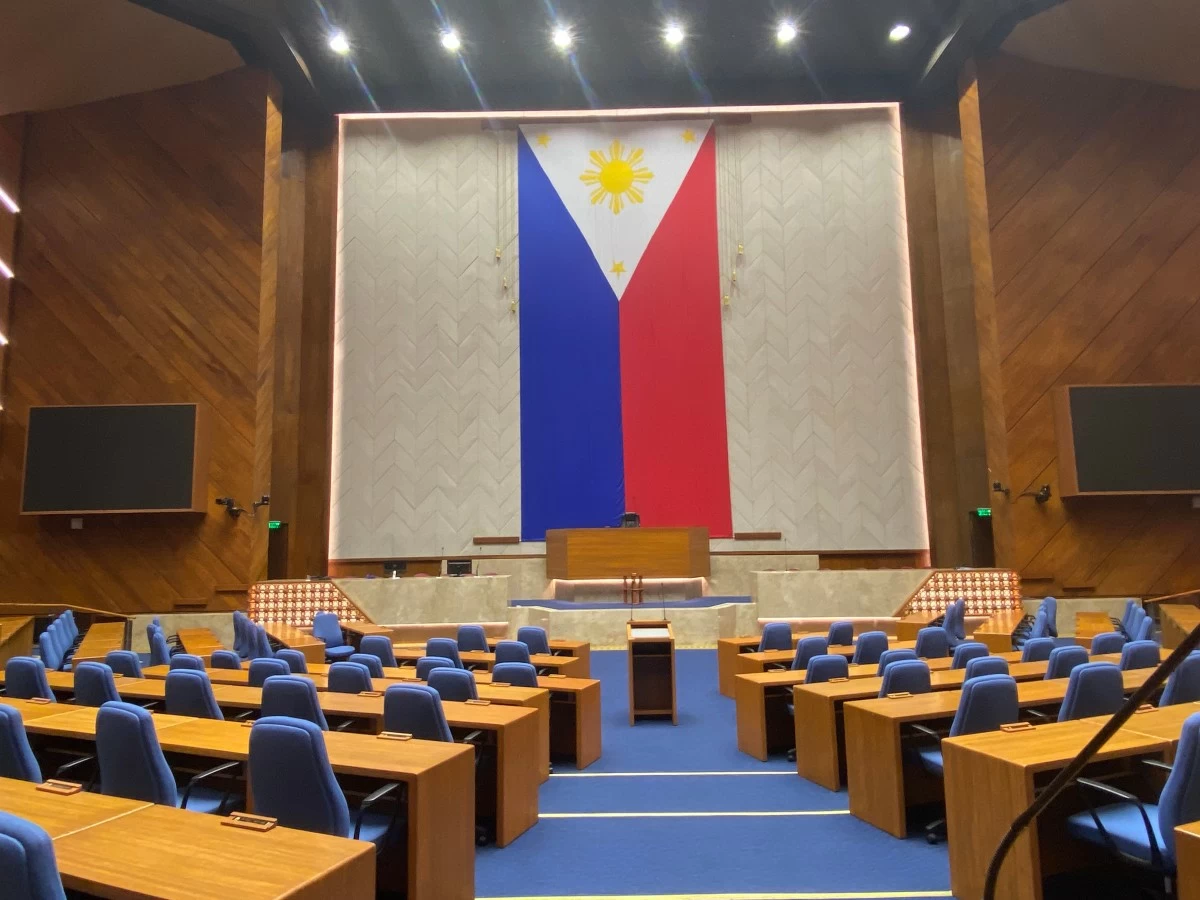
The House of Representatives has unanimously approved on third and final reading the bill institutionalizing a mechanism and setting criteria for the declaration of a state of imminent disaster and providing for government responses.
Garnering 177 affirmative votes during plenary session last Wednesday, June 4 was House Bill No. 11430, or the Declaration of State of Imminent Disaster Act.
It aims to prevent the loss of lives, properties, and livelihoods in the event of a disaster or a calamity, whether natural or man-made, says it principal author, House Speaker Martin Romualdez.
“The proposed Declaration of State of Imminent Disaster Act will enable the national government, local government units (LGUs), and our communities to better prepare for and respond to disasters or natural calamities. Better preparation and responses will save lives, properties, and livelihoods,” Romualdez said.
He noted that the Philippines, being located along the Pacific typhoon belt, is visited by an average of 20 storms per year which cause disruptions to life and economic activities, and even loss of lives. With climate change, these weather disturbances have become increasingly stronger.
HB 11430 authorizes the President, to declare a State of Imminent Disaster over a cluster of barangays, municipalities, cities, provinces, and regions using guidelines issued by the National Disaster Risk Reduction and Management Council (NDRRMC).
The local chief executive (LCE), through an executive order and upon the recommendation of the local DRRM council, may also declare a state of imminent disaster in his area of jurisdiction.
Various hazards, such as natural and human-induced disasters, epidemics, pandemics, other illnesses of public health concern, and other events disrupting the normal functioning of communities may cause the declaration of a state of imminent disaster.
The declaration shall allow the national and local DRRM councils to use national and local resources and mechanisms to implement anticipatory measures.
LGUs shall include planned interventions in their regular programs, plans, activities, and budgets. For national government agencies, implementation funding shall be charged against the National DRRM Fund.
The proposed law penalizes the following acts: Dereliction of duties, which leads to destruction, loss of lives, critical damage to facilities, and misuse of funds; preventing the entry and distribution of relief goods in areas declared under a State of Imminent Disaster, including appropriate technology, tools, equipment, accessories, shelter implements, and disaster teams and experts; and buying from disaster relief agencies, for consumption or resale, any relief goods, equipment, or other commodities that are intended for distribution to areas declared under a State of Imminent Disaster.
It also outlaws buying, for consumption or resale, from the recipient communities forecasted to be affected by an imminent disaster of any of their relief goods, equipment, or other aid commodities received by them; selling of relief goods, equipment, or other aid commodities that are intended for distribution to recipient communities forecasted to be affected by imminent disaster; forcibly seizing relief goods, equipment, or other aid commodities intended for or consigned to a specific group or relief agency for purposes of disaster preparedness; and diverting or misdelivery of relief goods, equipment, or other aid commodities to persons other than the rightful recipient or consignee; among other violations.