






 Philippines
National
Pedestrians barred from crossing San Juanico Bridge as gov't moves to address structural integrity issue
Philippines
National
Pedestrians barred from crossing San Juanico Bridge as gov't moves to address structural integrity issue
Pedestrians barred from crossing San Juanico Bridge as gov't moves to address structural integrity issue


At A Glance
- Instead, OCD executive director Ariel Nepomuceno said coasters and light vehicles will ferry passengers across to ensure safety and operational efficiency.
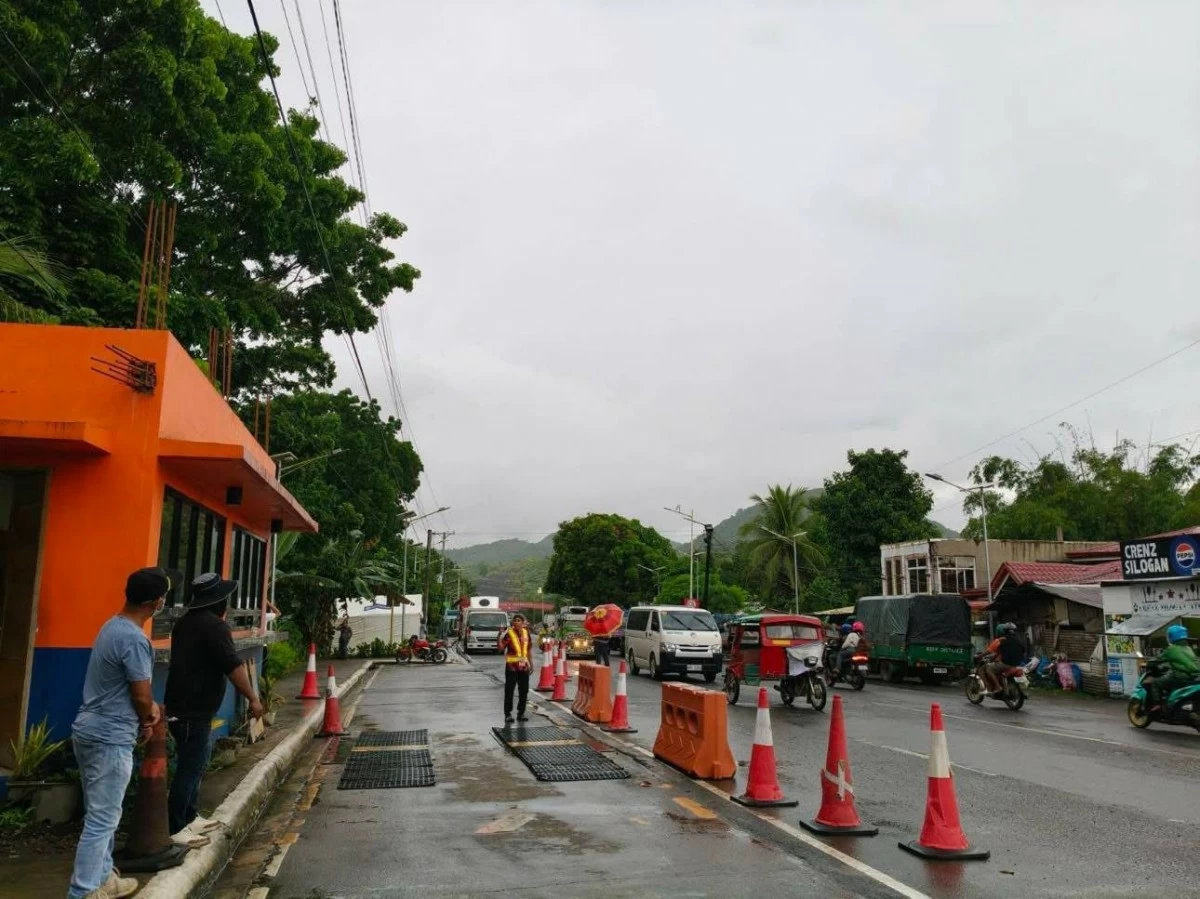
Pedestrians will no longer be allowed to cross the iconic San Juanico Bridge that connects Samar and Leyte following concerns on its structural integrity based on recent assessments by experts, the Office of Civil Defense (OCD) said on Sunday, May 18.
Instead, OCD executive director Ariel Nepomuceno said coasters and light vehicles will ferry passengers across to ensure safety and operational efficiency.
Nepomuceno said the ban on pedestrians crossing the bridge is just one of the many measures that will be implemented starting May 18 in order to ensure the safety of everybody while the national government is initiating moves to address the problem.
“We ask everyone to understand and work with us. Our top priority is the safety of travelers and residents. We will lift these restrictions only when we are fully confident that the bridge’s structural integrity is secure,” said Nepomuceno.
The national government earlier imposed a three-ton limit at the San Juanico Bridge over concerns of its structural integrity following the recent assessment by engineers and experts.
In order to consolidate the efforts, Nepomuceno said San Juanico Task Group (SJTG) was created and will be responsible for ensuring smooth traffic flow, security, and rapid response efforts across the bridge.
“The task force will collaborate closely with partner agencies to implement safety protocols and conduct ongoing structural assessments,” said Nepomuceno, adding that the OCD will serve as the lead agency.
Other measures include strict observance of the three-ton limit through the existence of vehicle weighing stations that will be manned by personnel from the Department of Public Works and Highways (DPWH).
Nepomuceno said security personnel will enforce these measures to prevent congestion and ensure safety, including the conduct of 24-hour patrols at strategic points, with deployment schemes coordinated among agencies to ensure continuous coverage.
To assist passengers crossing the bridge, Nepomuceno said an on-site One-Stop-Shop will be operational for franchise applications and permits.
Two temporary passenger terminals will be established—one in Tacloban City, Leyte, in front of Orly’s Restaurant, and another in Sta. Rita, Samar, near a food stop.
U-turns and staging areas along bypass roads, on the other hand, will help manage traffic and facilitate movement across the bridge.
Nepomuceno said heavy vehicles will be rerouted through proposed checkpoints strategically located in Sogod and Ormoc on the Leyte side, as well as in Palo, Tacloban, and Sta. Fe.
On the Samar side, proposed checkpoints will be established in Catbalogan, Taft, Basey, and Sta. Rita.
“These checkpoints will enforce rerouting policies, guiding trucks away from the bridge toward alternative routes such as Ormoc, to reduce stress on the structure and enhance safety,” said Nepomuceno.
The Blue Alert was earlier hoisted over the area and Nepomuceno said it will remain in effect following the enforcement of load limits on the San Juanico Bridge.
“This alert is issued in anticipation of slow-onset disasters or potential escalation of the situation. It underscores the need for heightened readiness, proactive measures, and strengthened inter-agency coordination to ensure the smooth flow of essential goods and services while mitigating emerging risks and disruptions,” he said.
Another important safety adjustment, according to Nepomuceno, is the setting up of a single Public Assistance Desk, through two Mega Tents located on both sides of the bridge to serve as the primary help point—from streamlining assistance to information dissemination.