







A congressional candidate in the province of Surigao del Norte is seeking the disqualification of her rival for supposedly using government facilities in the production of campaign material.
Surigao del Norte House bet seeks rival's disqualification
Published May 8, 2025 03:31 pm


At A Glance
- A congressional candidate in the province of Surigao del Norte is seeking the disqualification of her rival for supposedly using government facilities in the production of campaign material.
Lucille Sering, a candidate for the province's 1st district seat, filed a disqualification case before the Commission on Elections (Comelec) against Francisco "Lalo" Matugas.
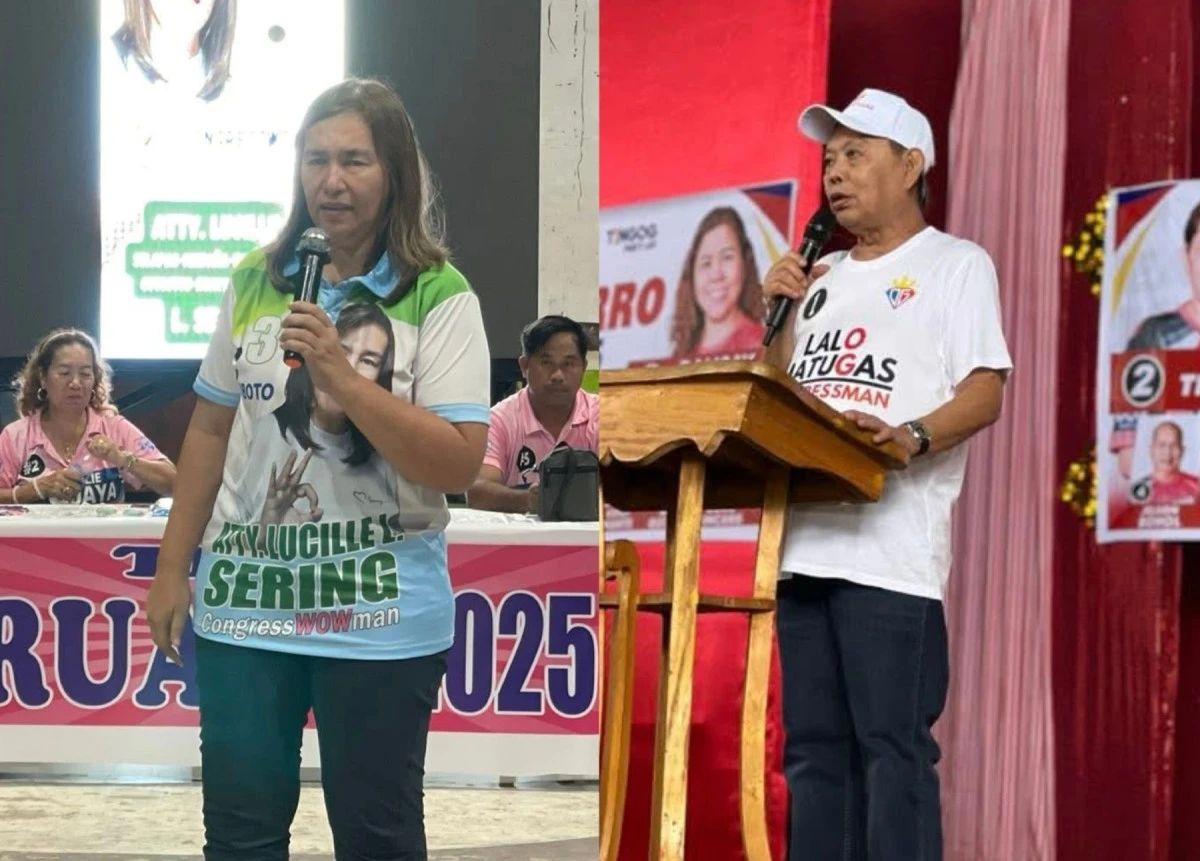
Surigao del Norte 1st district congressional aspirants Lucille Sering (left) and Lalo Matugas (right)
Sering also filed a similar case against Matugas' son, Francisco Jose "Bingo" Matugas II, who is running for governor in the province.
Sering said her complaint stemmed from her rival's political campaign video posted on April 30, 2025 on the official Facebook page of "Cong. Bingo Matugas".
The material purportedly featured scenes using students, faculty and facilities of government-owned Surigao del Norte State University (SNSU) – Del Carmen campus in Siargao Island.
"The use of these government property and facilities for electoral campaign purposes constitutes Abuse of State Resources (ASR) and it violates Article 261 (o) of the Omnibus Election Code," she said.
Section 261 of the Omnibus Election Code prohibits the "use of public funds, money deposited in trust, equipment, facilities owned or controlled by the government for an election campaign," Sering argued.
She also said that such provision has been reiterated in the recent Comelec Resolution No. 11104, which covers abuse of state resources when a government official or candidate use public resources to benefit their own or their political ally’s candidacy.
"The use of government property and facilities for partisan political activity is not only an abject violation of the law but it also raises serious concerns about ethical and legal implications of utilizing public resources for political gains," she said.
"Moreover, the political advertisement depicted young students and a school teacher as actors and political campaign endorsers, further blurring the lines between educational institutions and political campaign propaganda. Such practices not only violate established guidelines on the use of government (state educational institution) facilities but also exploit the academic environment for electoral advantage," she added.