






 Philippines
National
DDB raises drug abuse prevention awareness among elderly people
Philippines
National
DDB raises drug abuse prevention awareness among elderly people
DDB raises drug abuse prevention awareness among elderly people
By Chito Chavez


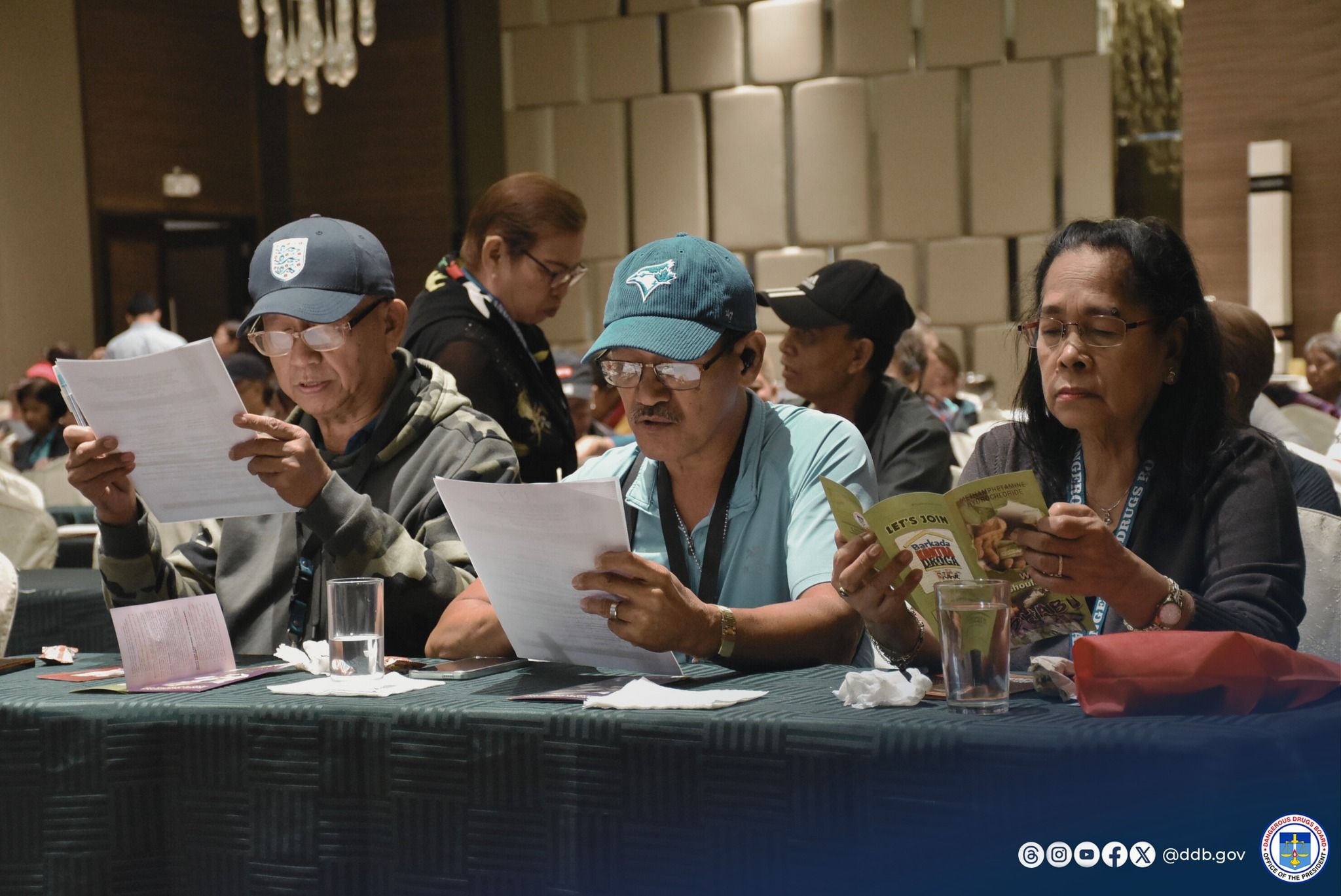
The Dangerous Drugs Board (DDB) has conducted an orientation seminar on drug abuse prevention and education to provide senior citizens with valuable information on the risks, prevention, and early detection of drug abuse.
DDB Assistant Secretary Maria Belen Angelita Matibag provided insightful thoughts on the latest findings from the National Household Survey on the Patterns and Trends of Drug Abuse which highlighted serious health risks associated with drug abuse.
According to the DDB, senior citizens may be “more vulnerable” to the dangers of drug abuse due to various factors.
Through Republic Act 7432 or the Senior Citizens Act, the DDB said that qualified seniors, as identified by the Office of Senior Citizens Affairs (OSCA), are encouraged to actively serve their communities to help them get productive and busy.
Through the event, the DDB said that senior citizens were empowered to actively contribute to a safer and healthier future and play an important role in guiding younger generations in the fight against drug abuse.
Recently, the DDB also shared valuable insights into the national drug situation at the “Fellowship Program and Colloquium on Collaborative and Data-Driven Pathways for Peace.”
DDB Board Secretary Michael Miatari emphasized the importance of regional and national stakeholders aligning their efforts through data-driven strategies to effectively address key peace and order challenges, particularly in drug abuse prevention and control.
“The colloquium featured in-depth discussions on strengthening peace and order initiatives through baseline assessments of existing policies and issuances,’’ the DDB said.
Representatives from 22 local government units (LGUs) gathered to showcase their initiatives, best practices and challenges, highlighting their responsiveness at the grassroots level.
Formally known as Building Resilience and Inclusion through Democratic Governance and Engagements (BRIDGE), the event was organized by the Galing Pook Foundation and The Asia Foundation, with support from the United Kingdom Embassy in the Philippines and the Department of the Interior and Local Government (DILG).
“These collaborative efforts aim to enhance data-driven strategies for peace and order mechanisms, particularly in the Bangsamoro Autonomous Region in Muslim Mindanao (BARMM). By fostering cohesive, locally led initiatives, the government, together with various organizations, can work towards strengthening peace and order within communities,” the DDB said.