ADVERTISEMENT

Philippines prepares for unprecedented 5-million tons rice imports

Published Sep 1, 2026 09:07 pm
(Manila Bulletin file photo)
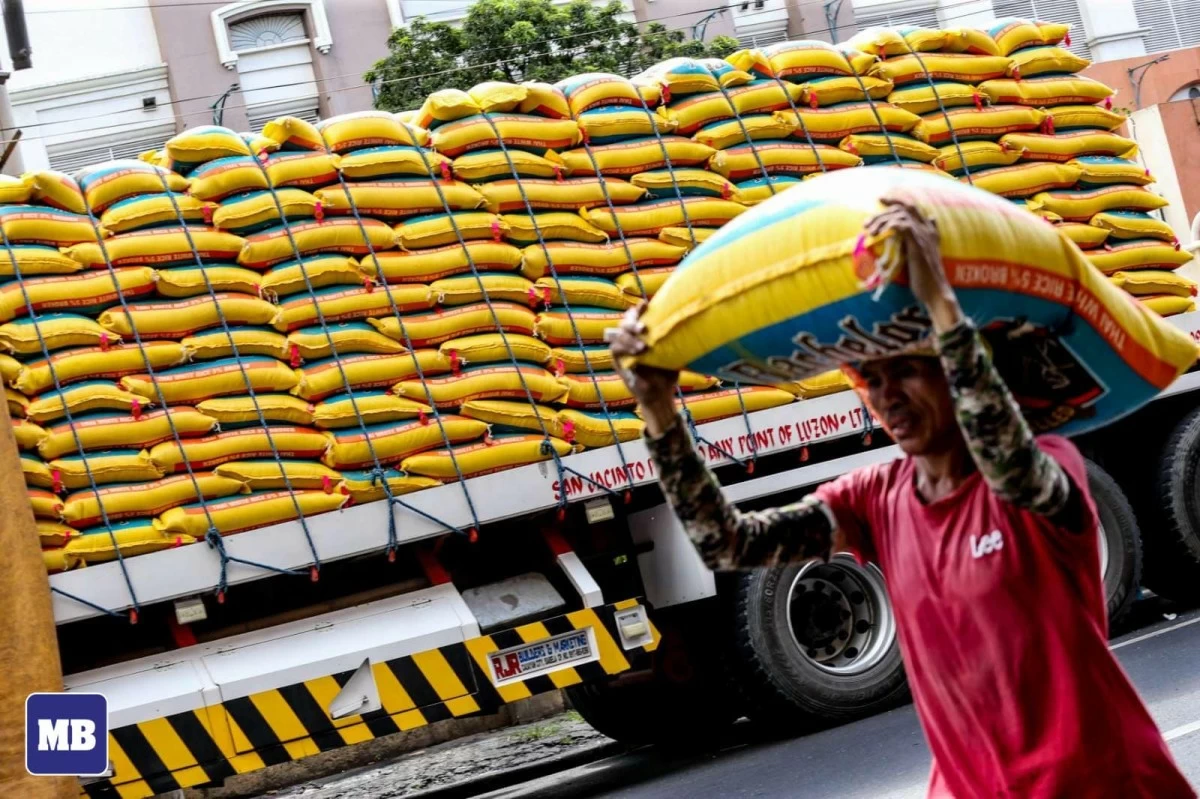
The Philippines will import a record-high five million metric tons (MT) this year, as it turns to foreign supplies to offset a projected shortfall in domestic production caused by El Niño, according to the Department of Agriculture (DA).
“As we are facing El Niño, we are projecting that we might need to import up to five million MT for this year,” said Agriculture Secretary Francisco Tiu Laurel during his agency’s budget hearing on Tuesday, Sept. 1.
The projected import volume this year is nearly four percent higher than the current record of 4.81 million MT set in 2024.
Total rice imports as of Aug. 13 reached 3.46 million MT, already higher than the 3.39 million MT recorded last year, according to the Bureau of Plant Industry (BPI).
Tiu Laurel said the additional rice supply will serve as a buffer as the country’s rice production losses are estimated to reach 900,000 MT within the year.
He said the decline represents the “worst-case scenario” of a strong El Niño in the fourth quarter of the year, which is projected to damage several hectares of rice farms.
“What we are all doing this year is precautionary. It is better to be prepared and have enough supply rather than risk having a shortage,” said Tiu Laurel.
Tiu Laurel noted that increased rice imports for the year will also serve as a supply cushion for the first quarter of next year in order to get ahead of a potentially weaker harvest season.
Considering this, the import volume for 2027 may go down to the normal range of between 3.8 million MT and four million MT.
While the country relies on foreign supplies to meet domestic demand, Tiu Laurel said the main objective of the government continues to be increasing local output.
He told lawmakers that the DA is focused on rolling out mechanization measures, expanding irrigation, and developing new rice seeds to further boost productivity.
The agency is also preparing to implement a program requiring traders to first invest in rice mills and processing facilities before they allowed to purchase rice from abroad.
It is estimated that around 80 percent of rice importers in the country are engaged solely in importing and have yet to commit investments in the local rice sector.
“That is one of the plans to make the industry self-sustaining and competitive in the international market,” said Tiu Laurel.
Based on BPI data, Vietnam has maintained its position as the country’s top rice supplier with imports reaching 2.56 million MT, or 74 percent of the total volume, as of Aug. 13.
Other top sources of rice include Thailand with 378,404 MT, Myanmar with 286,052 MT, Pakistan with 107,485 MT, and Cambodia with 87,802 MT.
The DA’s proposed budget for next year is ₱198.45 billion, down eight percent from the allocation of ₱215.69 billion for this year.
Under this budget, the agency wants to prioritize programs that raise farm and fishery productivity, improve infrastructure, reduce post-harvest losses, strengthen logistics and market access, and expand the use of technology.

Related Tags

Department of Agriculture (DA) rice imports
.mb-article-details { position: relative; } .mb-article-details .article-body-preview, .mb-article-details .article-body-summary{ font-size: 17px; line-height: 30px; font-family: "Libre Caslon Text", serif; color: #000; } .mb-article-details .article-body-preview iframe , .mb-article-details .article-body-summary iframe{ width: 100%; margin: auto; } .read-more-background { background: linear-gradient(180deg, color(display-p3 1.000 1.000 1.000 / 0) 13.75%, color(display-p3 1.000 1.000 1.000 / 0.8) 30.79%, color(display-p3 1.000 1.000 1.000) 72.5%); position: absolute; height: 200px; width: 100%; bottom: 0; display: flex; justify-content: center; align-items: center; padding: 0; } .read-more-background a{ color: #000; } .read-more-btn { padding: 17px 45px; font-family: Inter; font-weight: 700; font-size: 18px; line-height: 16px; text-align: center; vertical-align: middle; border: 1px solid black; background-color: white; } .hidden { display: none; }
function initializeAllSwipers() { // Get all hidden inputs with cms_article_id document.querySelectorAll('[id^="cms_article_id_"]').forEach(function (input) { const cmsArticleId = input.value; const articleSelector = '#article-' + cmsArticleId + ' .body_images'; const swiperElement = document.querySelector(articleSelector); if (swiperElement && !swiperElement.classList.contains('swiper-initialized')) { new Swiper(articleSelector, { loop: true, pagination: false, navigation: { nextEl: '#article-' + cmsArticleId + ' .swiper-button-next', prevEl: '#article-' + cmsArticleId + ' .swiper-button-prev', }, }); } }); } setTimeout(initializeAllSwipers, 3000); function showArticleBody(button) { const article = button.closest("article"); const summary = article.querySelector(".article-body-summary"); const body = article.querySelector(".article-body-preview"); const readMoreSection = article.querySelector(".read-more-background"); // Hide summary and read-more section summary.style.display = "none"; readMoreSection.style.display = "none"; // Show the full article body body.classList.remove("hidden"); } document.addEventListener("DOMContentLoaded", () => { let loadCount = 0; // Track how many times articles are loaded const offset = [1, 2, 3, 4, 5, 6, 7, 8, 9, 10]; // Offset values const currentUrl = window.location.pathname.substring(1); let isLoading = false; // Prevent multiple calls if (!currentUrl) { console.log("Current URL is invalid."); return; } const sentinel = document.getElementById("load-more-sentinel"); if (!sentinel) { console.log("Sentinel element not found."); return; } function isSentinelVisible() { const rect = sentinel.getBoundingClientRect(); return ( rect.top < window.innerHeight && rect.bottom >= 0 ); } function onScroll() { console.log('scroll event'); if (isLoading) return; if (isSentinelVisible()) { if (loadCount >= offset.length) { console.log("Maximum load attempts reached."); window.removeEventListener("scroll", onScroll); return; } isLoading = true; const currentOffset = offset[loadCount]; window.loadMoreItems().then((data) => { console.log(data); console.log(this); loadCount++; }).catch(error => { console.error("Error loading more items:", error); }).finally(() => { isLoading = false; }); } } window.addEventListener("scroll", onScroll); }); // Mutation Observer for Newly Loaded Articles const observer = new MutationObserver(() => { console.log("length: ", articles.length); const articles = document.querySelectorAll(".articles-observe"); if (articles.length > 0) { observeArticles(articles); } }); observer.observe(document.body, { childList: true, subtree: true }); let oberservationCount = 0; // Intersection Observer for Updating URL function observeArticles(articles) { const intersectionObserver = new IntersectionObserver( (entries) => { entries.forEach((entry) => { if (entry.isIntersecting) { const newUrl = entry.target.getAttribute("data-url"); if (newUrl && newUrl !== window.location.pathname) { history.pushState(null, null, newUrl); // Extract metadata const section = entry.target.querySelector('.section-info a:first-of-type')?.textContent?.trim() || ''; const author = entry.target.querySelector('.author-section a')?.textContent?.trim() || ''; const title = entry.target.querySelector('h1, h2, h3, .article-title')?.textContent?.trim() || document.title; // Parse URL for Chartbeat path format const parsedUrl = new URL(newUrl, window.location.origin); const cleanUrl = parsedUrl.host + parsedUrl.pathname; // Update Chartbeat configuration if (typeof window._sf_async_config !== 'undefined') { window._sf_async_config.path = cleanUrl; window._sf_async_config.sections = section; window._sf_async_config.authors = author; } // Track virtual page view with Chartbeat if (typeof pSUPERFLY !== 'undefined' && typeof pSUPERFLY.virtualPage === 'function') { pSUPERFLY.virtualPage(cleanUrl, { title: title, sections: section, authors: author }); } // Optional: Update document title if (title && title !== document.title) { document.title = title; } console.log('Chartbeat virtual page tracked:', { url: cleanUrl, section: section, author: author, title: title }); } } }); }, { threshold: 0.1 } ); articles.forEach(article => { console.log(oberservationCount++); intersectionObserver.observe(article) }); }
ADVERTISEMENT
.most-popular .layout-ratio{ padding-bottom: 79.13%; } @media (min-width: 768px) and (max-width: 1024px) { .widget-title { font-size: 15px !important; } }

{{ articles_filter_1561_widget.title }}

.most-popular .layout-ratio{ padding-bottom: 79.13%; } @media (min-width: 768px) and (max-width: 1024px) { .widget-title { font-size: 15px !important; } }

{{ static_articles_1562_widget.title }}

.most-popular .layout-ratio{ padding-bottom: 79.13%; } @media (min-width: 768px) and (max-width: 1024px) { .widget-title { font-size: 15px !important; } }

{{ articles_filter_1563_widget.title }}

{{ articles_filter_1564_widget.title }}

Sign up by email to receive news.