ADVERTISEMENT

Latest science on Dengvaxia

Published Sep 1, 2026 12:05 am  |  Updated Aug 31, 2026 05:16 pm
UNDER THE MICROSCOPE
The Dengvaxia controversy continues to simmer, thanks to new cases filed in court and the Sandigabayan recently, and the pronouncements of a self-proclaimed “vaccine expert” who still claims Dengvaxia caused deaths among those vaccinated.
But there have been no valid scientific studies published in reputable medical journals to validate these claims of excess deaths due to possible “worsening of dengue signs and symptoms” due to dengue-naïve persons (persons with no prior dengue infection) being vaccinated with Dengvaxia (CYD-TDV), as Dengvaxia manufacturer Sanofi has announced in its supplemental warning in November 2017.
However, the latest valid scientific study on this subject published in the journal Vaccine, volume 56, May 2025 titled “Effectiveness of a single-dose dengue vaccination in Cebu, Philippines: Final results of a five-year case control study” gives us the perspective of what has happened in the five years since the Dengvaxia vaccination program was suspended.
This study involves a rigorous case control study that pairs a group of 584 who were given only one dose of Dengvaxia with 1168 control subjects (not given Dengvaxia). Both groups had virologically confirmed dengue (VCD). The VCD subjects presented as dengue with earning signs (DWS) (eight cases or 1.4 percent), severe dengue eight (1.4 percent) and death due to dengue (1 case or 0.2 percent).
This scientific research was done after the suspension of the Dengvaxia vaccination program that left the Cebu subjects with only the first dose of Dengvaxia and aims to determine the five-year effectiveness of a single dose of CYD-TDV against hospitalized VCD.
The authors who are from the University of the Philippines National Institutes of Health, University of Illinois at Urbana-Champagne, Research Institute of Tropical Medicine, Cebu Provincial Hospital and Eversley Childs Sanitorium and General Hospital, Mandaue City, had previously reported interim (first year) vaccine effectiveness against hospitalized VCD and dengue with warning signs in 2020 was 26 percent and 51 percent respectively in this journal. This recently published study followed through on that study to determine if one dose of Dengvaxia continued to be effective five years after vaccination because data on the long-term effectiveness of incomplete vaccination in the real-world setting was limited.
These effectivity rates were lower than those given the complete three doses which protected against hospitalized VCD and dengue with warning signs at 80 percent. But this is perfectly understandable due to only a single dose administered versus the recommended three doses. The subjects’ immune systems were only primed by the first dose but could not ramp up immunity due to lack of additional stimulation by second and third doses. This is basic immunology.
In this new study, overall vaccine effectiveness against hospitalization was 21 percent in those given one dose of Dengvaxia even after five years. It must be stated that immunity wanes naturally post-vaccination but will increase immune responses if re-stimulated by another dose of vaccine or a re-infection. This is borne out by the higher protection in the first-year post-vaccination at 49 percent. The new data attests to durability of partial protection in the context of the incomplete vaccination schedule.
As of this date, there has been no published data on whether there have been deaths causally attributed to dengue and not just a temporal relationship but with different cause of death.
The main problem was the lack of context in the issuance of an update information on Dengvaxia by Sanofi Inc. It cited the possibility of severe dengue in those vaccinated but had no detailed explanation whether it was supported by clinical trial data.
This study did not see any increased incidence in severe dengue nor any increase in complications or deaths. In fact, it showed a significantly lower proportion of the presence of warning signs and less severe illness among those who received at least one dose of the vaccine.
So, here we are with a valid scientific study done under the most rigorous conditions showing that even one dose of Dengvaxia conferred some degree of immunity and did not show any increased incidence of severe dengue nor any increase in complications or deaths.
Yet, the witch hunt continues targeting even researchers who didn’t have anything to do with procurement and who were just doing basic research on vaccine effectiveness.
People can’t seem to distinguish between good science and the shrill pronouncements of people intent on besmirching good people’s reputations to endear themselves to authorities who they want to influence to appoint them to juicy government positions.
It is time to uphold the validity of science and not believe just anyone who wants to create panic and confusion that led to widespread vaccine hesitancy. The latter has now led to lower vaccination rates against common childhood diseases, resulting in several measles outbreaks which killed several thousand children during the years following the 2017 brouhaha over Dengvaxia.
Please believe the science, not the witchcraft.
Science saves lives. Misinformation kills.

Related Tags

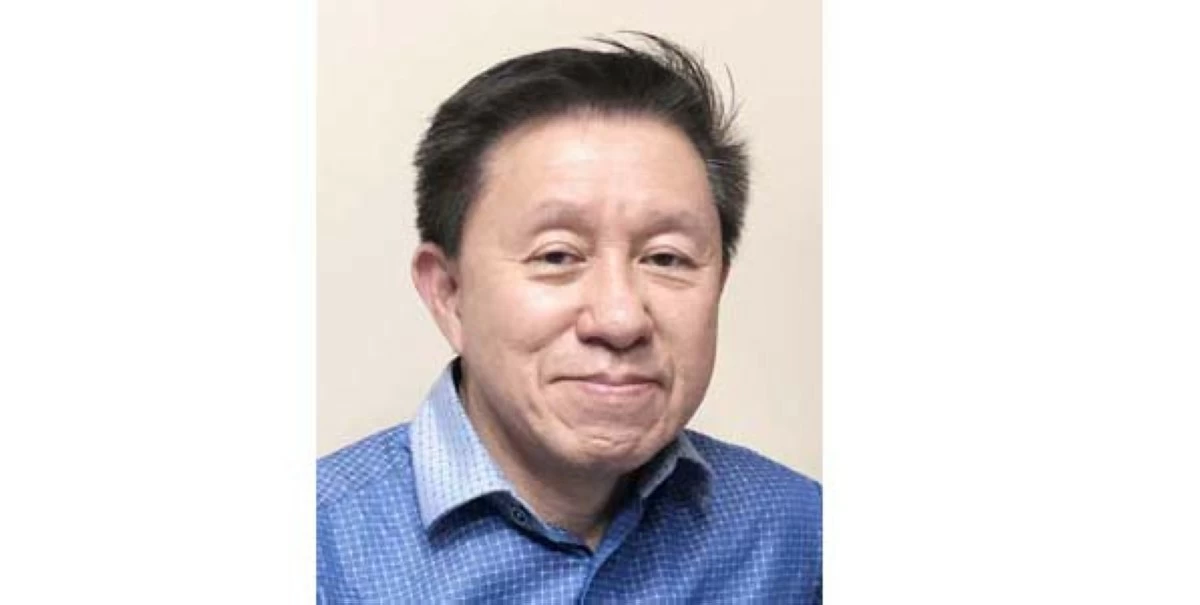
UNDER THE MICROSCOPE RAYMUNDO LO Dengvaxia
ADVERTISEMENT
.most-popular .layout-ratio{ padding-bottom: 79.13%; } @media (min-width: 768px) and (max-width: 1024px) { .widget-title { font-size: 15px !important; } }

{{ articles_filter_1561_widget.title }}

.most-popular .layout-ratio{ padding-bottom: 79.13%; } @media (min-width: 768px) and (max-width: 1024px) { .widget-title { font-size: 15px !important; } }

{{ static_articles_1562_widget.title }}

.most-popular .layout-ratio{ padding-bottom: 79.13%; } @media (min-width: 768px) and (max-width: 1024px) { .widget-title { font-size: 15px !important; } }

{{ articles_filter_1563_widget.title }}

{{ articles_filter_1564_widget.title }}

.mb-article-details { position: relative; } .mb-article-details .article-body-preview, .mb-article-details .article-body-summary{ font-size: 17px; line-height: 30px; font-family: "Libre Caslon Text", serif; color: #000; } .mb-article-details .article-body-preview iframe , .mb-article-details .article-body-summary iframe{ width: 100%; margin: auto; } .read-more-background { background: linear-gradient(180deg, color(display-p3 1.000 1.000 1.000 / 0) 13.75%, color(display-p3 1.000 1.000 1.000 / 0.8) 30.79%, color(display-p3 1.000 1.000 1.000) 72.5%); position: absolute; height: 200px; width: 100%; bottom: 0; display: flex; justify-content: center; align-items: center; padding: 0; } .read-more-background a{ color: #000; } .read-more-btn { padding: 17px 45px; font-family: Inter; font-weight: 700; font-size: 18px; line-height: 16px; text-align: center; vertical-align: middle; border: 1px solid black; background-color: white; } .hidden { display: none; }
function initializeAllSwipers() { // Get all hidden inputs with cms_article_id document.querySelectorAll('[id^="cms_article_id_"]').forEach(function (input) { const cmsArticleId = input.value; const articleSelector = '#article-' + cmsArticleId + ' .body_images'; const swiperElement = document.querySelector(articleSelector); if (swiperElement && !swiperElement.classList.contains('swiper-initialized')) { new Swiper(articleSelector, { loop: true, pagination: false, navigation: { nextEl: '#article-' + cmsArticleId + ' .swiper-button-next', prevEl: '#article-' + cmsArticleId + ' .swiper-button-prev', }, }); } }); } setTimeout(initializeAllSwipers, 3000); const intersectionObserver = new IntersectionObserver( (entries) => { entries.forEach((entry) => { if (entry.isIntersecting) { const newUrl = entry.target.getAttribute("data-url"); if (newUrl) { history.pushState(null, null, newUrl); let article = entry.target; // Extract metadata const author = article.querySelector('.author-section').textContent.replace('By', '').trim(); const section = article.querySelector('.section-info ').textContent.replace(' ', ' '); const title = article.querySelector('.article-title h1').textContent; // Parse URL for Chartbeat path format const parsedUrl = new URL(newUrl, window.location.origin); const cleanUrl = parsedUrl.host + parsedUrl.pathname; // Update Chartbeat configuration if (typeof window._sf_async_config !== 'undefined') { window._sf_async_config.path = cleanUrl; window._sf_async_config.sections = section; window._sf_async_config.authors = author; } // Track virtual page view with Chartbeat if (typeof pSUPERFLY !== 'undefined' && typeof pSUPERFLY.virtualPage === 'function') { try { pSUPERFLY.virtualPage({ path: cleanUrl, title: title, sections: section, authors: author }); } catch (error) { console.error('ping error', error); } } // Optional: Update document title if (title && title !== document.title) { document.title = title; } } } }); }, { threshold: 0.1 } ); function showArticleBody(button) { const article = button.closest("article"); const summary = article.querySelector(".article-body-summary"); const body = article.querySelector(".article-body-preview"); const readMoreSection = article.querySelector(".read-more-background"); // Hide summary and read-more section summary.style.display = "none"; readMoreSection.style.display = "none"; // Show the full article body body.classList.remove("hidden"); } document.addEventListener("DOMContentLoaded", () => { let loadCount = 0; // Track how many times articles are loaded const offset = [1, 2, 3, 4, 5, 6, 7, 8, 9, 10]; // Offset values const currentUrl = window.location.pathname.substring(1); let isLoading = false; // Prevent multiple calls if (!currentUrl) { console.log("Current URL is invalid."); return; } const sentinel = document.getElementById("load-more-sentinel"); if (!sentinel) { console.log("Sentinel element not found."); return; } function isSentinelVisible() { const rect = sentinel.getBoundingClientRect(); return ( rect.top < window.innerHeight && rect.bottom >= 0 ); } function onScroll() { if (isLoading) return; if (isSentinelVisible()) { if (loadCount >= offset.length) { console.log("Maximum load attempts reached."); window.removeEventListener("scroll", onScroll); return; } isLoading = true; const currentOffset = offset[loadCount]; window.loadMoreItems().then(() => { let article = document.querySelector('#widget_1690 > div:nth-last-of-type(2) article'); intersectionObserver.observe(article) loadCount++; }).catch(error => { console.error("Error loading more items:", error); }).finally(() => { isLoading = false; }); } } window.addEventListener("scroll", onScroll); });

Sign up by email to receive news.