






 Entertainment
Celebrities
Jury finds Duane 'Keffe D' Davis guilty in Tupac Shakur murder
Entertainment
Celebrities
Jury finds Duane 'Keffe D' Davis guilty in Tupac Shakur murder
Jury finds Duane 'Keffe D' Davis guilty in Tupac Shakur murder


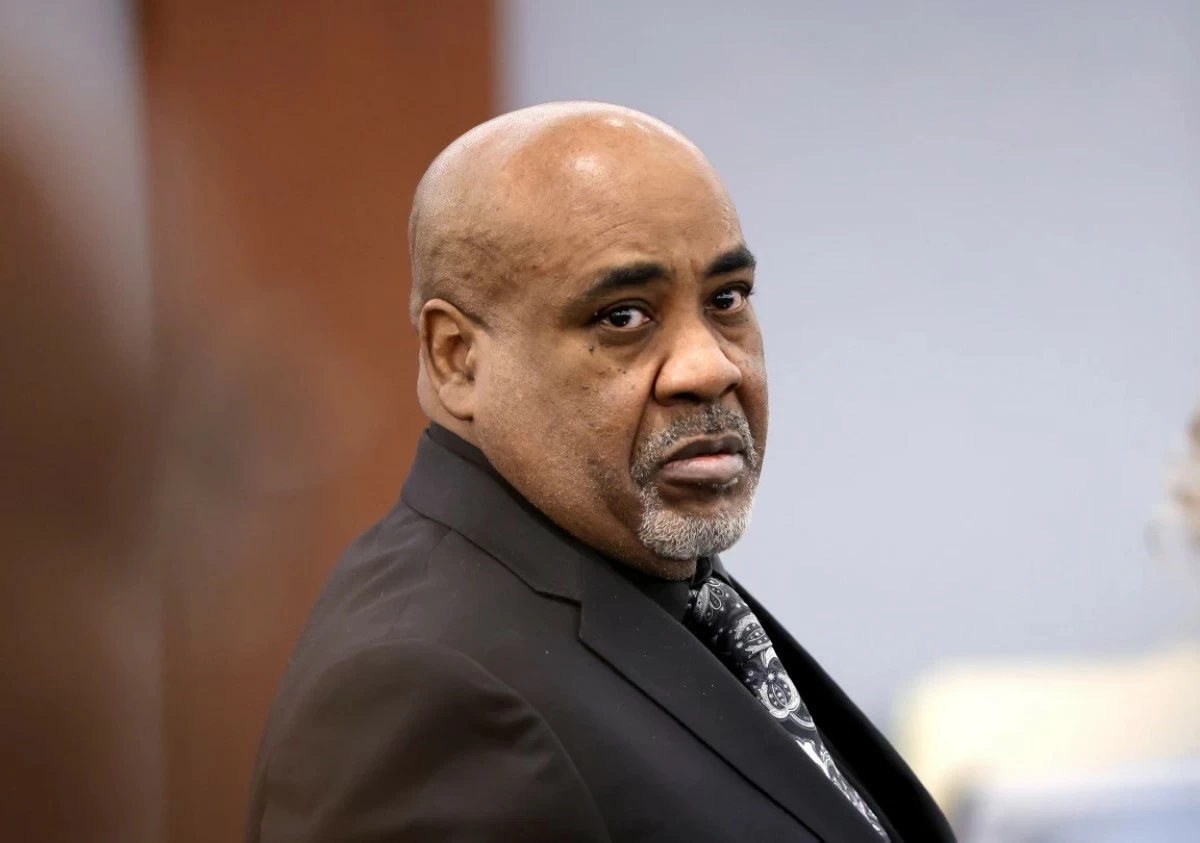
LAS VEGAS (AP) — A jury found Duane “Keffe D” Davis guilty of orchestrating the 1996 killing of rap icon Tupac Shakur, bringing a long-awaited development to a case that has captivated hip-hop fans for nearly three decades.
Davis, 63, was convicted Monday of murder with a deadly weapon. The jury reached its verdict in less than three hours after a weekslong trial in Las Vegas. He faces a possible life sentence.
After the verdict was read, Shakur’s sister, Sekyiwa “Set” Shakur, cried and hugged prosecutors. Davis’ son covered his face with one hand.
Prosecutors argued that Davis obtained a gun and organized the shooting after his nephew was beaten by Shakur and Death Row Records co-founder Marion “Suge” Knight earlier that night.
Chief Deputy District Attorney Binu Palal told jurors during closing arguments that Davis “went hunting” for Shakur and Knight and urged them to find him guilty.
Prosecutors said Davis had repeatedly placed himself inside the white Cadillac from which the shots were fired. Although Davis was not accused of pulling the trigger, prosecutors argued that he supplied the gun and directed the younger men in the vehicle.
Davis had acknowledged in interviews and in his 2019 memoir that he was inside the Cadillac and had provided the weapon. However, he never identified himself as the gunman.
Defense attorney Michael Sanft argued that Davis’ public statements were exaggerated stories designed to make money and that there was no physical evidence connecting his client to the shooting.
“They have nothing in this case that says that man was here in Las Vegas on Sept. 7, 1996,” Sanft said during closing arguments.
The case dates back to Sept. 7, 1996, when Shakur was riding in a BMW with Knight near the Las Vegas Strip. A white Cadillac pulled alongside them at a red light and gunfire erupted.
Shakur was struck multiple times and died six days later at age 25. Knight was wounded but survived.
For years, no one was charged in Shakur’s killing. The case gained new momentum after Davis began publicly discussing his involvement and authorities arrested him in 2023.
Prosecutors relied heavily on Davis’ own interviews, statements and memoir, arguing that his accounts consistently placed him in the vehicle and established his role in organizing the attack.
The defense challenged those statements, pointing to disclaimers in Davis’ memoir and arguing that he had changed or embellished his story over the years.
The trial also revisited the gang rivalries surrounding Shakur’s death, including the conflict between the Mob Piru and South Side Compton Crips and their connections to rival record labels Death Row Records and Bad Boy Records.
Shakur’s death came months before the September 1996 murder of fellow rap icon The Notorious B.I.G., a case that remains unsolved.
Davis is the first person convicted in connection with Shakur’s killing.