






 Business
The Economy
Global lenders unite to strengthen fertilizer supply chains, shield food security
Business
The Economy
Global lenders unite to strengthen fertilizer supply chains, shield food security
Global lenders unite to strengthen fertilizer supply chains, shield food security


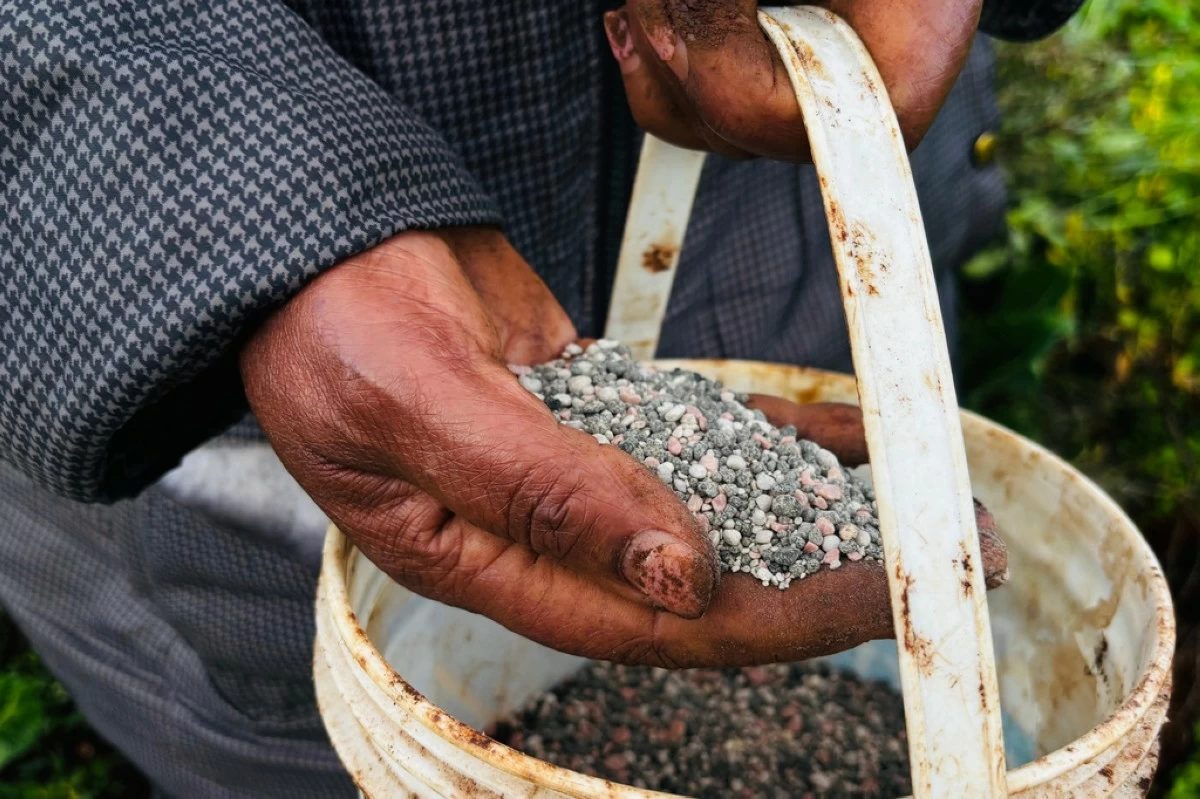
The world’s largest multilateral development banks (MDBs) and international financial institutions (IFIs) are seeking increased investments in fertilizer production, storage, transportation, and other infrastructure to shield global food security from future supply shocks.
In a joint statement last Monday, Aug. 31, the African Development Bank Group (AfDB), the Asian Development Bank (ADB), the European Bank for Reconstruction and Development (EBRD), the Inter-American Development Bank Group (IDB Group), the International Fund for Agricultural Development (IFAD), and the World Bank Group (WBG) committed to developing a coordinated roadmap covering financing, policy dialogue, technical assistance (TA), and private-sector engagement.
The institutions said repeated shocks have exposed structural vulnerabilities in global fertilizer supply chains, disproportionately affecting smallholder farmers and low-income households.
“We, the MDBs, recognize that food security remains one of the world’s most pressing development challenges,” they said.
Beyond ensuring fertilizer availability, they said long-term food security requires improving fertilizer-use efficiency, diversifying nutrient sources, restoring healthy soils and natural capital, and investing in resilient food systems.
The initiative builds on measures undertaken following the 2022 global food crisis, when MDBs and other IFIs implemented the IFI Action Plan to Address Food Insecurity and expanded support for agriculture, food trade, social protection, and resilient food systems.
More recently, discussions among the Group of 20 (G20) economies have emphasized resilient food and fertilizer value chains, while the proposed Group of Seven Plus (G7+) Action Plan on Fertilizer Shocks and Food Systems Resilience has highlighted stronger monitoring, early warning, coordination, and timely financing to address fertilizer-related food security risks.
Against this backdrop, the AfDB, the ADB, the EBRD, the IDB Group, the IFAD, and the WBG expressed readiness to work with G20 members, development partners, and the private sector on a coordinated MDB Roadmap on Strengthening Fertilizer Supply Chains.
“We affirm our readiness to work with G20 members, development partners and the private sector to develop a coordinated MDB Roadmap on Strengthening Fertilizer Supply Chains in line with MDB financing, analytical work, policy dialogue, and technical assistance around a shared agenda to strengthen fertilizer value chains, including through economic corridors that are less vulnerable to future shocks, complementing G20 and G7 efforts,” they said.
Under the proposed roadmap, the institutions aim to increase financing for fertilizer production, upstream production, processing, blending, storage, transportation, and other critical infrastructure while improving market monitoring and ensuring timely access to fertilizers.
They also intend to promote more efficient fertilizer use through soil diagnostics, fertilizer recommendations, precision nutrient management, digital agriculture, farmer advisory services, research, and innovation.
The initiative would also support improved soil and water management, nature-based solutions, resilient value chains, innovative technologies, and private-sector investment.
The institutions committed to continuing support for vulnerable households while improving smallholder farmers’ and agrifood enterprises’ access to financing, inputs, logistics, and markets, particularly for fertilizers.
They also plan to deepen collaboration with governments, international organizations, research institutions, civil society, and the private sector through data and knowledge sharing, evidence-based policy dialogue, and coordinated operational support.