








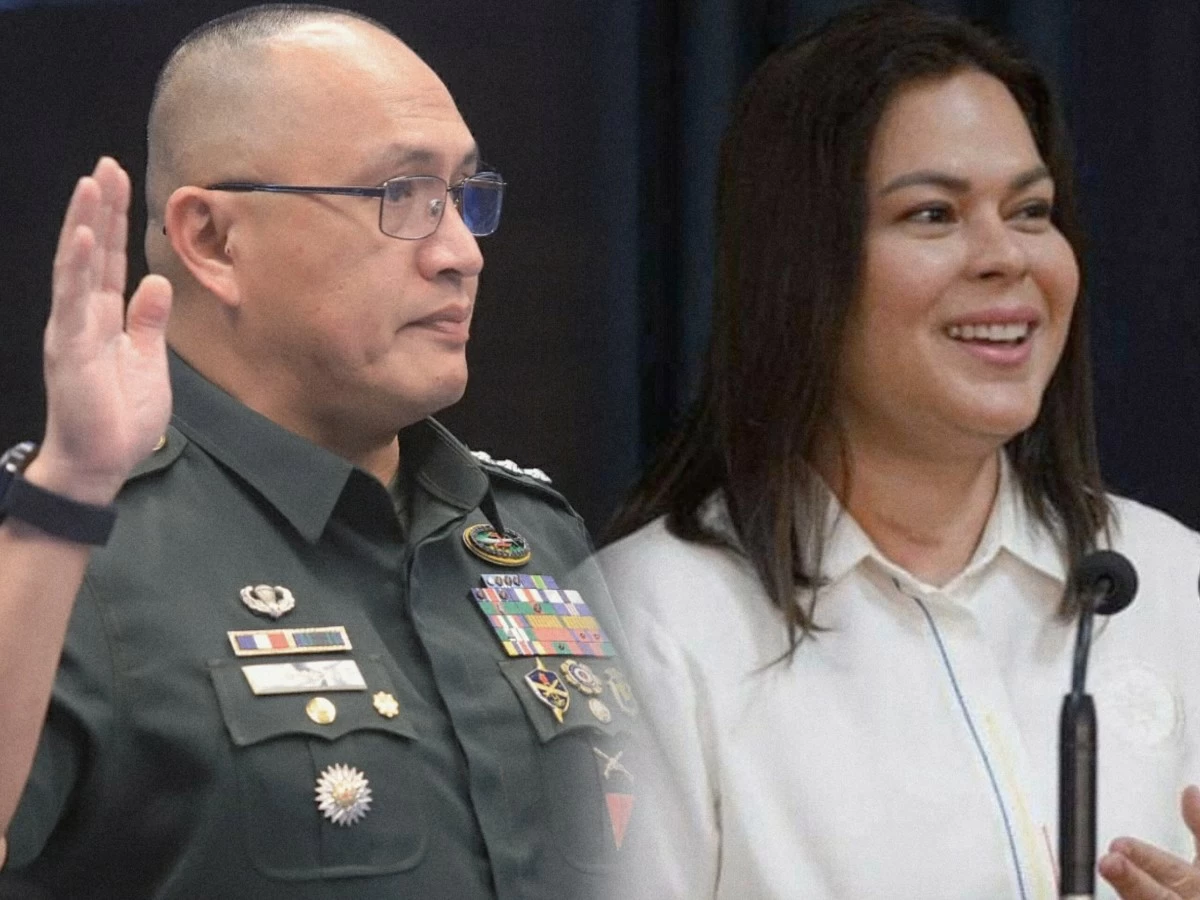
The Philippine Army had been conducting Youth Leadership Summit (YLS) for almost two decades before impeachment trial respondent Vice President Sara Duterte became Department of Education (DepEd) secretary, Col. Manaros Boransing II testified before senator-judges on Tuesday, Sept. 1.
Boransing's revelation belied claims that the 2023 summits were created by DepEd or were dependent on the agency’s confidential funds--the alleged misuse of which was the subject matter of the Senate impeachment court.
At any rate, Boransing acknowledged that DepEd joined the interagency planning when schools and students began to be involved.
He described the program during direct examination by private prosecutor, layweecReynaldo Robles on day 20 of respondent Duterte’s impeachment trial.
“The [YLS] is a long-time Philippine Army program or Armed Forces of the Philippines (AFP) program,” Boransing said.
He described YLS as a response to the recruitment of students and out-of-school youth by violent extremist groups in areas affected by insurgency or terrorism.
“The first official, according to the Army’s historical records, the first record was 2002 in Southern Tagalog,” he testified.
Boransing recalled that the 1st Infantry “Tabak” Division had conducted a summit in Jolo, Sulu as early as 2005. The number of activities varied with the threat level, but the program continued regularly.
“It’s definitely annually...It is part of the regular program of the Philippine Army if it is requested by our subordinate unit,” added the military official.
Duterte was DepEd secretary from 2022 to 2024.
Boransing issued certification on Jan. 1, 2024, covering eight YLS activities with 531 participants and 53 Information Education Campaign (IEC) activities with 9,428 participants in 2023.
The Army led the YLS while bringing in local governments, schools, police and other stakeholders. “Well, sir, it’s the Army, and we try to have the local government unit involved as much as possible,” he said.
The program’s long history did not mean the Army acted alone; an interagency technical working group selected particular venues after assessing local conditions.
“There were some inputs from DepEd, sir, because some of the areas are schools, and many of the participants are students. So definitely, they were involved in the planning and the choosing of the areas,” the witness testified.
He described those inputs as school locations, academic schedules and permission to speak with students. He could not say whether they were products of confidential operations.
He said the Army budgeted for its own role in YLS, local governments supported youth delegates and participating agencies paid their respective expenses.
“It’s part of the regular budget, sir,” Boransing said of the Army’s participation.
Boransing's testimony showed that the YLS predated Duterte’s DepEd tenure, operated as a regular Army program and could proceed without receiving confidential funds from DepEd.
While the Interagency coordination can explain why DepEd officials or students were present, it cannot be established that confidential informers were paid, that they supplied intelligence or that their information caused the activities certified by Boransing.
DepEd later attached Boransing’s certifications to its April 17, 2024 response to COA Audit Observation Memorandum No. 2024-015. The AOM sought proof about the reported rewards totaling ₱15.54 million given to informants for the successful information-gathering or surveillance.
Certifications for attendance only
Boransing testified that he issued the document as a routine certification of activities and participation—not as his verification of DepEd’s confidential fund transactions.
The Jan. 1, 2024 certification recorded eight YLS activities with 531 participants and 53 Information Education Campaign (IEC) activities with 9,428 participants in schools within the 1st Infantry “Tabak” Division’s area of operations.
Robles then replayed in court Boransing’s Oct. 17, 2024 testimony at the House of Representatives to establish why the Army issued such documents. The latter affirmed that account under oath before the impeachment court.
It did not name a DepEd informer, describe intelligence, record a reward payment or trace the ₱15.54 million later associated with DepEd’s confidential fund response to state auditors.
Boransing said Army programs regularly brought together national agencies, local governments, schools and community groups. Participants commonly requested proof of attendance or involvement.
“When we participate in activities of one or many agencies, many agencies ask for certifications of attendance,” Boransing said.
“We assumed that the certification was also for that purpose...A lot of other national government agencies and local government units ask for certifications in that manner also,” he added.
Boransing said then-DepEd Undersecretary Nolasco Mempin sought the document through the Army chain of command.
The document’s text remained narrow--it listed activities, participants and locations, but it did not state that DepEd funded the Army programs.
It also did not certify that information supplied by a paid informer caused an activity to occur. Likewise, it contained no acknowledgment from a reward recipient and no description of an intelligence product.