







2 to 3 tropical cyclones may develop in September — PAGASA
Published Sep 1, 2026 10:23 am


At A Glance
- The next tropical cyclone names on PAGASA's list are "Queenie," "Rosal," and "Samuel."
- The country has already recorded 16 tropical cyclones this year.
- On average, around 20 tropical cyclones enter the Philippine area of responsibility each year, with about eight or nine crossing the Philippines.
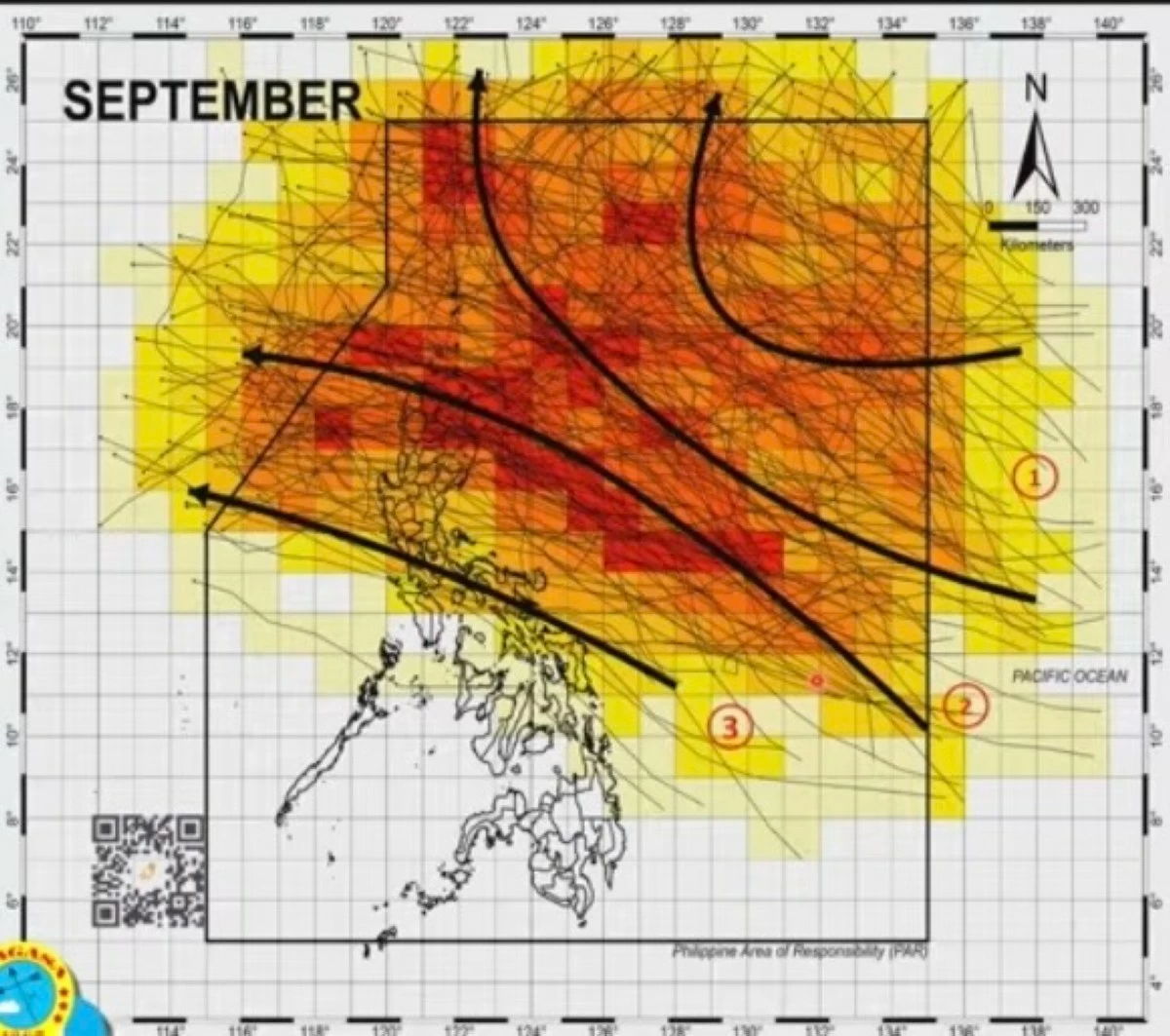
PAGASA’s climatological tracks for September showing three potential paths for tropical cyclones (PAGASA)
Two to three tropical cyclones may form within or enter the Philippine Area of Responsibility (PAR) in September, according to the Philippine Atmospheric, Geophysical and Astronomical Services Administration (PAGASA).
The next tropical cyclone names on PAGASA’s list are “Queenie,” “Rosal,” and “Samuel.”
PAGASA said climatological tracks for September show three common paths for tropical cyclones.
The first path sees tropical cyclones forming east of the PAR and moving northwestward before recurving toward Japan or South Korea.
These systems do not make landfall in the Philippines but may enhance the southwest monsoon or “habagat” and bring rains to parts of the country.
The second is a landfalling track, with tropical cyclones forming east of the PAR, moving northwestward, and traversing Northern Luzon before heading toward Southern China or Vietnam.
The third is also a landfalling track, but the tropical cyclones traverse Central or Southern Luzon before moving toward Southern China or Vietnam.
PAGASA said that on average, around 20 tropical cyclones enter the PAR each year, with about eight or nine crossing the Philippines.
The peak of the tropical cyclone season is from July to October, when nearly 70 percent of all tropical cyclones develop.
The country has already recorded 16 tropical cyclones this year.