ADVERTISEMENT

Wear Your Culture brings Filipino craftsmanship to the streets

From Manobo embroidery to modern jackets, the brand is giving traditional craft a contemporary wardrobe update

Published Aug 31, 2026 02:16 pm
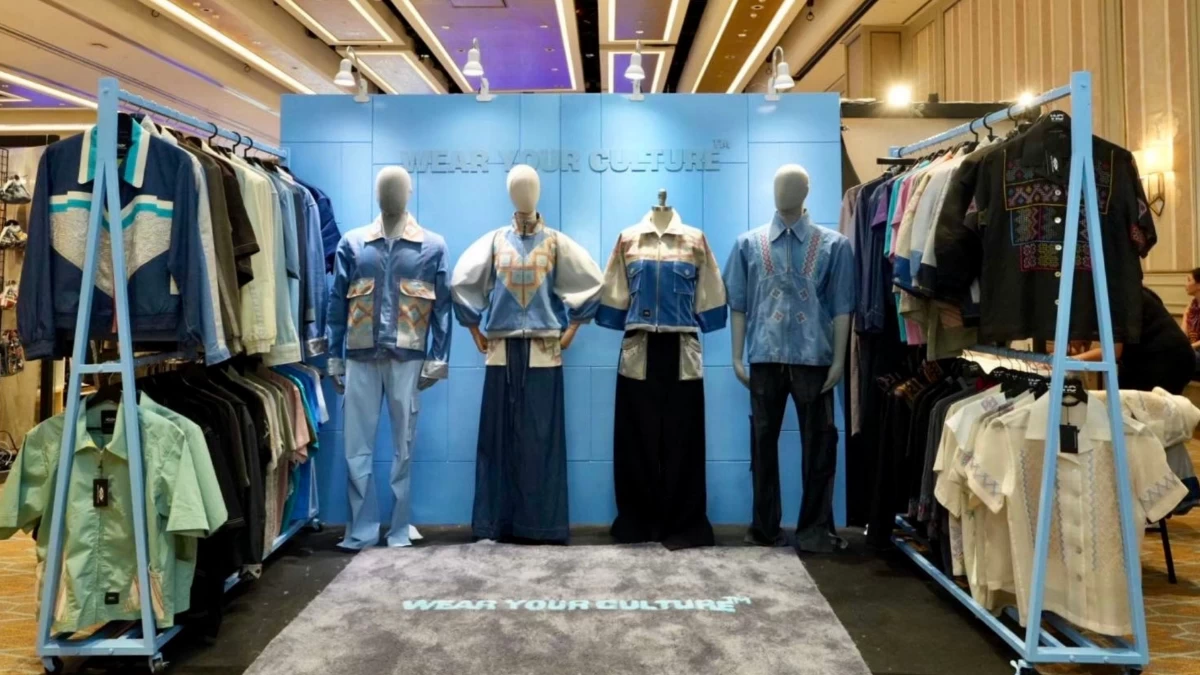
Wear Your Culture at Arte Fino (Photo: Wear Your Culture)
The Barong, Filipiniana, and Baro’t-saya may be among the most recognizable symbols of Filipino fashion. But, for the longest time, they remain clothes reserved for a wedding, a formal event, or a national celebration.
Ever since its establishment, Wear Your Culture has been making a case for wearing heritage beyond those occasions.
The local fashion brand founded by husband-and-wife team Alvin Degamo and Evita Bunyi-Degamo takes indigenous textiles, hand embroidery, and Filipino craftsmanship, and gives them a contemporary wardrobe spin. Think traditional details on jackets, barongs reworked with indigenous embroidery, and Filipiniana-inspired pieces that can be dressed up or paired with denim for a casual take. Ten years on, its message remains simple: Filipino culture should not just be admired. It should be worn.

The life-changing immersion
For Alvin, the idea behind Wear Your Culture began years before the brand took shape. He and Evita were both models, an experience that exposed them to different fabrics and eventually sparked his curiosity about where these beautiful textiles came from.
After leaving modeling and moving into the events business, Alvin joined an immersion with weavers in Iloilo. What he saw there gave him a different perspective on the fabrics he had long admired.
“The weavers were all old,” Alvin tells Manila Bulletin Lifestyle. He learned that many of the younger generation did not want to inherit the craft because there was simply not enough demand for weaving.  "Because there was no demand, it is now a dying industry."

The thought led to a question: What if traditional textiles could become part of the clothes people already wear? Instead of using indigenous textiles only as decorative objects, the brand began placing them on contemporary silhouettes. Jackets, polos, boleros, and barongs became the brand's canvas.
“Why don't we make it in a modern silhouette with infused traditional fabric?” he says. “You can wear your culture.”
And that is exactly what the name Wear Your Culture is about. The clothes are designed not just to showcase Filipino craftsmanship but to take it outside the showroom and into everyday life.
Letting the craft lead
The design process does not begin with a sketch.
“The weaves come first,” Alvin says. “Then I'll come up with something based on the look, the colors.”

The textile comes first. The silhouette follows. Among the artisans the brand works with are the Manobo of Agusan del Sur, whose hand embroidery is called Suyam. Alvin was drawn to the technique and found ways to reinterpret it for a more contemporary wardrobe.
Traditionally using red, white, and black, the embroidery is given a softer update through colors such as sky blue and pink. It has appeared on jackets and even on a barong, resulting in one of the brand's distinctive creations, which the brand calls “Suyrong,” a play on Suyam and barong.
But despite being the person behind the silhouettes, Alvin does not put himself at the center of the creative process. For him, the real artists are the artisans.
It is a fitting description for a brand whose pieces are shaped by several pairs of hands. After the fabrics are sourced, Alvin develops the design and brings it to sewing subcontractors. Some finished garments are then sent to artists for hand-painted details. The lengthy journey from textile to finished garment is also why the brand keeps production limited, sometimes creating only one or two pieces per size.
“That’s why I do only limited pieces,” Alvin says.

A bigger stage for Filipino craft
As Wear Your Culture approaches its 10th year in 2027, the brand is preparing to scale up its presence. Alvin is planning a larger campaign and hopes to increase production, exposure, and awareness. For him, their relationship with Arte Fino has also become an important part of its journey.
The founder said that the community has provided the brand with exposure, innovation, and connections to clients while bringing the brand into a larger network of Filipino makers.
“Everyone is helping each other,” Alvin says.
He hopes that kind of support can help Filipino craftsmanship reach beyond its current niche audience and eventually find a larger global market. After all, heritage does not have to wait for a special occasion. Sometimes, all you need to do is wear it.

Related Tags

Wear Your Culture Arte Fino Local Fashion
ADVERTISEMENT
.most-popular .layout-ratio{ padding-bottom: 79.13%; } @media (min-width: 768px) and (max-width: 1024px) { .widget-title { font-size: 15px !important; } }

{{ articles_filter_1561_widget.title }}

.most-popular .layout-ratio{ padding-bottom: 79.13%; } @media (min-width: 768px) and (max-width: 1024px) { .widget-title { font-size: 15px !important; } }

{{ static_articles_1562_widget.title }}

.most-popular .layout-ratio{ padding-bottom: 79.13%; } @media (min-width: 768px) and (max-width: 1024px) { .widget-title { font-size: 15px !important; } }

{{ articles_filter_1563_widget.title }}

{{ articles_filter_1564_widget.title }}

.mb-article-details { position: relative; } .mb-article-details .article-body-preview, .mb-article-details .article-body-summary{ font-size: 17px; line-height: 30px; font-family: "Libre Caslon Text", serif; color: #000; } .mb-article-details .article-body-preview iframe , .mb-article-details .article-body-summary iframe{ width: 100%; margin: auto; } .read-more-background { background: linear-gradient(180deg, color(display-p3 1.000 1.000 1.000 / 0) 13.75%, color(display-p3 1.000 1.000 1.000 / 0.8) 30.79%, color(display-p3 1.000 1.000 1.000) 72.5%); position: absolute; height: 200px; width: 100%; bottom: 0; display: flex; justify-content: center; align-items: center; padding: 0; } .read-more-background a{ color: #000; } .read-more-btn { padding: 17px 45px; font-family: Inter; font-weight: 700; font-size: 18px; line-height: 16px; text-align: center; vertical-align: middle; border: 1px solid black; background-color: white; } .hidden { display: none; }
function initializeAllSwipers() { // Get all hidden inputs with cms_article_id document.querySelectorAll('[id^="cms_article_id_"]').forEach(function (input) { const cmsArticleId = input.value; const articleSelector = '#article-' + cmsArticleId + ' .body_images'; const swiperElement = document.querySelector(articleSelector); if (swiperElement && !swiperElement.classList.contains('swiper-initialized')) { new Swiper(articleSelector, { loop: true, pagination: false, navigation: { nextEl: '#article-' + cmsArticleId + ' .swiper-button-next', prevEl: '#article-' + cmsArticleId + ' .swiper-button-prev', }, }); } }); } setTimeout(initializeAllSwipers, 3000); const intersectionObserver = new IntersectionObserver( (entries) => { entries.forEach((entry) => { if (entry.isIntersecting) { const newUrl = entry.target.getAttribute("data-url"); if (newUrl) { history.pushState(null, null, newUrl); let article = entry.target; // Extract metadata const author = article.querySelector('.author-section').textContent.replace('By', '').trim(); const section = article.querySelector('.section-info ').textContent.replace(' ', ' '); const title = article.querySelector('.article-title h1').textContent; // Parse URL for Chartbeat path format const parsedUrl = new URL(newUrl, window.location.origin); const cleanUrl = parsedUrl.host + parsedUrl.pathname; // Update Chartbeat configuration if (typeof window._sf_async_config !== 'undefined') { window._sf_async_config.path = cleanUrl; window._sf_async_config.sections = section; window._sf_async_config.authors = author; } // Track virtual page view with Chartbeat if (typeof pSUPERFLY !== 'undefined' && typeof pSUPERFLY.virtualPage === 'function') { try { pSUPERFLY.virtualPage({ path: cleanUrl, title: title, sections: section, authors: author }); } catch (error) { console.error('ping error', error); } } // Optional: Update document title if (title && title !== document.title) { document.title = title; } } } }); }, { threshold: 0.1 } ); function showArticleBody(button) { const article = button.closest("article"); const summary = article.querySelector(".article-body-summary"); const body = article.querySelector(".article-body-preview"); const readMoreSection = article.querySelector(".read-more-background"); // Hide summary and read-more section summary.style.display = "none"; readMoreSection.style.display = "none"; // Show the full article body body.classList.remove("hidden"); } document.addEventListener("DOMContentLoaded", () => { let loadCount = 0; // Track how many times articles are loaded const offset = [1, 2, 3, 4, 5, 6, 7, 8, 9, 10]; // Offset values const currentUrl = window.location.pathname.substring(1); let isLoading = false; // Prevent multiple calls if (!currentUrl) { console.log("Current URL is invalid."); return; } const sentinel = document.getElementById("load-more-sentinel"); if (!sentinel) { console.log("Sentinel element not found."); return; } function isSentinelVisible() { const rect = sentinel.getBoundingClientRect(); return ( rect.top < window.innerHeight && rect.bottom >= 0 ); } function onScroll() { if (isLoading) return; if (isSentinelVisible()) { if (loadCount >= offset.length) { console.log("Maximum load attempts reached."); window.removeEventListener("scroll", onScroll); return; } isLoading = true; const currentOffset = offset[loadCount]; window.loadMoreItems().then(() => { let article = document.querySelector('#widget_1690 > div:nth-last-of-type(2) article'); intersectionObserver.observe(article) loadCount++; }).catch(error => { console.error("Error loading more items:", error); }).finally(() => { isLoading = false; }); } } window.addEventListener("scroll", onScroll); });

Sign up by email to receive news.