ADVERTISEMENT

National Heroes Day: Are we worthy of their sacrifices?

Published Aug 31, 2026 12:05 am  |  Updated Aug 31, 2026 10:55 am
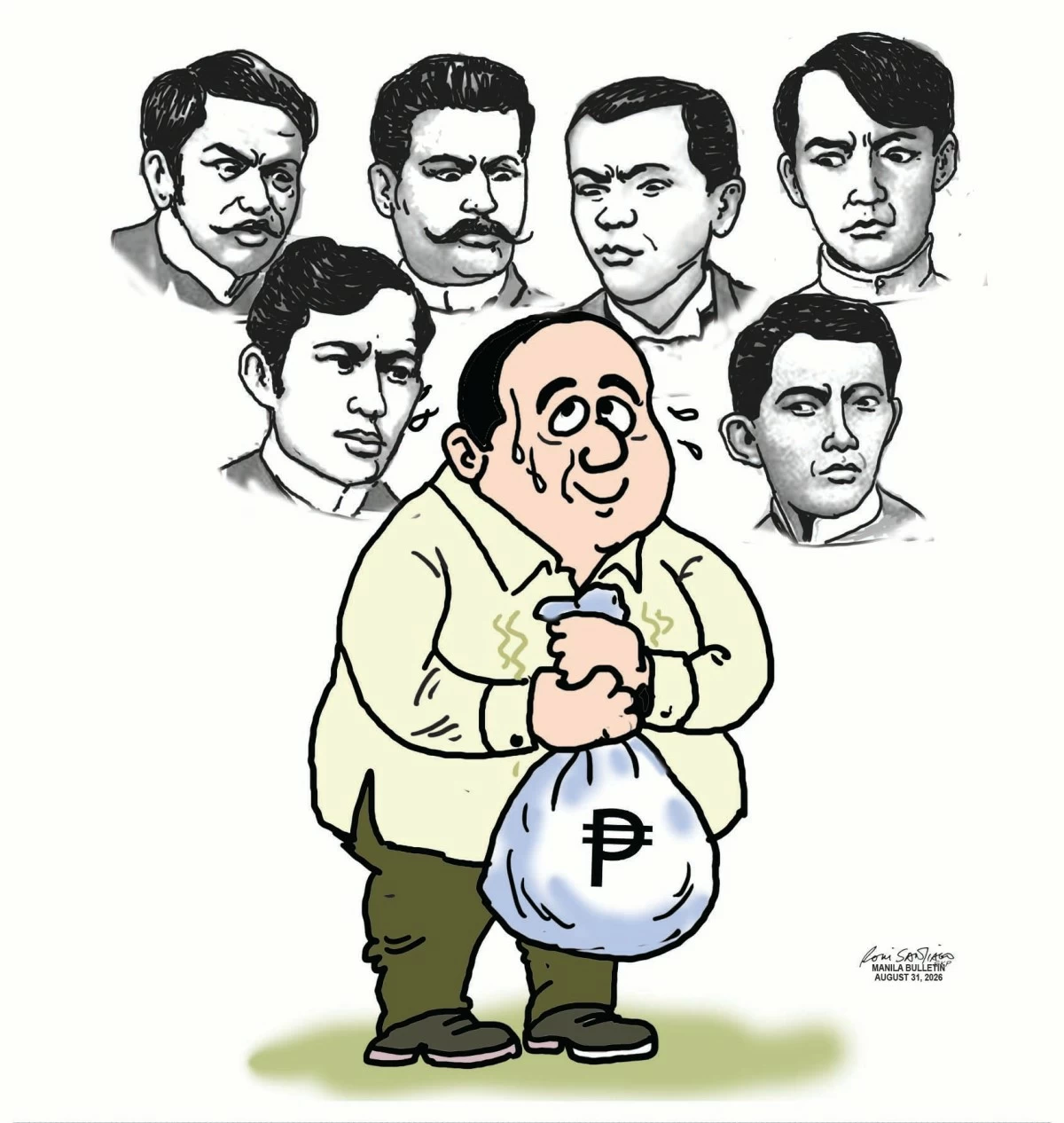
A non-working holiday gives Filipinos time to pause, remember and reflect. National Heroes Day should demand more than that. It should force an uncomfortable question: Are we governing the country in a manner worthy of the sacrifices we commemorate?
Every last Monday of August, we honor Filipinos who gave their lives, freedom, fortunes and talents to build a country future generations could inherit with dignity. They did not sacrifice for monuments, medals or annual ceremonies. They fought for a Philippines that would be freer, more just and better able to give its people decent lives.
That unfinished aspiration — not the ceremonies or rituals — should define the holiday observance.
Our heroes confronted foreign domination, injustice and deprivation. We face different but equally damaging enemies: corruption, poverty, inequality. On account of weak institutions eroded by political patronage, there is chronic inability to achieve sustainable economic growth that would translate into meaningful gains for ordinary Filipinos.
So the measure of our reverence cannot be the number of wreaths laid at their monuments. It must be the quality of governance that, in turn, enables the attainment of quality of life.
Good governance is patriotism in practice. It means treating public money as a sacred trust, not political currency. Every peso for infrastructure, education, health, agriculture and social protection must produce a clear public benefit.
It means institutions strong enough to investigate wrongdoing without fear or favor, and courts capable of delivering justice regardless of wealth or political connections.
It means a bureaucracy built on competence rather than connections; elections that offer choices based on character and capability rather than machinery and money; and a Legislature that treats the national budget as an instrument of development, not a vehicle for political accommodation.
It means government that works.
For ordinary Filipinos, that standard is concrete: a child receiving a quality education; a family obtaining healthcare without falling into debt; a farmer earning a fair livelihood; a worker receiving a wage that supports a dignified life; commuters traveling safely and predictably; communities protected from floods; and young people finding opportunities at home instead of being forced to seek their futures elsewhere.
Rafael Zulueta da Costa’s Like the Molave, written in 1940, captures the obligation that remembrance imposes. Its invocation of Jose Rizal and the country’s martyrs was not simply an act of mourning. It challenged succeeding generations to become “firm, resilient, staunch” — strong enough to continue the work of nation-building.
More than eight decades later, that challenge remains unanswered.
We have become too comfortable celebrating heroes while postponing the reforms their sacrifices demand. We praise their courage, then tolerate the corruption, incompetence and injustice that keep their vision out of reach.
The most meaningful National Heroes Day observance is not another speech. It is an acknowledgment that the Philippines still has “a thousand waters to be spanned” and “a thousand mountains to be crossed”—and that the work cannot be assigned to the dead.
We cannot summon Rizal, Bonifacio, Mabini, Gabriela Silang or the countless unnamed heroes to finish what they began. The responsibility is ours.
If we continue asking our heroes to rise and inspire us because their work remains unfinished, we must fully accept the responsibility of citizenship and do our part in nation-building.

Related Tags

National Heroes Day
ADVERTISEMENT
.most-popular .layout-ratio{ padding-bottom: 79.13%; } @media (min-width: 768px) and (max-width: 1024px) { .widget-title { font-size: 15px !important; } }

{{ articles_filter_1561_widget.title }}

.most-popular .layout-ratio{ padding-bottom: 79.13%; } @media (min-width: 768px) and (max-width: 1024px) { .widget-title { font-size: 15px !important; } }

{{ static_articles_1562_widget.title }}

.most-popular .layout-ratio{ padding-bottom: 79.13%; } @media (min-width: 768px) and (max-width: 1024px) { .widget-title { font-size: 15px !important; } }

{{ articles_filter_1563_widget.title }}

{{ articles_filter_1564_widget.title }}

.mb-article-details { position: relative; } .mb-article-details .article-body-preview, .mb-article-details .article-body-summary{ font-size: 17px; line-height: 30px; font-family: "Libre Caslon Text", serif; color: #000; } .mb-article-details .article-body-preview iframe , .mb-article-details .article-body-summary iframe{ width: 100%; margin: auto; } .read-more-background { background: linear-gradient(180deg, color(display-p3 1.000 1.000 1.000 / 0) 13.75%, color(display-p3 1.000 1.000 1.000 / 0.8) 30.79%, color(display-p3 1.000 1.000 1.000) 72.5%); position: absolute; height: 200px; width: 100%; bottom: 0; display: flex; justify-content: center; align-items: center; padding: 0; } .read-more-background a{ color: #000; } .read-more-btn { padding: 17px 45px; font-family: Inter; font-weight: 700; font-size: 18px; line-height: 16px; text-align: center; vertical-align: middle; border: 1px solid black; background-color: white; } .hidden { display: none; }
function initializeAllSwipers() { // Get all hidden inputs with cms_article_id document.querySelectorAll('[id^="cms_article_id_"]').forEach(function (input) { const cmsArticleId = input.value; const articleSelector = '#article-' + cmsArticleId + ' .body_images'; const swiperElement = document.querySelector(articleSelector); if (swiperElement && !swiperElement.classList.contains('swiper-initialized')) { new Swiper(articleSelector, { loop: true, pagination: false, navigation: { nextEl: '#article-' + cmsArticleId + ' .swiper-button-next', prevEl: '#article-' + cmsArticleId + ' .swiper-button-prev', }, }); } }); } setTimeout(initializeAllSwipers, 3000); const intersectionObserver = new IntersectionObserver( (entries) => { entries.forEach((entry) => { if (entry.isIntersecting) { const newUrl = entry.target.getAttribute("data-url"); if (newUrl) { history.pushState(null, null, newUrl); let article = entry.target; // Extract metadata const author = article.querySelector('.author-section').textContent.replace('By', '').trim(); const section = article.querySelector('.section-info ').textContent.replace(' ', ' '); const title = article.querySelector('.article-title h1').textContent; // Parse URL for Chartbeat path format const parsedUrl = new URL(newUrl, window.location.origin); const cleanUrl = parsedUrl.host + parsedUrl.pathname; // Update Chartbeat configuration if (typeof window._sf_async_config !== 'undefined') { window._sf_async_config.path = cleanUrl; window._sf_async_config.sections = section; window._sf_async_config.authors = author; } // Track virtual page view with Chartbeat if (typeof pSUPERFLY !== 'undefined' && typeof pSUPERFLY.virtualPage === 'function') { try { pSUPERFLY.virtualPage({ path: cleanUrl, title: title, sections: section, authors: author }); } catch (error) { console.error('ping error', error); } } // Optional: Update document title if (title && title !== document.title) { document.title = title; } } } }); }, { threshold: 0.1 } ); function showArticleBody(button) { const article = button.closest("article"); const summary = article.querySelector(".article-body-summary"); const body = article.querySelector(".article-body-preview"); const readMoreSection = article.querySelector(".read-more-background"); // Hide summary and read-more section summary.style.display = "none"; readMoreSection.style.display = "none"; // Show the full article body body.classList.remove("hidden"); } document.addEventListener("DOMContentLoaded", () => { let loadCount = 0; // Track how many times articles are loaded const offset = [1, 2, 3, 4, 5, 6, 7, 8, 9, 10]; // Offset values const currentUrl = window.location.pathname.substring(1); let isLoading = false; // Prevent multiple calls if (!currentUrl) { console.log("Current URL is invalid."); return; } const sentinel = document.getElementById("load-more-sentinel"); if (!sentinel) { console.log("Sentinel element not found."); return; } function isSentinelVisible() { const rect = sentinel.getBoundingClientRect(); return ( rect.top < window.innerHeight && rect.bottom >= 0 ); } function onScroll() { if (isLoading) return; if (isSentinelVisible()) { if (loadCount >= offset.length) { console.log("Maximum load attempts reached."); window.removeEventListener("scroll", onScroll); return; } isLoading = true; const currentOffset = offset[loadCount]; window.loadMoreItems().then(() => { let article = document.querySelector('#widget_1690 > div:nth-last-of-type(2) article'); intersectionObserver.observe(article) loadCount++; }).catch(error => { console.error("Error loading more items:", error); }).finally(() => { isLoading = false; }); } } window.addEventListener("scroll", onScroll); });

Sign up by email to receive news.