






Manila Bulletin
 Business
Trade & Industry
DTI: Philippine exports to beat targets as electronics, services demand rallies
Business
Trade & Industry
DTI: Philippine exports to beat targets as electronics, services demand rallies
Business
Trade & Industry
DTI: Philippine exports to beat targets as electronics, services demand rallies
DTI: Philippine exports to beat targets as electronics, services demand rallies
Published Aug 31, 2026 12:00 am
|
Updated Aug 29, 2026 02:25 pm


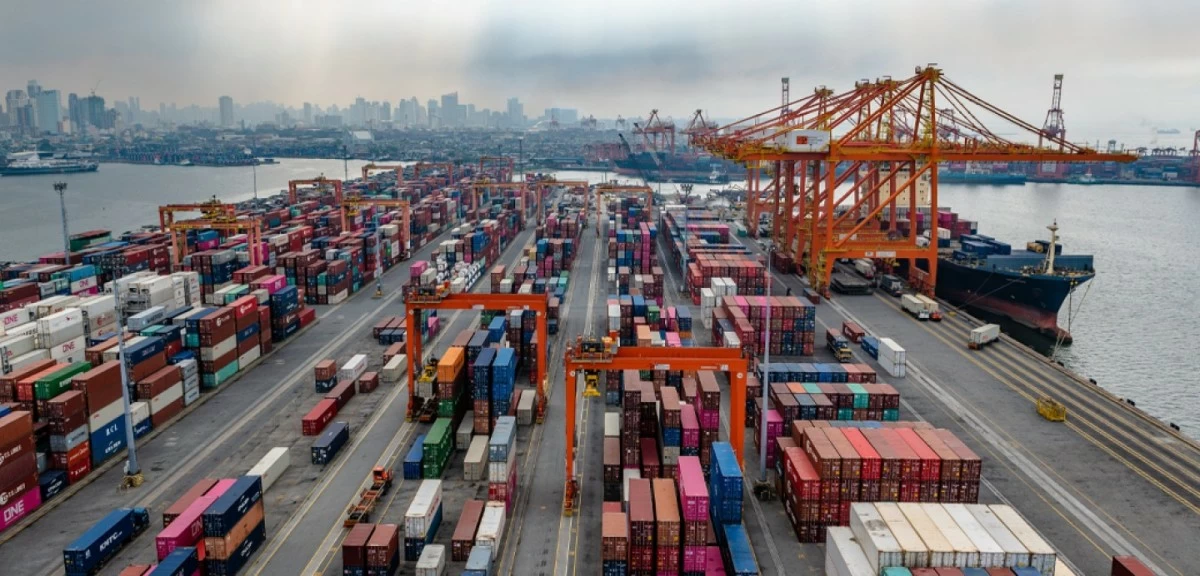
Manila International Container Terminal ((ICTSI photo)
The Department of Trade and Industry (DTI) expects export growth to beat moderate forecasts this year as overseas demand for Philippine products keeps climbing.
Citing the latest trade figures, DTI-Export Marketing Bureau (EMB) Director Bianca Sykimte said the agency is optimistic that total exports will outperform the lower targets set by the Development Budget Coordination Committee (DBCC).
“We are cautiously optimistic that we'll surpass that forecast,” Sykimte told reporters last week.
Last month, the DBCC projected a three percent increase in merchandise exports and four percent growth in service exports for the year.
The Department of Budget and Management (DBM), which chairs the DBCC, noted that international trade will likely stay moderate due to an expected global slowdown.
The DBM attributed the cooling market to normalizing inventory cycles and potential supply chain snarls driven by geopolitical tensions.
“We're still doing the numbers, but we're optimistic that we're going to grow,” Sykimte said.
Preliminary data from the Philippine Statistics Authority (PSA) showed that goods exports jumped nearly 13 percent to $54.92 billion from January to July from $48.67 billion in the same period last year.
Electronics remained the country’s primary export driver, bringing in $30.92 billion, or over 63 percent of the total.
Meanwhile, first-quarter service exports grew four percent year-on-year, rising to $12.79 billion from $12.26 billion.
To build on this momentum, Sykimte said the DTI is urging local exporters to capitalize on existing free trade agreements (FTAs) and preferential trading deals.
She specifically cited the United Kingdom's Developing Countries Trading Scheme (DCTS), which local businesses have yet to fully leverage.
According to UK trade adviser Ellie Parker, roughly £92 million (around ₱7.7 billion) in eligible exports failed to take advantage of the DCTS’s lower tariff rates.
To boost participation, Sykimte said Manila is partnering with London to market the program, focusing heavily on sectors with the lowest utilization rates. The DCTS slashes tariffs, removes trade conditions, and streamlines rules for developing nations.
However, the Philippines will eventually transition out of the program if it maintains its upper-middle-income status for three consecutive years.
Sykimte hinted that the government may pursue a bilateral FTA with the UK after aging out of the scheme, ensuring local goods continue to enjoy preferential tariffs.
“Market diversification has always been a strategy for us, so we’re doing our best to promote all these FTAs,” she said.