






Manila Bulletin
 Philippines
National
De Lima seeks all-out protection of mangroves amid heavy rains, floods; warns vs earth-balling
Philippines
National
De Lima seeks all-out protection of mangroves amid heavy rains, floods; warns vs earth-balling
Philippines
National
De Lima seeks all-out protection of mangroves amid heavy rains, floods; warns vs earth-balling
De Lima seeks all-out protection of mangroves amid heavy rains, floods; warns vs earth-balling
Published Aug 31, 2026 10:27 am


At A Glance
- Rep. Leila de Lima urges the DENR to suspend its memorandum allowing mangrove earth-balling, citing extremely low survival rates and conflicts with environmental laws and global conservation commitments.
- DENR Secretary Juan Miguel Cuna defends the interim guidelines as necessary amid project permit requests, noting ongoing consultations and a survival-rate study expected by December 2026.
- De Lima also files HB No. 8353 to establish coastal greenbelt zones, stressing the urgent need for a national mangrove policy to strengthen protection and prevent coastal erosion.
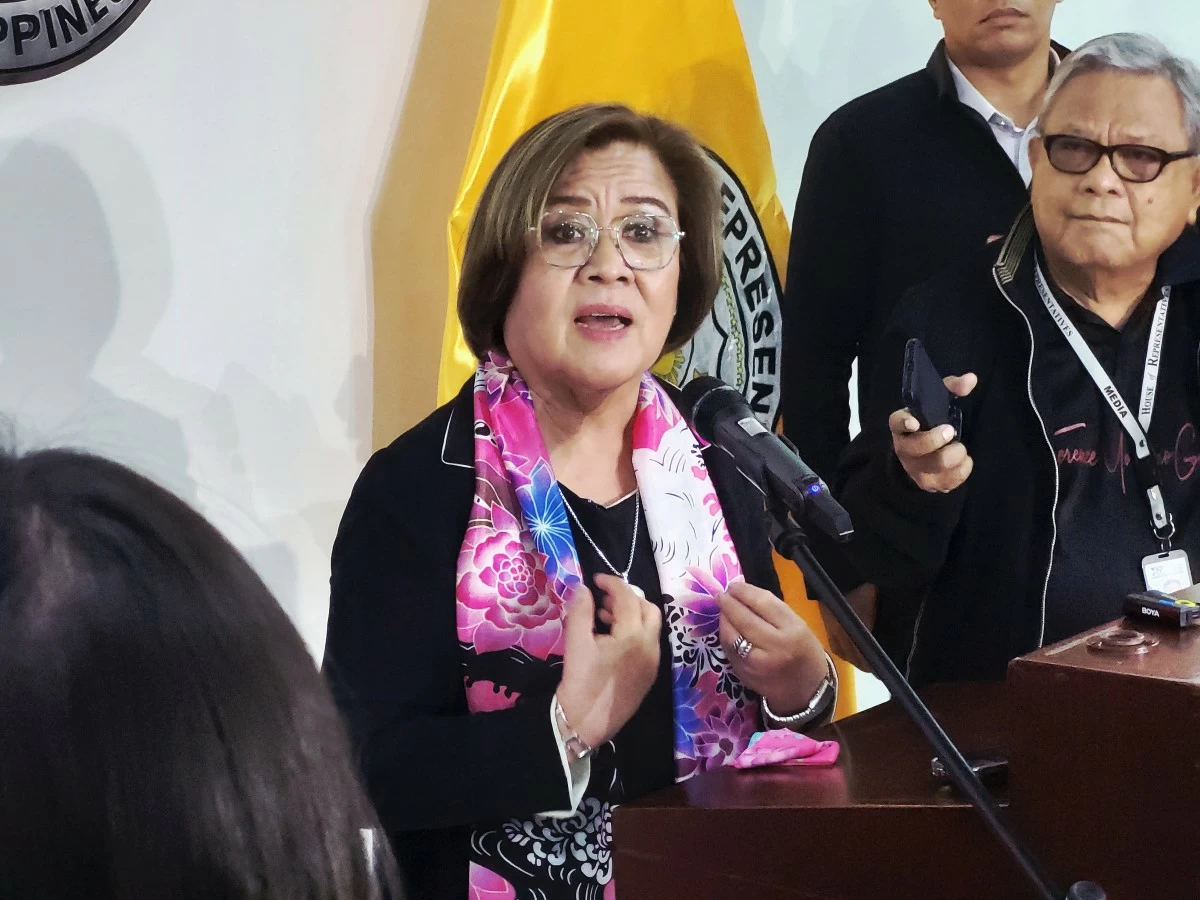
Mamamayang Liberal (ML) Party-list Rep. Leila de Lima (Ellson Quismorio/ MANILA BULLETIN)
House Senior Deputy Minority Leader and Mamamayang Liberal (ML) Party-list Rep. Leila de Lima is prodding the Department of Environment and Natural Resources (DENR) to suspend its earth-balling and relocation of mangroves.
This, as De Lima expressed concern over the destructive impact of the recent strong typhoons and "Habagat" as well as climate change on the livelihoods and lives of Filipinos.
Earth-balling is defined as the practice of digging up a tree with its surrounding soil to form a compact, circular mass, which is then protected during transport to a new location.
During the House budget briefing on the proposed 2027 budget of the DENR on Aug. 26, De Lima asked about the status of the DENR Memorandum dated Oct. 8, 2025, which provides interim operational guidance and conditions on the earth-balling and relocation of mangroves in exceptional circumstances.
“We understand that there is a technical working group (TWG) that was recently created regarding the earth-balling of mangroves. I am wondering why that memorandum was issued at all, even before consultations, or even before the creation of TWG, or a scientific study. What exactly is the survival rate?” De Lima asked during the briefing.
"All of these things should have been confirmed or verified first before allowing the issuance of this memorandum. Yes, it is considered interim operational guidance, but is it really interim, or is it now a de facto policy na mag-allow ng earth-balling of mangroves for flagship infrastructure?” she added.
Responding to De Lima, DENR Secretary Juan Miguel Cuna said that, amid numerous requests for permits for earth-balling for government projects, the agency deemed it appropriate at the time, under sustainable development that they are following, to issue interim guidelines through a memorandum specifying certain methods or guidelines to be followed.
Cuna also shared that the DENR was in consultation with the Ecosystem Research and Development Bureau (ERDB), the Biodiversity Management Bureau (BMB) and the Forest Management Bureau. According to Cuna, they requested these agencies to come up with a study particularly on the survival rate.
“We're encouraged by the initial results that have been sent to us already, but for us to be able to to really extensively complete the study, we are targeting December of this year,” the DENR chief said.
De Lima stressed that the DENR must be more forthright about study’s findings, given the extremely low, if not zero, survival rate of mangrove earth-balling. She then urged the DENR to first suspend the implementation, if not do away with the memorandum altogether.
Cuna committed to evaluate the matter in light of ongoing developments.
Last July 2026, De Lima filed House Resolution (HR) No. 1206 seeking to conduct an inquiry into the DENR memorandum as this directly conflicts with the Philippines’ internationally-endorsed commitments and undermines the country’s credibility and standing as a steward of global mangrove conservation.
According to HR No. 1206, the memorandum contravenes Section 99 of Republic Act (RA) No. 8550 or the “Philippine Fisheries Code of 1998” as amended, which prohibits the conversion of mangroves for any other purpose, as well as RA No. 8371 or the “Indigenous Peoples’ Rights Act of 1997”, if mangrove areas are located within ancestral domains.
The resolution also cited Presidential Proclamation 2152, which declares the entire Province of Palawan and certain parcels of the public domain and/or parts of the country as mangrove swamp forest reserves.
The Global Mangrove Alliance Philippines (GMAP) welcomed De Lima’s measure “as an important opportunity to ensure that decisions affecting our mangroves are guided by science, existing environmental laws, the constitutional right of Filipinos to a balanced and healthful ecology, and the long-term welfare of our communities".
“Available evidence also indicates that successful earth-balling has been demonstrated primarily for young, small-diameter mangroves. Most trees affected by development projects are mature mangroves, making successful transplantation highly uncertain and ecologically risky,” GMAP said in a statement.
Coastal greenbelt zones sought
Relatedly, De Lima also filed House Bill (HB) No. 8353 seeking to require the establishment of coastal greenbelt zones, which are mangroves and beach forests stretching to at least 100 meters in width, designed to prevent coastal erosion.
The measure also specifically defines the country’s policy goals and objectives for the management of mangrove resources in the country.
“The lack of a national policy on mangroves poses a great challenge and has caused existing mangrove protection and rehabilitation efforts to remain ineffective and unsuccessful," she noted in her bill.
De Lima says a "comprehensive mechanism" must be urgently implemented to address this.