






Manila Bulletin
 Philippines
National
8.1M individuals affected by 'habagat' as massive flooding strikes entire country – OCD
Philippines
National
8.1M individuals affected by 'habagat' as massive flooding strikes entire country – OCD
Philippines
National
8.1M individuals affected by 'habagat' as massive flooding strikes entire country – OCD
8.1M individuals affected by 'habagat' as massive flooding strikes entire country – OCD
Published Aug 30, 2026 02:10 pm


At A Glance
- The Office of Civil Defense (OCD) said 2.3 million families or 8.1 million individuals were affected by the enhanced southwest monsoon (habagat), with 646 areas flooded across seven regions.
- The death toll remained at 32, with 19 injured and three missing. Some 43,500 people are staying in 523 evacuation centers while 3,200 houses were damaged.
- The Armed Forces of the Philippines (AFP) and Philippine Coast Guard (PCG) conducted rescue, evacuation, and relief operations in flood-hit areas, including Tarlac, Bataan, Batangas, Zambales, Pampanga, and Pangasinan. Authorities are also monitoring La Mesa Dam and the Marikina River for possible further flooding in Metro Manila.
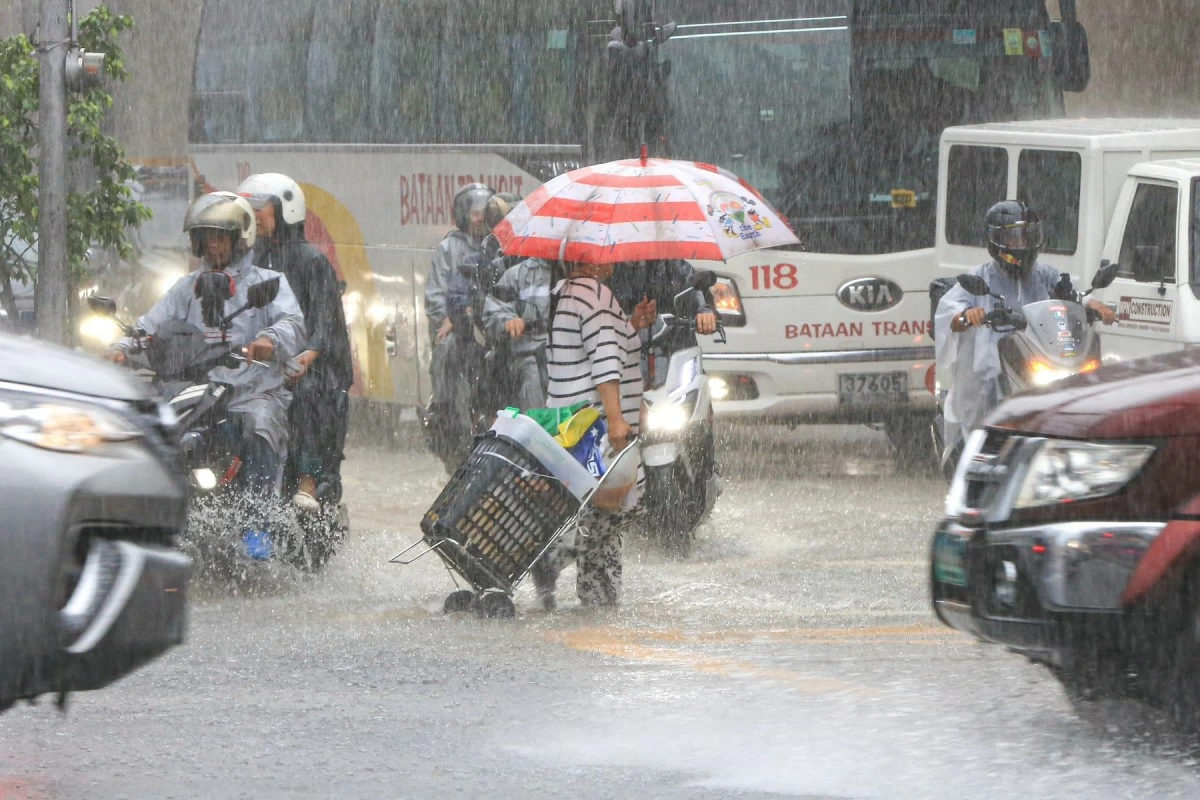
Motorists endure heavy rains and flooding brought by the southwest monsoon, or “habagat,” as they traverse EDSA-Kamuning in Quezon City on Monday, August 17, 2026. (Santi San Juan | MB)
Severe weather systems due to the enhanced southwest monsoon (habagat) continued to batter the country, displacing 8.1 million individuals composed of 2.3 million families, as relentless downpours triggered widespread inundation and critical infrastructure failures across multiple regions.
A report from the Office of Civil Defense (OCD) on Sunday, Aug. 30, showed 646 areas were submerged in floodwaters across seven regions.
Most affected by flooding was Central Luzon (Region 3) as 402 areas in Bataan, Bulacan, Nueva Ecija, Pampanga, Tarlac, and Zambales were inundated.
In Mimaropa (Region 4B), there were 151 areas that were flooded in Occidental Mindoro, Oriental Mindoro, and Romblon.
A total of 53 areas in the National Capital Region (NCR) were also swamped by floodwaters, specifically in Malabon City, Quezon City, Valenzuela City, and Caloocan City.
There were 26 areas that were also flooded in Western Visayas (Region 6), with all those affected located in Iloilo.
In Ilocos (Region 1), seven areas were flooded, affecting Pangasinan, Dagupan, La Union, and Ilocos Sur.
Six areas were flooded in Cavite, Laguna, Rizal, and Batangas – all in Calabarzon (Region 4A).
And in Zamboanga Peninsula (Region 9), one area was flooded in Zamboanga del Sur.
Meanwhile, the death toll remained at 32, including 19 injured individuals and three missing.
The continuing rainfall has also forced 43,500 individuals or 13,500 families into 523 evacuation centers. Some 3,200 houses were damaged, including 2,800 partially damaged and 355 totally destroyed.
The OCD placed infrastructure damage at P6.16 billion and agricultural losses at P2.32 billion. Assistance extended to affected communities reached P1.69 billion.
La Mesa Dam, Marikina River overflow
OCD Deputy Administrator for Administration Assistant Secretary Bernardo Rafaelito Alejandro IV said that authorities were closely watching La Mesa Dam as it overflowed due to continued rains, raising concerns over further flooding in Metro Manila.
“We continue to monitor La Mesa Dam. Many low-lying communities in Metro Manila will be affected,” Alejandro said.
He said nearly three million residents in Quezon City alone could be affected, particularly in Fairview, Quirino Highway and San Bartolome. Flooding could also reach Caloocan, Valenzuela, Malabon and Navotas.
The Marikina River was also being monitored for a possible forced evacuation, while early warnings were being issued to communities at risk.
Rescue and evacuation efforts
As flooding affected many parts of the country, the Armed Forces of the Philippines (AFP) deployed disaster response units to Tarlac, Pampanga, and Bataan to support local government units in relief distribution and rescue missions.
In Tarlac, the Philippine Air Force (PAF) continued its search and rescue operations after a vehicle plunged into Agana Bridge on August 29. One passenger was rescued, while four remain missing.
PAF units also assisted in evacuation operations in Paniqui, Tarlac.
Meanwhile, the Philippine Coast Guard (PCG) carried out multiple humanitarian assistance and disaster response (HADR) operations as it evacuated 190 residents in Abucay, Bataan; assisted 27 individuals in Balayan, Batangas; and rescued 30 people in Olongapo City, Zambales.
Various coast guard units also conducted forced evacuations in Metro Manila, Cavite, Zambales, Bataan, and Pampanga; and evacuated families in Santa Cruz, Zambales and Agno, Pangasinan.
Meanwhile, 48 passengers were stranded while 30 vessels took shelter in various ports around the country due to the bad weather.
Enough resources
Despite weeks of monsoon rains, Alejandro said the government still had sufficient food and non-food supplies.
“We have enough resources available, both food and non-food. The DSWD still has many food items,” he said.
“The challenge now is how to replenish what we have prepositioned because they have already been used. We are planning to do augmentation. Perhaps we will wait for the rains to ease, but we are making sure helicopters and trucks are ready to move once the weather improves so we can replenish immediately,” Alejandro added.