






Manila Bulletin
 Lifestyle
Arts and Culture
The Cultural Center of the Philippines in the 21st Century
Lifestyle
Arts and Culture
The Cultural Center of the Philippines in the 21st Century
Lifestyle
Arts and Culture
The Cultural Center of the Philippines in the 21st Century
The Cultural Center of the Philippines in the 21st Century
New generations, new art forms, and a renewed cultural landmark define the CCP's continuing journey to keep Philippine arts vibrant, relevant, and accessible
Published Aug 29, 2026 08:22 am


The creation of the Governance Commission for Government-Owned or Controlled Corporations (GCG) through R.A. No. 10149 in 2011 marked an important turning point for the Cultural Center of the Philippines (CCP). Among its significant effects was a stronger emphasis on board accountability and more active board involvement in policy formulation, decision-making, and institutional oversight.
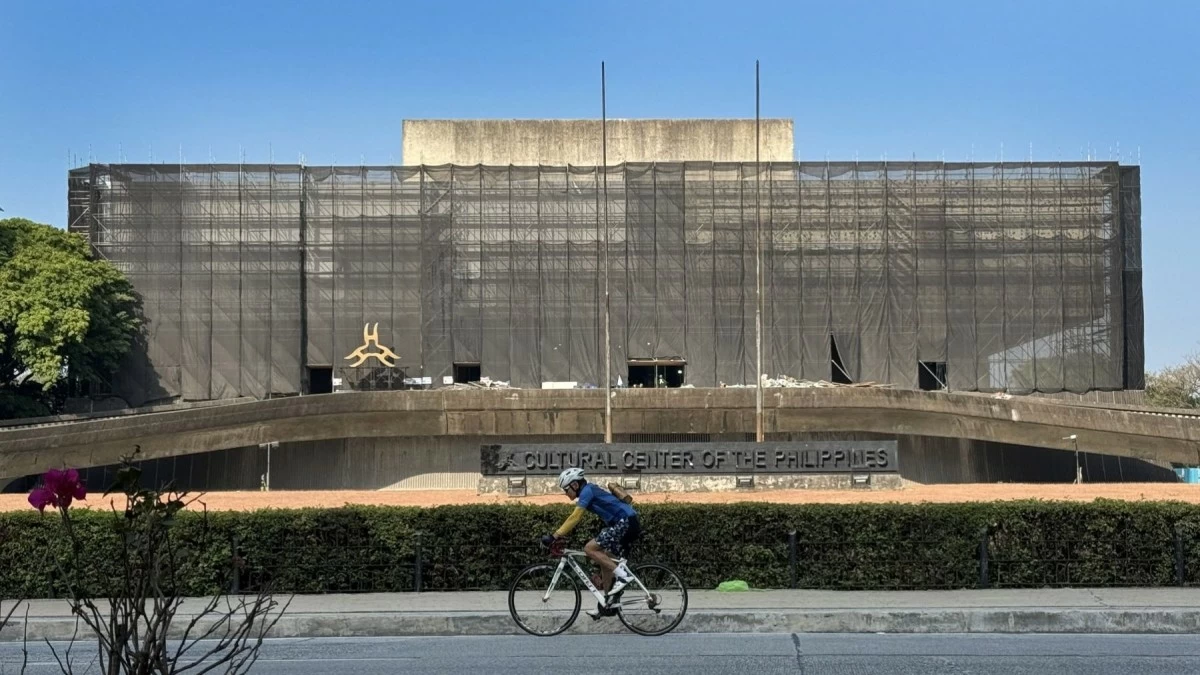
The CCP main building restoration (Photo: Mark Balmores/Manila Bulletin0
The establishment of board committees, prompted by the GCG, has further strengthened governance. These committees have enabled more thorough deliberation of management proposals and board initiatives and have helped make decision-making more informed.
Performing arts network
The CCP has long worked closely with professional resident companies in music, dance, and drama, and has strengthened its continuing annual events, namely Pasinaya, Cinemalaya, and Virgin Labfest, to which Ternocon, a celebration of Filipino formal wear, was added in 2018.
With the closure of the main building, performances have been held at the Metropolitan Theater, the Samsung Performing Arts Theater at the Circuit in Makati City, and elsewhere in Metro Manila and the regions.
The outreach program has been active, sponsoring nationwide concerts of the Philippine Philharmonic Orchestra (PPO) and other groups. The PPO has continued to perform abroad, most recently in 10 cities in the United Kingdom. Ayala Land Malls has co-sponsored Metropolitan Opera HD and British National Theatre presentations of grand opera and Shakespeare plays.
This resident company network has expanded to include National Performing Arts Companies. More outstanding groups will be added as official CCP partners, creating more opportunities for collaboration.
Working with Generations X, Y, Z, and Alpha
Venturing beyond the established boundaries of the performing arts, the CCP conceived of Kanto Kultura to encourage the artistically inclined among ordinary young Filipinos. Its first project, Kanto-Kanta, sought to inspire young people to compose and perform using indigenous themes and musical instruments.
The concept was simple and accessible: participation was affordable, and the rules were straightforward. The response was enthusiastic, and many of those who took part have since gone on to pursue successful artistic careers.
With young audiences and emerging art forms in mind, the CCP also started projects in animation based on selected “Lola Basyang” stories, produced in partnership with De La Salle–College of Saint Benilde.
Continuing into new territory, the CCP launched an Animation, Comics and Game Development Grants Program. The results have been encouraging: one grantee, Ranida Games' “Sinag Fighting Game” (inspired by Philippine mythology), has achieved over 900,000 downloads on both Google Play and Apple iOS from numerous players worldwide.
To help deepen cultural roots among young Filipinos, initiatives were also taken to revive vanishing arts, notably traditional lullabies. “Himig Himbing: Mga Heleng Atin” was launched in 2022, consisting of audiovisual renditions of eight lullabies based on ethnomusicological research. Professionally arranged and produced, the selections are in Tagalog, Bicol, Kalinga, Subanon, Ilocano, Cebuano, and other Philippine languages.
Great art can hardly flourish without an appreciative audience. For creativity to flourish, people must have opportunities not only to experience the arts but also to have the knowledge and ability to understand and appreciate them.
The CCP has therefore partnered with the Philippine Normal University (PNU) on a program designed to deepen future teachers’ knowledge and appreciation of culture and the arts. The initiative has a powerful multiplier effect: PNU graduates will eventually teach in schools throughout the country, influencing not only their students but also their fellow educators. In this way, appreciation for the arts can reach far beyond the walls of the CCP and into classrooms and communities nationwide.
The visual arts
During its first five decades, the CCP devoted much of its attention to music, dance, drama, and film. For the CCP’s second half-century, the board has resolved to give greater prominence to the visual arts, covering painting, sculpture, graphics, photography, and other forms of visual expression.
The CCP has an outstanding collection of paintings, musical instruments, and ethnographic items. The painting collection includes the work that introduced modern art to the Philippines, Victorio Edades’ “The Builders,” as well as important works by Amorsolo, Zobel, Joya, and others through the 1980s. Dubbed the 21AM (21st Century Art Museum), it is being digitized and expanded to include more recent works and emerging forms such as installation and video art. More importantly, the CCP hopes to help bring greater international recognition to Philippine visual art and Filipino artists among leading museums and collectors around the world.
There are sculptures in various places within the CCP premises, including some by artists from ASEAN countries. These are now arranged on the lawn beside the Philippine Navy Headquarters along Roxas Boulevard.
Plans are underway to create a permanent ASEAN sculpture garden within Liwasang Kalikhasan, the tree-covered four-hectare area south of the main building. The Liwasan is planned to be a cultural destination in its own right, with sculpture, fountains, open-air performance areas, perhaps a grove of native flowering trees, and a pool where children can sail miniature boats. It could be a welcoming place where art, nature, recreation, and community can come together.
Renovating the CCP main building
The renovation of the CCP main building became necessary after more than five decades. Structural and mechanical deficiencies had accumulated, including leaks through the concrete roof, water seepage from below, deteriorating electrical systems, damaged drainage and sanitary facilities, and concerns about the building’s structural integrity.
When the CCP was inaugurated in 1969, it ranked among the finest in the world. More than half a century later, however, technology has advanced dramatically. Acoustics, theatrical lighting, stage engineering, audiovisual recording, and production systems have all undergone major transformations. The renovation represents not simply the repair of an aging structure but also an opportunity to equip the CCP for the next generation of artistic production.
For the medium term, the complex development plan envisions a separate building for administrative offices not directly required for main building productions. In keeping with this plan, administrative offices will continue to be housed in the CCP Annex. The space released in the main building will therefore be devoted to conference rooms, exhibitions, official reception areas, and other public-oriented functions, helping transform the main building into a destination that visitors will experience as a cultural attraction in its own right.
With global warming and a rising population, the CCP is exploring possibilities of building facilities at the Clark Economic Zone. As the CCP looks beyond its historic home, its continuing challenge—and promise—is to ensure that the arts remain a vital, accessible, and evolving part of the nation’s future.
Note: The CCP Board of Trustees consists of the following: chairperson emerita, Imelda Romualdez Marcos; chairman, Jaime C. Laya; vice chairpersons, Ma. Carissa O. Coscoluella and Ma. Margarita M. Floirendo; president Kaye C. Tinga; and trustees Isidro A. Consunji, Felix S. Duque, Gizela M. Gonzalez, Teodoro S. del Mundo, Jr., Marivic del Pilar, Jose Tomas C. Syquia, and Jonathan M. Velasco. Dennis N. Marasigan is vice president and artistic director and Jose Victor M. Gaite is vice president for Administration and Finance.
Comments are cordially invited, addressed to [email protected].