






Manila Bulletin
 Business
Trade & Industry
A Pangasinan farmer's fight against weather, and smugglers
Business
Trade & Industry
A Pangasinan farmer's fight against weather, and smugglers
Business
Trade & Industry
A Pangasinan farmer's fight against weather, and smugglers
A Pangasinan farmer's fight against weather, and smugglers
Waiting for the rain to stop:
By Derco Rosal
Published Aug 29, 2026 12:01 am
|
Updated Aug 28, 2026 07:53 am


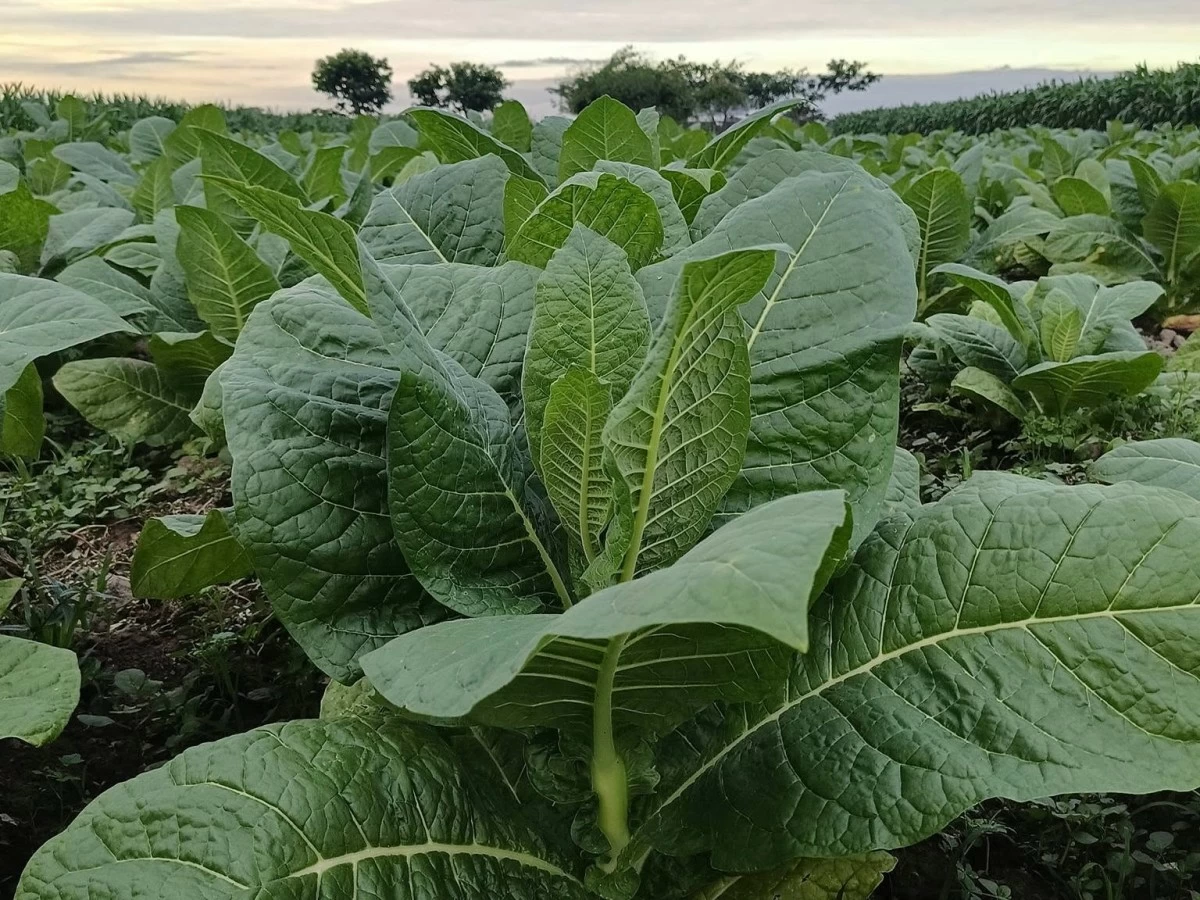
Silence has been creeping into the farmlands of Pangasinan. It may be a long while before farmers hear Ilocano radio dramas blasting from their stereos at sunrise, playing until the mid-morning heat turns oppressive. It has been nearly a month since the southwest monsoon began dumping rain across the country, leaving parts of the province submerged in floodwaters.
Rosita Mendoza, a 52-year-old tobacco grower in the town of Alcala, could only stare at the dim skies, the eaves dripping with rainwater, and her soaked land turning into a vast quagmire. Wooden planting pegs, chipped hoes, and plows sit stacked in her barn.
It isn't that Alcala farmers loathe the rain, but Mendoza and her peers were left praying for three straight dry days before they could begin sowing again. The Chinese cabbage she planted drowned, its remains hungry devoured by the mud.
For a woman who lived through an era when farm labor cost as little as ₱40 a day, losing seedlings to torrential rain is a familiar tragedy.
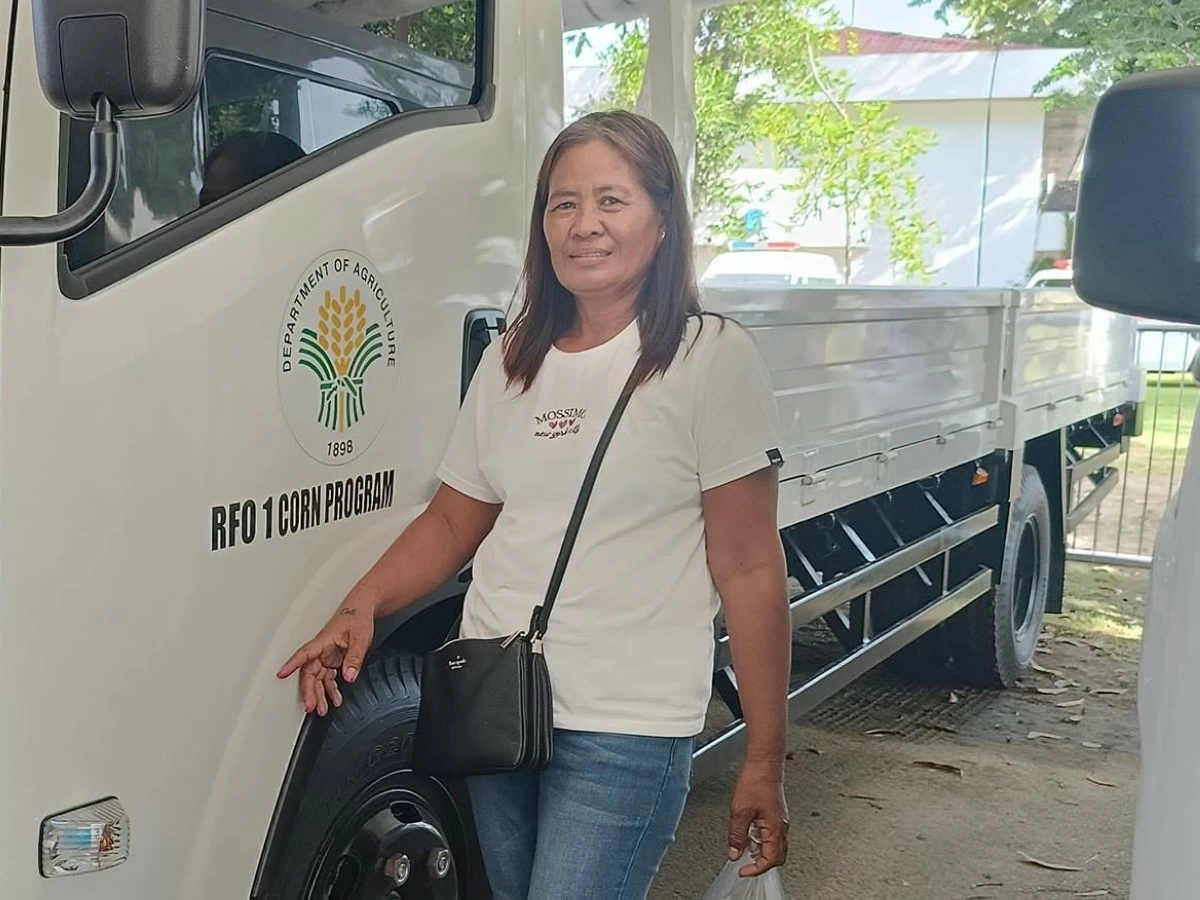
Mendoza poses with a hauling truck, wishing she could one day take one home. It was the day President Ferdinand Marcos Jr. visited the province and vowed to strengthen the agriculture sector—something farmers “barely” feel improving.
“They say those who plant are gamblers. Just because you sow something doesn’t mean you’ll reap the fruit,” Mendoza said. She spoke with a quiet resignation, as if this setback wouldn’t soon force her back into the field to sow another sack of seeds, once again at the mercy of unpredictable weather.
Fresh off her midyear tobacco harvest, Mendoza proceeded to plant other crops, accepting the reality that tobacco alone cannot buoy her family through the rest of the year.
“If we plant only one commodity and if it gets destroyed, we won’t have anything to feed us,” she said.
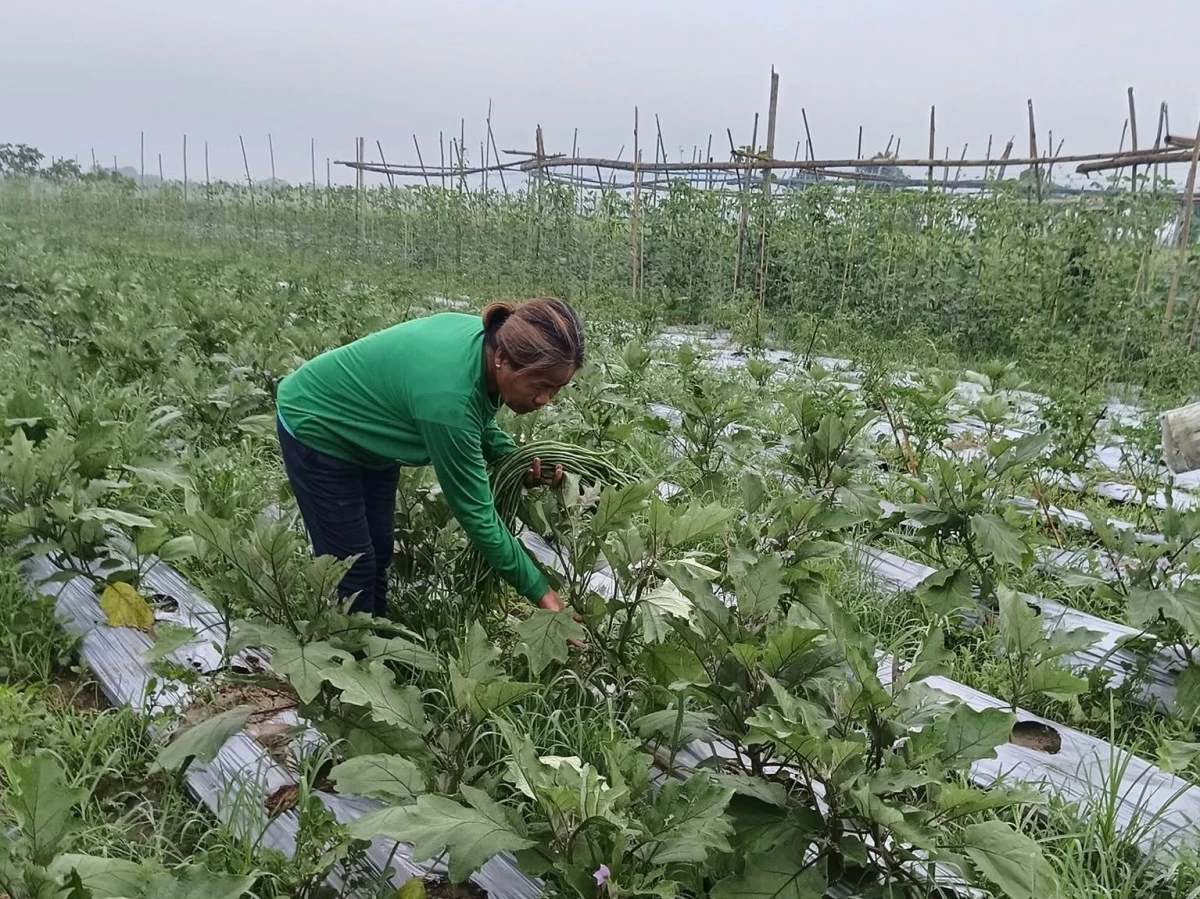
Mendoza checks on her eggplant field months after the tobacco harvest. While other commodities help sustain the farm between seasons, tobacco remains her biggest source of income.
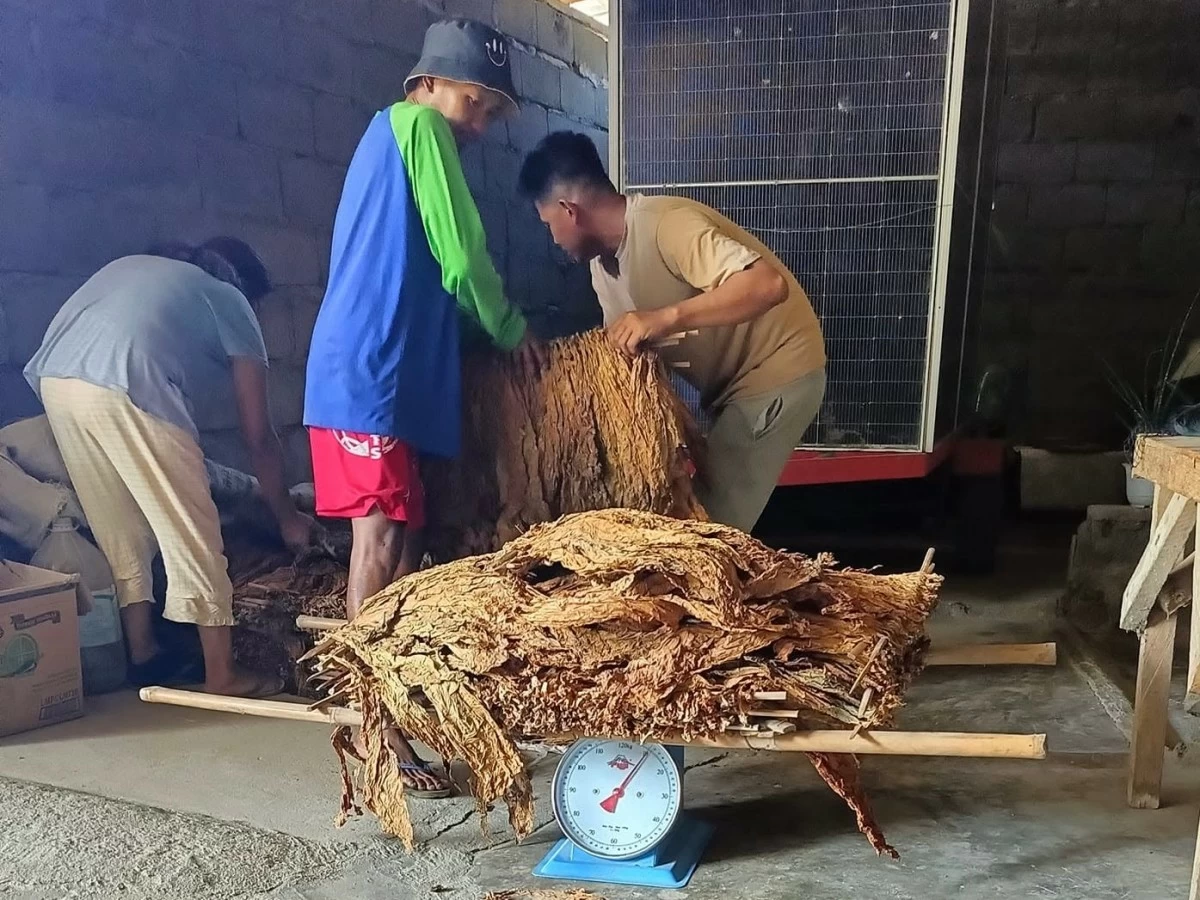
Alcala farmers weigh their burley tobacco harvest before it is remitted to Universal Leaf Philippines, Inc. (ULPI).
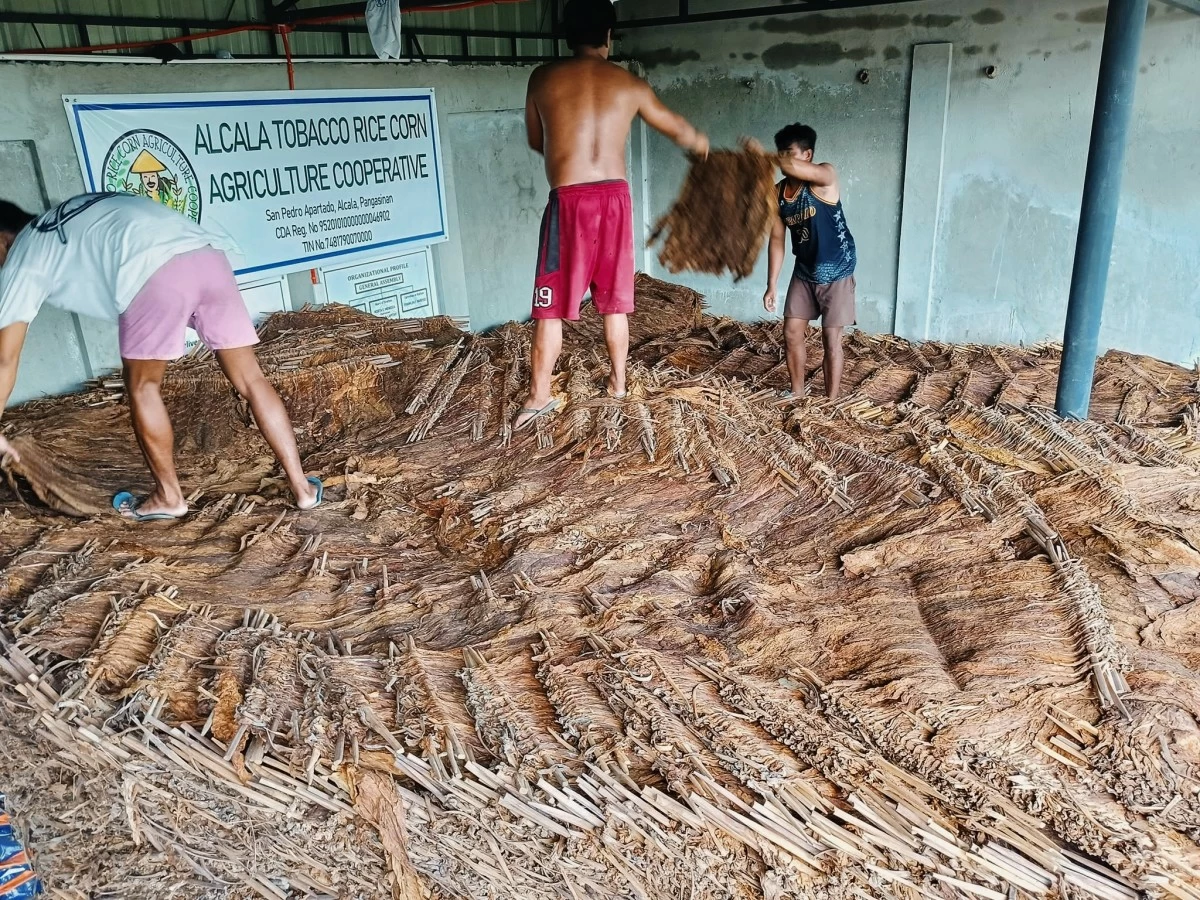
Tobacco growers flip strings of tobacco leaves to keep moisture at bay and prevent a decline in quality.
Tobacco season typically begins in September, but preparing the seedbeds has become a waiting game dictated by the rain—or the lack of it. “We can start again only when it stops raining for a few days,” Mendoza said.
When the earth finally breathes warm again, Mendoza will rise at four in the morning and leave her house an hour later to kick off her seedling nursery routine. “Around five in the morning, we’re already there in the fields because it becomes hot quickly,” she said.
Mendoza walks roughly a kilometer toward her half-hectare tobacco plot alongside other women, all wearing knee-length rubber boots, loose trousers, wide-brimmed hats, and handkerchiefs tied to block the sun.
To pass the time, they play a playlist of downloaded Ilocano dramas and rock music, the same tunes echoing through Ilocano-owned thrift stores in Metro Manila. Mendoza recalled that she and her late husband once tried to eke out a living in the capital region, but eventually took a bus back home to Pangasinan.
Upon her return, Mendoza turned to what came naturally: tobacco farming. She watched her family grow alongside the cycle of her crops. Her youngest daughter even earned a degree in agriculture and joined the workforce of their corporate buyers.
Mendoza considers herself fortunate. The burley tobacco she cultivates has a guaranteed buyer in Universal Leaf Philippines, Inc. (ULPI), a multinational tobacco firm. She laments, however, that native tobacco growers struggle to secure stable sales.
“Growers of native tobacco don’t have sure buyers. That’s why there are a lot of stocks—native farmers haven’t been able to sell them yet,” Mendoza said.
As a community leader, Mendoza offers a helping hand by renting farmland and allowing landless neighbors to till it. “There are a lot of people here who want to work, but they don’t have land. They don’t have the money to buy land,” she said.
Smuggling takes root
In a region where land is scarce for honest farmers, tobacco smugglers have found fertile ground to flourish and blend in with legal merchants. Early this year, Mendoza was offered illegal inventory to resell at her local retail store.
“Someone came to me with that kind of cigarette. I said, ‘I don’t want to sell it because it’s illegal. I’m the one who will get caught. It’s a big thing,’” Mendoza recalled. Yet, she noted that seeing bystanders smoking illicit cigarettes has become an almost everyday sight.
“I see them almost every day,” she said, adding that black-market products are “really cheap.”
Last year, the government lost more than ₱80 billion in tax revenues to illicit tobacco and vape products, turning the Philippines into a primary source of illegal vape leakage in Southeast Asia.

Ashok Kaul, founder and director of the Institute for Policy Evaluation
Ashok Kaul, founder and director of the Institute for Policy Evaluation, argues that curbing black-market transactions should not come at the expense of lower excise taxes. “Do not just accept it and lower the tax rates. Fight it!” he urged.
According to the global tax expert, the government must tackle smuggling through stricter enforcement. Pinpointing the source of illicit cigarettes is crucial to crafting an effective response.
“If you know it’s all smuggled, you know where to invest—at the border. If you know it’s locally produced, the countermeasures are different,” Kaul said.
Kaul commended the Philippines’ broader tobacco policies, noting significant progress since the implementation of the landmark Sin Tax Law more than a decade ago. But he pointed out a glaring weak spot: enforcement.
“You’ve reached the limit… I would say, ‘Look, you’ve done so well, but you’ve neglected one dimension—measuring and fighting illicit trade,’” Kaul said, emphasizing that combating illicit trade must be the country's top priority.
While Kaul warned against lowering taxes to appease smugglers, he also declined to endorse a Department of Finance (DOF) tax bill that seeks to hike excise taxes on harmful products.
Beyond tobacco, the proposed reform would update taxes on sweetened beverages, plastics, and luxury automobiles.
Finance Undersecretary Karlo Fermin S. Adriano noted that these revenue-generating measures are intended to offset losses from income tax relief for middle-income Filipinos, projecting net revenue gains of over ₱190 billion over four years.
Kaul warned against treating behavioral taxes as a permanent piggy bank for other tax relief measures.
“It’s not wise to rely on revenue from sin taxes,” he said. “Sin taxes are designed for a different purpose—they aren’t meant primarily to generate revenue.”
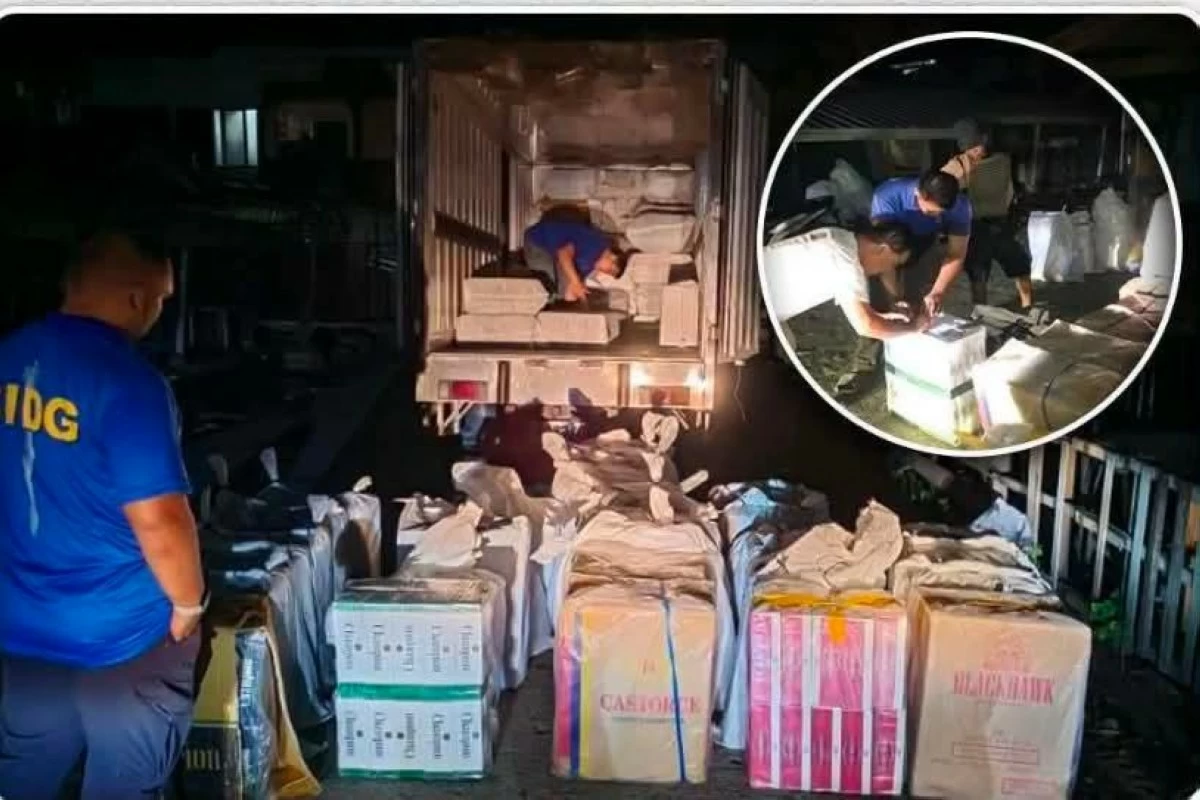
SMUGGLED cigarettes valued at P14 million were seized in Zamboanga City over the weekend. (Photo via Liza Jocson)
As raising tobacco taxes risks driving smokers further into the black market, the urgent call is for tighter border controls and stronger enforcement. Perhaps then, farmers like Mendoza can find relief, knowing they won't have to compete with smugglers just to scrape together an extra peso.
Of the millions of pesos in tobacco taxes that Alcala collected in 2025, Mendoza said farmers received only ₱2,000 each, alongside two bags of fertilizer and seedling bags. “That’s really not enough. Where will that go?” she asked.
Even the subsidies promised when global fuel prices spiked amid Middle East conflicts failed to reach the ground. Now that inflation has cooled, Mendoza has abandoned all expectations of receiving that support.
Still, she holds out hope that authorities will mandate a meaningful fraction of sin-tax collections to go straight into farmers' pockets. “I just hope that the excise tax will go to us even just a few percent,” she said.
Perhaps that extra support would give Mendoza and her community a fighting chance as illegal trade continues to threaten the legal market.