







PNP readies units for AI-enabled body cameras
Published Aug 28, 2026 04:31 pm


At A Glance
- The Philippine National Police (PNP) said it was preparing for the deployment of 10,000 to 20,000 new AI-enabled body-worn cameras to improve documentation of police encounters and operations.
- The cameras are expected to provide clearer footage that can help preserve evidence, support investigations, and provide an objective record for both police officers and the public.
- DILG Secretary Jonvic Remulla said the procurement has been bid out, with more cameras to be purchased annually.
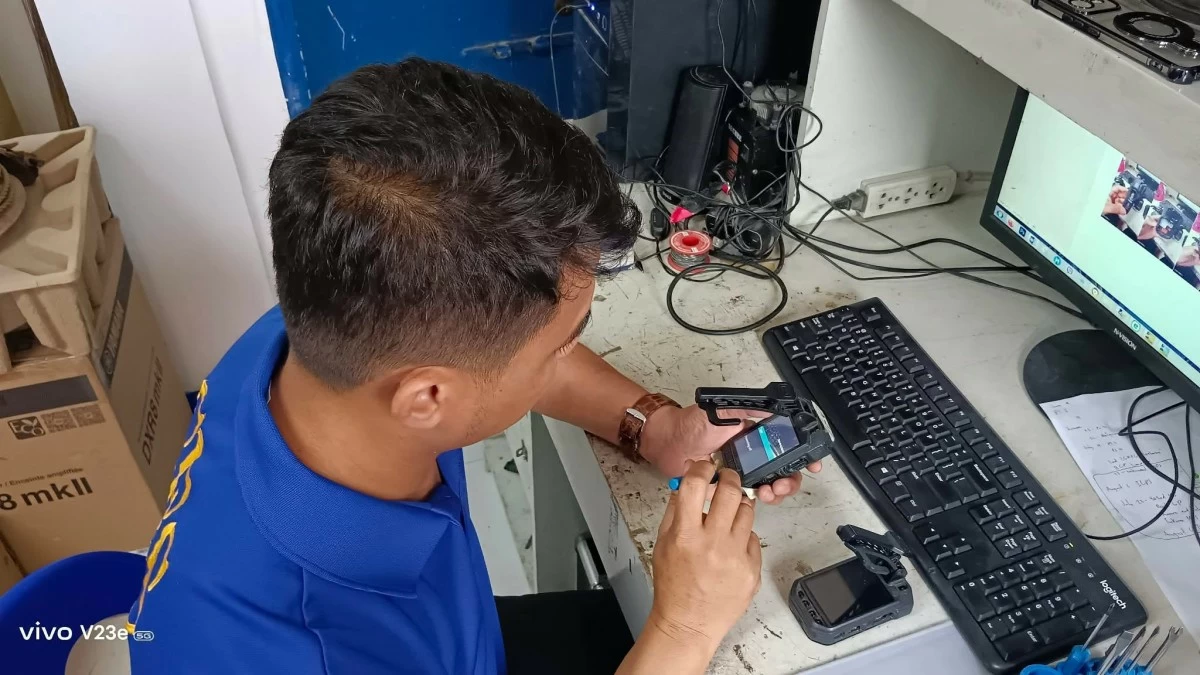
A non-uniformed personnel of the Philippine National Police (PNP) conducts a technical inspection of a body-worn camera to ensure its proper functionality, reliability, and operational readiness. (Photo: PNP Regional Communications and Electronics Unit 9)
The Philippine National Police (PNP) said Friday, Aug. 28, that it was gearing up for the deployment of new body-worn cameras powered by artificial intelligence (AI) that were expected to provide clearer records of police encounters and operations in the field.
Police General Jose Melencio Nartatez Jr., PNP chief, said the equipment would give police officers a more reliable record of their interactions with the public while helping preserve evidence and support investigations.
“The AI-enabled body cameras will enhance the PNP’s capability to document police operations with clearer and more reliable footage. This will help preserve evidence, support investigations, and promote greater accountability among our personnel,” Nartatez said.
Department of the Interior and Local Government (DILG) Secretary Jonvic Remulla earlier told the House committee on appropriations during a briefing on the proposed DILG budget for 2027 that the PNP is procuring 10,000 to 20,000 new AI-enabled body-worn cameras this year.
The new cameras are expected to have better lenses and improved image quality to make the footage more suitable for AI processing.
The procurement has already been bid out, he said, and more cameras will also be purchased annually as the PNP expands the use of the technology among its personnel.
For his part, Nartatez said the cameras would also serve as protection for police officers by providing an objective record of what happens during encounters and operations.
“This technology will protect not only the public but also our police officers by providing an objective record of what transpired during police encounters and operations,” the PNP chief said.
He said the police organization would make sure that the equipment is used properly and within existing rules.
“We assure the public that these body cameras will be used to strengthen transparency and accountability in police operations. We will ensure that our personnel use the technology properly and in accordance with existing laws and policies,” Nartatez added.