







Peso plunges past ₱62:$1 to new record low of ₱62.265
By Derco Rosal


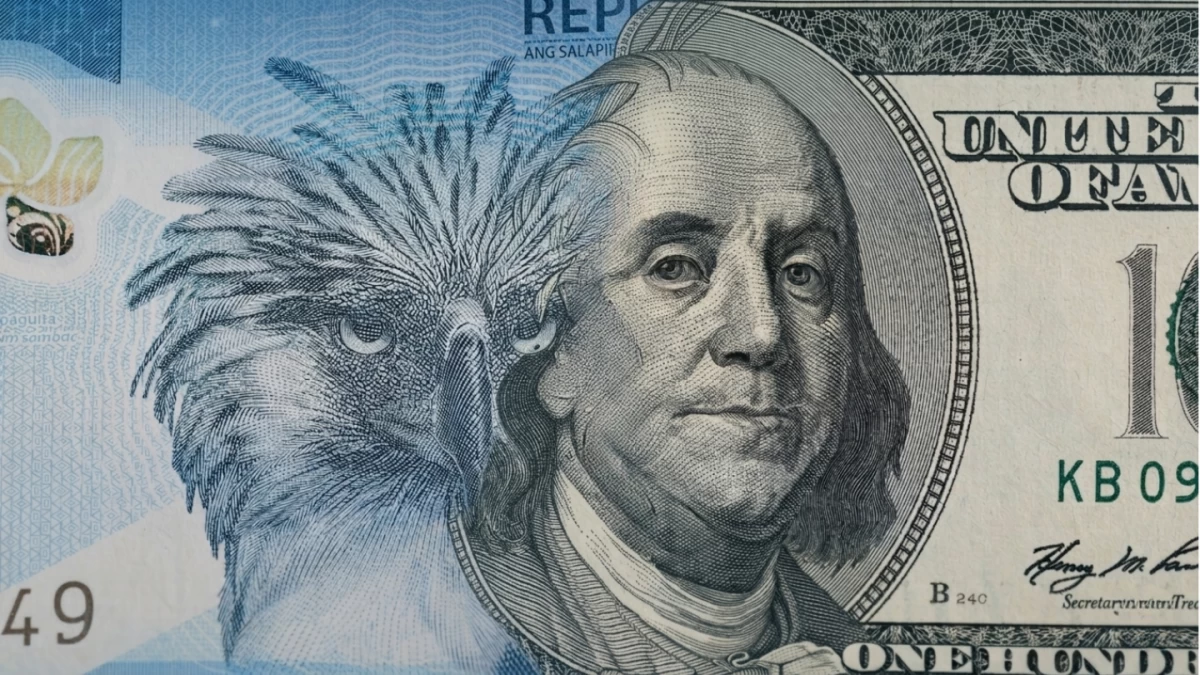
Demand for the safe-haven United States (US) dollar surged amid heightened geopolitical uncertainty, sending the Philippine peso tumbling to a fresh historic low of ₱62.265 on Friday, Aug. 28, from the previous record of ₱61.888 just a day ago.
The local currency slid to an intraday low of ₱62.27 and hit a high of ₱62 after opening at ₱62.05. Total trading volume climbed to $1.962 billion from Thursday’s $1.79 billion, according to the Bankers Association of the Philippines (BAP).
Singapore-based DBS Bank Ltd. noted that the Philippine peso was the only Association of Southeast Asian Nations (ASEAN)-6 currency to weaken against the greenback so far in the third quarter of 2026, declining by 0.8 percent, while its regional peers appreciated by 0.9 to 1.7 percent over the same period.
Reyes Tacandong & Co. senior adviser Jonathan Ravelas said the US dollar-peso pair rose again “after the greenback strengthened anew on Middle East worries and ahead of the Jackson Hole speech by US Federal Reserve (Fed) Chair Kevin Warsh.”
Similarly, Ruben Carlo O. Asuncion, chief economist at Union Bank of the Philippines (UnionBank), cited the dominance of offshore developments rather than domestic developments. “Markets remain focused on broad US dollar strength, elevated oil prices, and lingering uncertainty in global financial markets,” he said.
Asuncion noted that the local currency still slipped even as the Bangko Sentral ng Pilipinas (BSP) decided to further raise key borrowing costs by a quarter point to five percent—a move that typically supports the currency.
“Demand for dollars from importers and investors has also likely contributed to the peso’s weakness,” Asuncion said, noting that the net oil-importing country remains vulnerable during periods of a sustained rally in the greenback.
“More broadly, the peso’s recent weakness is consistent with the challenges often faced by emerging market (EM) and regional currencies during periods of dollar strength and heightened global uncertainty,” he added.
Ravelas expects the currency pair to trade within the range of ₱61.9 to ₱62.3 despite the support from the BSP’s tightening. He said geopolitical risks are expected to continue driving this dimmer outlook for the peso.