







₱7.2-trillion test: Can the House deliver an honest 2027 budget?
Published Aug 28, 2026 12:05 am
|
Updated Aug 27, 2026 05:17 pm


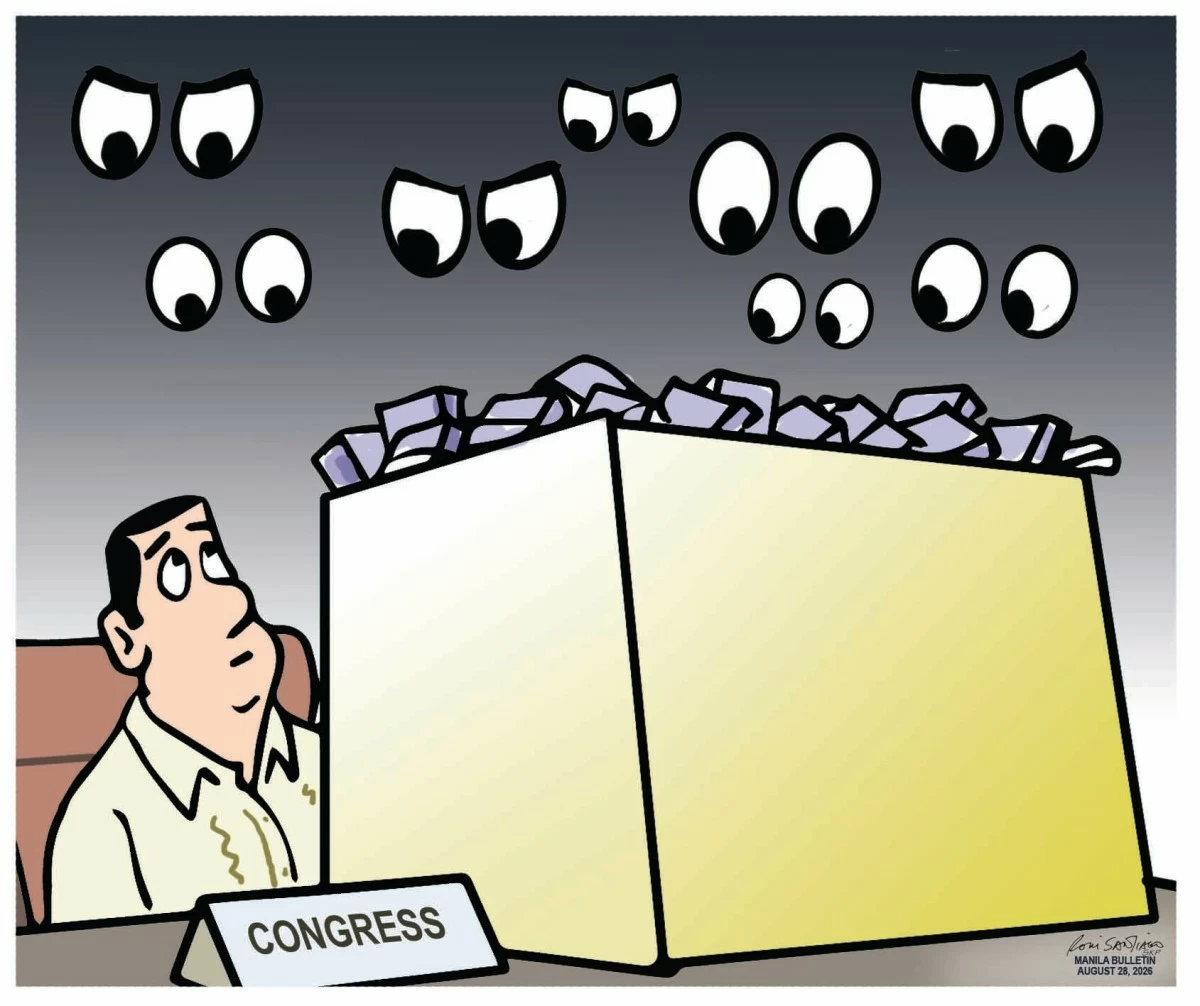
The filing of the proposed ₱7.2-trillion 2027 General Appropriations Bill (GAB), or House Bill No. 10858, presents the House of Representatives with more than another annual budget exercise. It is a test of whether Congress has learned the painful lessons of the 2025 budget and the flood-control scandal—and whether it is prepared to restore public trust.
House Committee on Appropriations Chairperson Rep. Mikaela Angela “Mika” Suansing (1st District, Nueva Ecija) said the House may realign allocations among sectors and agencies as it sees fit. There is nothing inherently wrong with realignment. Congress has the constitutional authority and responsibility to scrutinize the executive’s proposed spending budget and improve it.
But the question is: Improve it for whom?
As congressmen deliberate on the proposed 2027 National Expenditure Program, they must keep in mind that the ₱7.2-trillion budget is taxpayers’ money. Every peso carries the labor of a worker, the sacrifice of a family, the enterprise of a business, and the hopes of a citizen.
Therefore, the ₱7.2 trillion must serve the Filipino people—not political allies, favored districts, contractors, or private interests.
The proposed budget puts substantial resources into education, public works, health, local government, national defense, transportation, agriculture, social welfare and state universities. These allocations should translate into better schools, accessible health care, safer communities, productive farms, reliable infrastructure, and genuine opportunities for ordinary Filipinos.
The House must therefore treat every proposed realignment with suspicion—not because every amendment is corrupt, but because the experience of the 2025 budget demonstrated how opaque amendments can become fertile ground for abuse.
The flood-control controversy is a warning that Congress cannot afford to ignore. Senate investigations in 2025 uncovered allegations involving questionable, failed, and even “ghost” projects, while lawmakers themselves raised concerns over congressional insertions. Sen. Panfilo Lacson said congressional amendments are not necessarily illegal, but warned that large individual insertions can undermine properly planned government programs.
More troubling is the so-called “small committee,” where substantial changes to the budget could be made behind closed doors. Reports on the 2025 process described how this mechanism became another point at which alleged insertions could occur.
This is where the House must draw a bright and clear line.
No secret budget. No mystery amendments. No anonymous insertions. No political pork disguised as public spending.
If a lawmaker proposes moving billions of pesos from one agency or program to another, the public deserves to know who proposed it, why it was proposed, what project or program will receive the money, and what technical and fiscal basis supports the change.
Budget deliberations, including amendments and realignments, should be conducted in public through the appropriate House committees—or, when necessary, the plenary. The public should not have to rely on leaks, insiders, or investigations years later to discover where their money went.
Yes, open deliberations may take longer. But democracy is not supposed to be optimized for speed at the expense of accountability.
The House has an opportunity to make the 2027 national budget a genuine instrument of national development and social justice—from the poorest Filipino to the wealthiest.
The challenge is simple but profound: Will Congress merely pass the biggest budget in Philippine history—or will it produce one worthy of the people who pay for it?
The answer should be an honest-to-goodness budget, forged in the full light of day.